





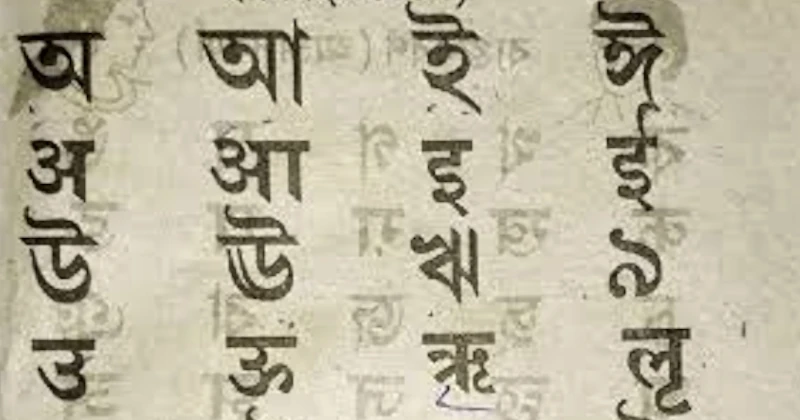
The dominance of a few major languages reveals fascinating stories of history, migration, and cultural endurance. English may still reign supreme as the most spoken language globally with an estimated 1.5 billion speakers, including both native and second-language users but two languages from Bharat have carved a powerful place for themselves among the linguistic giants of the world: Hindi and Bengali.
The global spread of English is unparalleled. With about 1.5 billion people speaking the language, it continues to serve as the primary bridge of communication across continents, professions, and cultures. However, it’s noteworthy that only 390 million are native speakers. The overwhelming majority use English as a second or foreign language, highlighting how deeply colonial legacies and modern media have shaped linguistic trends.
Right behind English is Mandarin Chinese, spoken by around 1.1 to 1.2 billion people. Unlike English, Mandarin’s dominance stems not from global spread but from demographic concentration. It remains the world’s most spoken native language, firmly rooted in China and neighbouring regions. Mandarin’s growing influence in business and diplomacy has only reinforced its global status.
Standing tall among the world’s top three most spoken languages, Hindi boasts nearly 609 million speakers. Its influence extends far beyond the Indian subcontinent thanks to the vast Bharatiya diaspora spread across the United States, the United Kingdom, the Middle East, Africa, and Oceania.
As one of Bharat’s 22 official languages, Hindi serves as the most widely understood and spoken language in the country. From Bollywood’s cinematic reach to digital content creators redefining Hindi storytelling online, the language continues to modernize without losing its native vibrancy.
Interestingly, Hindi’s presence isn’t limited to homes and theatres; it increasingly finds a voice in technology and education, with several global tech giants now offering Hindi interfaces and translation tools. As the world rediscovers regional authenticity, Hindi’s soft power is expanding like never before.
Spanish, with around 560 million speakers, holds the fourth position. It remains a dominant force across Spain, Latin America, and even in the United States, where it is the second most used language. Its reach extends beyond geography Spanish is the second most used language on the Internet after English, reflecting the cultural dynamism of Hispanic communities worldwide.
Meanwhile, Arabic, with between 330 and 420 million speakers, spans an extraordinary region from Morocco’s deserts to the Gulf’s skyscrapers. However, its diverse dialects mean that the language varies widely across its vast geography, representing a mosaic of cultures under one linguistic umbrella.
Another jewel in Bharat’s linguistic crown, Bengali, commands around 280 million speakers, placing it firmly within the global top ten. The language binds together the cultural heartlands of Bangladesh and the Indian state of West Bengal, and its influence resonates through art, literature, and music.
From Rabindranath Tagore’s poetry to modern digital media, Bengali’s literary tradition continues to inspire millions. The language’s emotional depth and lyrical richness have made it one of the most beloved in South Asia, symbolising the cultural unity and resilience of the eastern subcontinent.
Further down the global list, Portuguese boasts around 264 million speakers, its reach amplified by Brazil’s cultural exports—from music and cinema to football. Russian, with approximately 255 million speakers, remains a key player in global science, literature, and space technology.
Rounding off the top ten is Urdu, spoken by about 238 million people across Pakistan, India, and parts of the Middle East. Urdu’s poetic charm has found a digital renaissance in recent years, with social media, online literature, and music giving it a new global stage.
That two Indian languages Hindi and Bengali feature among the world’s most spoken is not a statistical coincidence. It is a reflection of Bharat’s enduring civilizational strength, where language and culture remain living entities passed through generations. From ancient Sanskrit, the root of many modern Indian tongues, to the vibrant linguistic diversity today, Bharat’s languages embody the evolution of its thought, philosophy, and people.














Comments