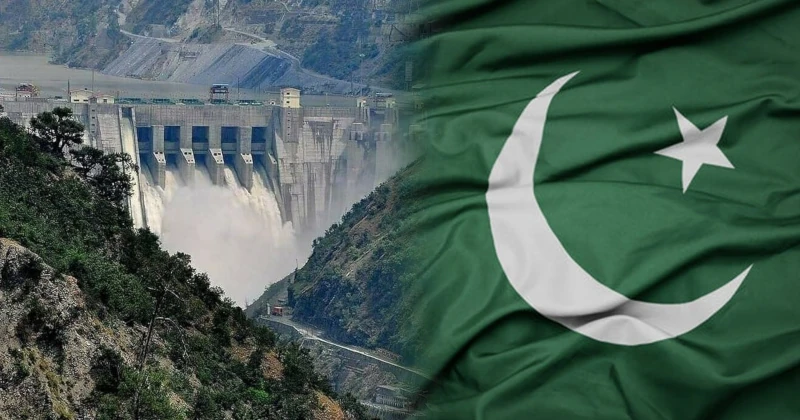
India turns Indus from lifeline to leverage after Pahalgam attack
December 5, 2025
  • Read Ecopy
  • Circulation
  • Advertise
  • Careers
  • About Us
  • Contact Us
Android AppiPhone AppArattai
Organiser
  • ‌
  • Bharat
    • Assam
    • Bihar
    • Chhattisgarh
    • Jharkhand
    • Maharashtra
    • View All States
  • World
    • Asia
    • Europe
    • North America
    • South America
    • Africa
    • Australia
  • Editorial
  • International
  • Opinion
  • RSS @ 100
  • More
    • Op Sindoor
    • Analysis
    • Sports
    • Defence
    • Politics
    • Business
    • Economy
    • Culture
    • Special Report
    • Sci & Tech
    • Entertainment
    • G20
    • Azadi Ka Amrit Mahotsav
    • Vocal4Local
    • Web Stories
    • Education
    • Employment
    • Books
    • Interviews
    • Travel
    • Law
    • Health
    • Obituary
  • Subscribe
    • Subscribe Print Edition
    • Subscribe Ecopy
    • Read Ecopy
  • ‌
  • Bharat
    • Assam
    • Bihar
    • Chhattisgarh
    • Jharkhand
    • Maharashtra
    • View All States
  • World
    • Asia
    • Europe
    • North America
    • South America
    • Africa
    • Australia
  • Editorial
  • International
  • Opinion
  • RSS @ 100
  • More
    • Op Sindoor
    • Analysis
    • Sports
    • Defence
    • Politics
    • Business
    • Economy
    • Culture
    • Special Report
    • Sci & Tech
    • Entertainment
    • G20
    • Azadi Ka Amrit Mahotsav
    • Vocal4Local
    • Web Stories
    • Education
    • Employment
    • Books
    • Interviews
    • Travel
    • Law
    • Health
    • Obituary
  • Subscribe
    • Subscribe Print Edition
    • Subscribe Ecopy
    • Read Ecopy
Organiser
  • Home
  • Bharat
  • World
  • Operation Sindoor
  • Editorial
  • Analysis
  • Opinion
  • Culture
  • Defence
  • International Edition
  • RSS @ 100
  • Magazine
  • Read Ecopy
Home Bharat

India turns Indus from lifeline to leverage after Pahalgam attack, warns Pakistan of harsh water pressure ahead

India’s response to the Pahalgam terror attack has thrust water into the heart of India–Pakistan tensions, with the Sydney-based Environmental Threat Report warning that even minor shifts in Indus river flows could trigger a cascading crisis across Pakistan’s economy, agriculture, and national stability.

Vishnu AravindVishnu Aravind
Nov 1, 2025, 12:05 pm IST
in Bharat, World
Follow on Google News
India holds the decisive upper hand on the Indus, and any strategic shift now could rapidly intensify Pakistan’s water crisis

India holds the decisive upper hand on the Indus, and any strategic shift now could rapidly intensify Pakistan’s water crisis

FacebookTwitterWhatsAppTelegramEmail

India’s response to the Pahalgam terror attack is expected to exert significant pressure on Pakistan, particularly through its influence over the Indus River water system, according to an assessment in this year’s Environmental Threat Report by the Sydney-based Institute of Economics and Peace. The report notes that even a minor alteration in water flow by India could push Pakistan into a serious crisis, given the country’s extreme dependence on the Indus River Basin for agriculture, industry, and urban consumption.

The findings further highlight Pakistan’s alarming water insecurity that the country’s dams have a storage capacity of barely 30 days, far below the global standard of 120–220 days required to ensure resilience during seasonal variability. The Indus River Basin is described as the lifeline of Pakistan’s economy, supporting nearly one-quarter of its GDP and playing a decisive role in food production and supply. Around 80 percent of Pakistan’s agricultural land depends on irrigation from the Indus system, while more than 60 percent of the population is directly or indirectly supported by it through farming, employment, or related services. In major population centres, including Lahore, Karachi, and Multan, the Indus and its tributaries provide drinking water as well as resources for manufacturing and other industries essential to urban livelihoods.

Pakistan’s vulnerability is rooted in the fact that it relies overwhelmingly on river waters originating in India. Under the 1960 Indus Waters Treaty (IWT), India made significant concessions to ensure Pakistan’s access to the western rivers, the Indus, Jhelum, and Chenab, while retaining full control of the eastern rivers, the Sutlej, Beas, and Ravi. These western rivers constitute the bulk of the Indus system, and therefore, the treaty has been crucial to sustaining Pakistan’s agricultural heartland, particularly Punjab province. Any disruption in water availability, especially during critical planting or harvesting seasons, would trigger immediate agricultural distress, worsening Pakistan’s already severe economic challenges. Food insecurity linked to reduced river flows could therefore create a cascading crisis, affecting livelihoods, market stability, and national security.

Indus Water Treaty of 1960

Following the Pahalgam terror attack in April, New Delhi announced the abrogation of its adherence to the Indus Water Sharing Agreement, signalling a potential recalibration of the long-standing water-sharing mechanism. While India is still bound by physical geography, making a total blockage or diversion of the western rivers impossible, the report stresses that even tactical adjustments such as increasing hydroelectric exploitation or altering release schedules could have deep impacts across Pakistan’s water-reliant sectors.

The Indus Waters Treaty itself stands as a landmark bilateral agreement forged after years of post-Partition negotiations. When the rivers of Punjab were divided between India and Pakistan in 1947, New Delhi gained upper-riparian control over waters flowing downstream into Pakistan. Rising tensions over access and usage prompted the World Bank to intervene in 1954 as a mediator. Six years later, on 19 September 1960, the two nations signed the treaty, which has since been considered one of the most resilient water-sharing arrangements in the world, surviving multiple wars and diplomatic freezes. The agreement grants Pakistan full rights to the western rivers, while allowing India limited use for irrigation, drinking water supply, hydroelectricity, and navigation, provided that such use does not alter the river’s course or diminish the volume of water supplied to Pakistan. India extensively utilizes its share of the eastern rivers through major projects such as the Bhakra-Nangal Dam, Ranjit Sagar Dam, Pong Dam, and comprehensive canal systems. Yet, despite the treaty permitting up to 18 percent of the western rivers’ water for Indian consumption, experts assert that India currently uses only around 10 percent of what it is entitled to.

Pakistan’s most persistent objections have centred around India’s hydropower development in Jammu and Kashmir. The Kishanganga Hydroelectric Project (330 MW) on the Kishanganga (Neelum) River has been a major source of dispute. Initiated in 2007, the project was challenged by Pakistan at the Court of Arbitration in The Hague. More recently, New Delhi has fast-tracked approvals for several hydroelectric plants on the Chenab and other western tributaries, including the Kiru (624 MW) and Kwar (560 MW) projects. Earlier approvals were granted for the larger Pakal Dul (1,000 MW) and Ratle (850 MW) projects in the Kishtwar region. Pakistan argues that these developments raise cumulative risks for river flow regulation, especially during peak agricultural seasons.

Also Read: Dev Deepavali: Varanasi gears up for celebrations with laser show, cultural performances at Raj Ghat

A second upstream challenge as Afghan dams threaten Pakistan’s flow

Adding further complexity to Pakistan’s water security, Afghanistan has begun asserting control over the Kunar–Kabul river system, another major contributor to Pakistan’s Indus Basin supply. In a development marking heightened bilateral tensions, the Taliban government recently ordered the construction of a new dam on the Kunar River, following deadly clashes between Afghan and Pakistani forces. Originating in the Hindu Kush near the Broghil Pass on the Pakistan border, the 480-kilometre-long Kunar River flows into Afghanistan’s Kabul River, which eventually joins the Indus near Attock in Pakistan. This river network is vital for irrigation and consumption in Pakistan’s Khyber Pakhtunkhwa province.

Unlike the India–Pakistan water relationship, there is no formal water-sharing treaty between Pakistan and Afghanistan. Any upstream developments by Kabul therefore carry geopolitical risks and could intensify downstream scarcity. Analysts warn that Pakistan may soon face a dual-front water crisis, shaped both by India’s evolving river strategies and Afghanistan’s newly assertive hydraulic policies.

As climate change reduces glacial melt stability in the Himalayas and increases seasonal unpredictability, Pakistan’s growing dependency on transboundary rivers is emerging as one of its greatest national vulnerabilities. The report concludes that water, rather than traditional military confrontation, may become the most critical axis along which future India–Pakistan relations are negotiated, with devastating consequences for Pakistan.


Topics: Pahalgam AttackIndia-Pakistan tensionsWater SecurityIndus River BasinEnvironmental Threat Report
ShareTweetSendShareSend
✮ Subscribe Organiser YouTube Channel. ✮
✮ Join Organiser's WhatsApp channel for Nationalist views beyond the news. ✮
Previous News

Puducherry celebrates Liberation Day, CM Rangasamy hoists national flag

Next News

Karnataka – ‘Killer Congress’ poster campaign: BJP blames Siddaramaiah govt for rising crime against women & corruption

Related News

IG BSF Jammu Frontier Shashank Anand

‘Pakistan treated it as war’: BSF reveals intense cross-border clash during Operation Sindoor

Saudi Prince Mohammed Bin Salman and Prime MInister Narendra Modi (Left) and Pakistan PM Shehbaz Sharif (Right)

Saudi-Pakistan defence pact remains symbolic as Riyadh deepens ties with New Delhi

Pakistan Prime Minister Shahbaz Sharif

Pakistan PM Sharif claims Trump ended India-Pakistan clash, turns UN stage into comedy of military boasts and praise

A representative image- Supreme Court of India

“Cannot ignore what happened in Pahalgam”: Supreme Court says ground reality must guide J&K statehood decision

PM Narendra Modi

India warns Pakistan of ‘Painful consequences’ over repeated war threats and anti-India rhetoric

J&K: Pakistani intruder gunned down by BSF in Kathua; NIA tightens noose on local links to Pahalgam Attack

Load More

Comments

The comments posted here/below/in the given space are not on behalf of Organiser. The person posting the comment will be in sole ownership of its responsibility. According to the central government's IT rules, obscene or offensive statement made against a person, religion, community or nation is a punishable offense, and legal action would be taken against people who indulge in such activities.

Latest News

Petitioner S Vignesh Shishir speaking to the reporters about the Rahul Gandhi UK citizenship case outside the Raebareli court

Rahul Gandhi UK Citizenship Case: Congress supporters create ruckus in court; Foreign visit details shared with judge

(L) Kerala High Court (R) Bouncers in Trippoonithura temple

Kerala: HC slams CPM-controlled Kochi Devaswom Board for deploying bouncers for crowd management during festival

Fact Check: Rahul Gandhi false claim about govt blocking his meet with Russian President Putin exposed; MEA clears air

Union Minister for Road Transport and Highways Nitin Gadkari (Right)

India set for highway overhaul as Union Minister Nitin Gadkari unveils nationwide shift to MLFF electronic tolling

RSS Akhil Bharatiya Prachar Pramukh Shri Sunil Ambekar

When Narrative Wars result in bloodshed, countering them becomes imperative: Sunil Ambekar

Ministry of Civil Aviation mandates emergency action: IndiGo ordered to stabilise flight operations by midnight

Chhattisgarh CM Vishnu Deo Sai at Panchjanya Conclave, Nava Raipur, Image Courtesy - Chhattisgarh govt

Panchjanya Conclave: Chhattisgarh CM Sai shares views on development projects in Maoist hotbed, women empowerment

Union Finance Minister Nirmala Sitharaman

‘TMC is holding Bengal back’: Sitharaman slams Mamata govt over industrial & healthcare setbacks

Karnataka: Muslim youth Mohammed Usman accused of sexual assault, blackmail & forced conversion in Bengaluru

Social Justice Is a cover; Anti-Sanatana dharma is the DMK’s real face at Thirupparankundram

Load More
  • Privacy
  • Terms
  • Cookie Policy
  • Refund and Cancellation
  • Delivery and Shipping

© Bharat Prakashan (Delhi) Limited.
Tech-enabled by Ananthapuri Technologies

  • Home
  • Search Organiser
  • Bharat
    • Assam
    • Bihar
    • Chhattisgarh
    • Jharkhand
    • Maharashtra
    • View All States
  • World
    • Asia
    • Africa
    • North America
    • South America
    • Europe
    • Australia
  • Editorial
  • Operation Sindoor
  • Opinion
  • Analysis
  • Defence
  • Culture
  • Sports
  • Business
  • RSS @ 100
  • Entertainment
  • More ..
    • Sci & Tech
    • Vocal4Local
    • Special Report
    • Education
    • Employment
    • Books
    • Interviews
    • Travel
    • Health
    • Politics
    • Law
    • Economy
    • Obituary
  • Subscribe Magazine
  • Read Ecopy
  • Advertise
  • Circulation
  • Careers
  • About Us
  • Contact Us
  • Policies & Terms
    • Privacy Policy
    • Cookie Policy
    • Refund and Cancellation
    • Terms of Use

© Bharat Prakashan (Delhi) Limited.
Tech-enabled by Ananthapuri Technologies