





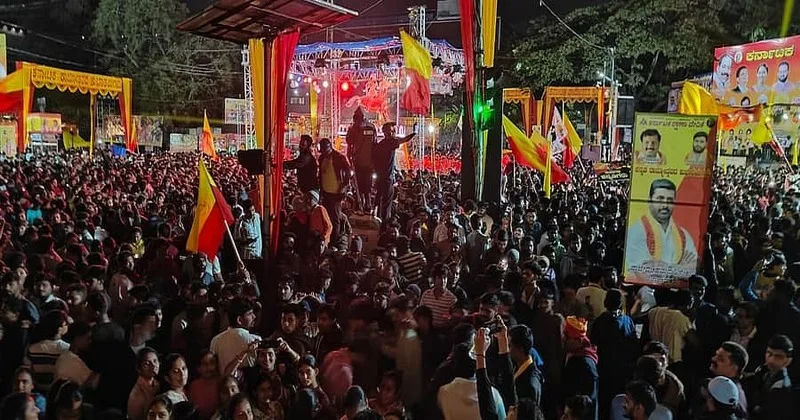
Bengaluru: As the clock ticks toward November 1, Karnataka is decked in red and yellow — the symbolic colours of the state flag — to mark the 69th Kannada Rajyotsava, celebrating the formation of the state of Karnataka in 1956. From bustling Bengaluru to the cultural heartlands of Mysuru, Hubballi, and Belagavi, the spirit of Kannada pride and unity has enveloped the air.
PM Narendra Modi in a tweet on November 1 greeted people of Karnataka. He said,”Today, when we mark Kannada Rajyotsava, we celebrate the spirit of excellence and industrious nature that the people of Karnataka are synonymous with. We also celebrate the outstanding culture of Karnataka, reflected in its literature, art, music and more. The state embodies the spirit of progress rooted in wisdom. I pray that people of the state are happy and healthy.”
https://x.com/narendramodi/status/1984458428282978408
The celebration marks the unification of Kannada-speaking regions under one administration — a movement that shaped the linguistic and cultural identity of the state. Across districts, preparations have reached their peak, with roads, circles, and public buildings illuminated in dazzling lights, adorned with Kannada flags and portraits of stalwarts who fought for the state’s unification.
Chief Minister Siddaramaiah will officially hoist the Karnataka flag at the Kanteerava Stadium in Bengaluru on Friday morning. The event will be attended by Governor Thawar Chand Gehlot, ministers, and thousands of Kannadigas. The government is also set to honour 70 eminent achievers from various fields with the prestigious Rajyotsava Award, which carries a cash prize of Rs 5 lakh and a gold medal.
In Belagavi, known as the state’s cultural frontier, thousands of Kannada activists and local residents gathered at Rani Chennamma Circle at midnight to usher in Rajyotsava with fireworks, music, and dance. Youths waved Kannada flags, chanted “Jai Karnataka Mata,” and danced to DJ beats in a display of passion and pride that continued well into the night.
Kannada organisations such as the Karnataka Rakshana Vedike and pro-Kannada groups have organised rallies, cultural programs, and bike jathas across the state. Many private institutions and schools have encouraged staff and students to dress in red and yellow, while local administrations have arranged processions showcasing folk dances like Dollu Kunitha, Veeragase, and Yakshagana.
Security has been tightened in border districts like Belagavi and Bidar to ensure peaceful celebrations, particularly amid tensions over language and regional issues.
The Rajyotsava celebration this year carries a strong message of unity, linguistic pride, and respect for Karnataka’s diverse cultural identity. As the state faces challenges of migration, language debates, and political rivalries, the festival serves as a reminder of the enduring bond that ties Kannadigas across the globe — their love for the language, land, and legacy.










Comments