





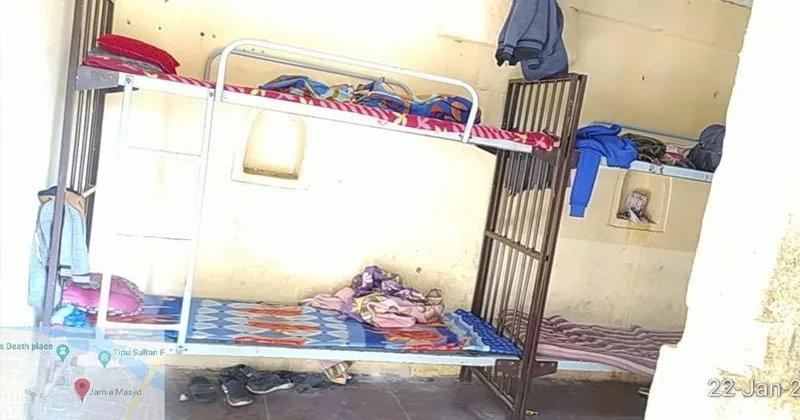
Mandya: The historic Jama Masjid in Srirangapatna, Mandya district, has once again become the center of controversy — this time over allegations that a madrasa is being operated within its premises, which falls under the jurisdiction of the Archeology Department. The latest development has sparked heated debates, reigniting old tensions surrounding the structure’s disputed religious identity.
For years, the Srirangapatna Jama Masjid has been mired in controversy due to claims that the site originally housed the Anjaneyaswamy Temple before being converted into a mosque during the regime of ruler Tipu Sultan. Now, allegations that a madrasa is functioning within the protected monument have further intensified public scrutiny.
According to sources, several children are being taught Islamic studies inside the Jama Masjid complex, and a few of them are also staying there as residents. The issue has gained traction because the Archeology Department’s regulations strictly prohibit any kind of educational or religious activity inside monuments classified as heritage properties.
“Once a monument comes under the Department of Archaeology, no one whether individual, group, or community can carry out any construction or regular activity without official approval. Even religious rituals are not permitted unless specifically sanctioned,” said a senior official from the department who did not wish to be named.
However, visuals and local reports suggest that a madrasa has been operating inside the mosque for several months. This, critics argue, amounts to a clear violation of the Archeology Department’s rules and calls into question the government’s enforcement of heritage site regulations.
Meanwhile, the issue has taken on a political tone. Hindu organisations such as the Bajrang Dal have written to the Mandya District Commissioner demanding immediate action and closure of the madrasa. “When the state government imposes restrictions on organizations like the RSS (Rashtriya Swayamsevak Sangh) from conducting activities on public land, how can it allow a madrasa to function on property that belongs to the Archeology Department?” asked a local Bajrang Dal leader.
The organisation alleged that the government is showing “double standards” enforcing strict rules on Hindu organizations while turning a blind eye to violations in minority-run institutions. “One law should apply equally to everyone. If the RSS or any Hindu group cannot conduct cultural activities on public property, how can the same government permit a madrasa in a protected monument?” the letter questioned.
The Srirangapatna Jama Masjid, a structure of immense historical and architectural significance, dates back to the rule of Tipu Sultan. It is considered an important monument reflecting the Indo-Islamic style of construction from the 18th century. However, the site has long been a flashpoint for communal and political disputes, with both Hindu and Muslim groups laying claim to its origins.
As the controversy deepens, the government faces increasing pressure to clarify its stance. Opposition voices are demanding that the same standards applied to Hindu organizations be uniformly implemented across communities. “Selective enforcement of law will only deepen communal mistrust,” said a retired bureaucrat from Mandya.
The Mandya district administration has not yet issued an official statement. However, sources indicate that the Deputy Commissioner may seek a report from the Archeology Department to determine whether any unauthorized activities are taking place inside the mosque.
















Comments