





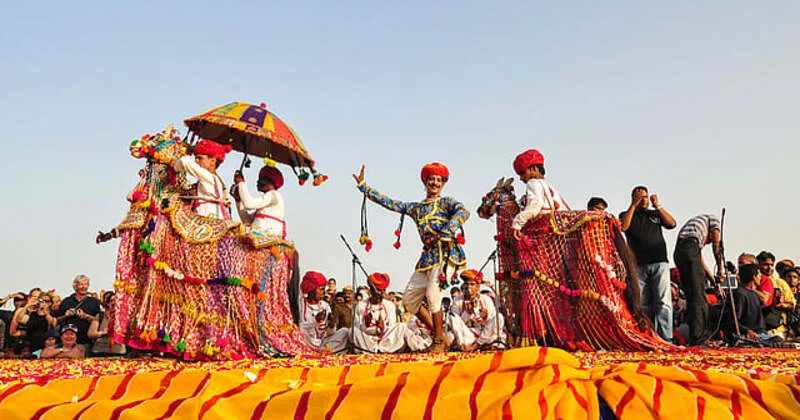
“Padharo Mhare Desh”- “Welcome to my land” is not just a slogan for Rajasthan Tourism, it’s an invitation. And there’s no better time to accept that invitation than now, because the world-famous Pushkar Mela has already begun. From October 30 to November 6, 2025, the tranquil town of Pushkar in Rajasthan has transformed into a living canvas of colour, music, devotion and desert charm.
What began centuries ago as a livestock trading event has evolved into one of India’s grandest cultural festivals, a meeting of the sacred and the spectacular. Today, Pushkar Mela draws thousands of camels and traders, but also travellers, photographers, devotees, and culture lovers from around the world. Here’s why you should be there this very week.
A Camel and livestock extravaganza
At the heart of the Pushkar Mela is its original purpose, the trading of camels and livestock. It remains, to this day, one of the largest camel fairs in the world, a sight that you will not witness anywhere else. Thousands of camels and cattle are brought by pastoral communities from across Rajasthan and neighbouring states. These animals are groomed, decorated, and paraded across the desert sands, creating an unforgettable spectacle of colour and life.
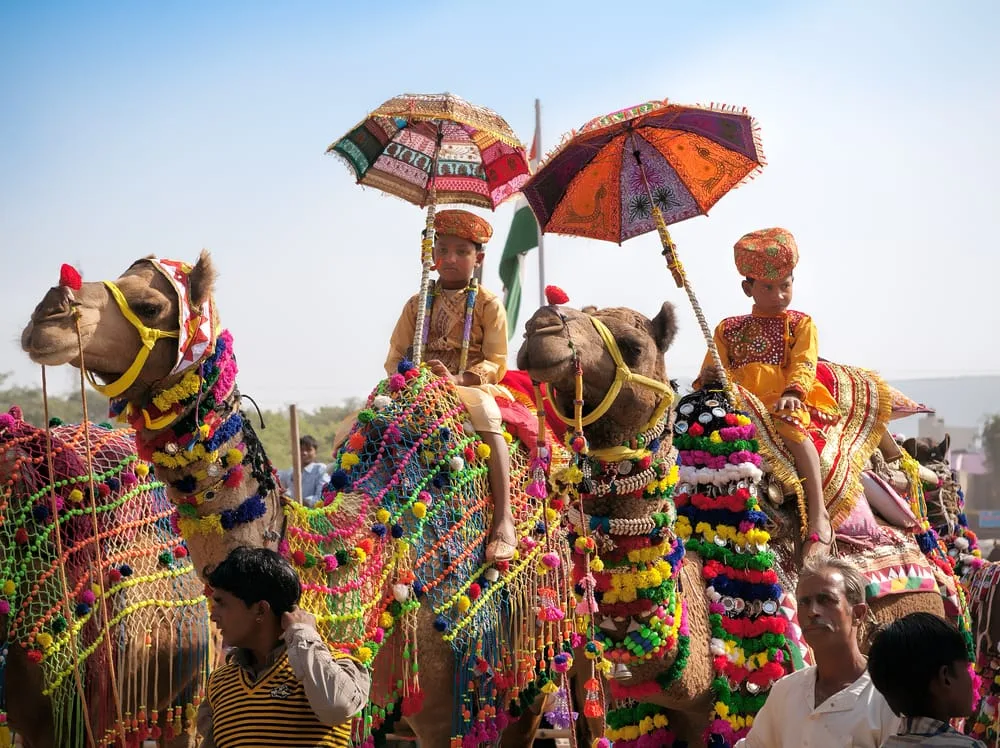
The sight of camels adorned with intricate beadwork, colourful tassels, and patterned cloth is almost surreal. Their proud owners take part in camel races and even camel beauty contests, each hoping their animal will fetch admiration or a good price. The fairgrounds buzz with trading, negotiations, and laughter, a reflection of the deep connection between the desert people and their animals.
Even as tourism now dominates the scene, the fair still holds true to its rural roots. For anyone interested in India’s traditional livelihoods, animal husbandry, or cultural heritage, this is a living museum of the desert economy.
Cultural competitions, folk music and pure festivity
Pushkar Mela is far more than a trading hub, it’s a celebration of Rajasthani culture at its most vivid. Throughout the week, the fairground becomes a stage for competitions, performances, and local traditions that fill the air with cheer.
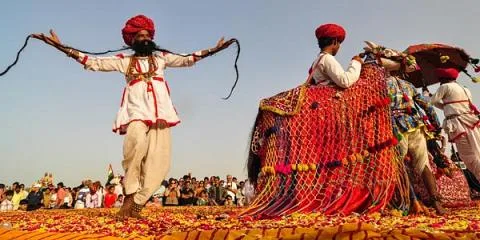
Visitors can watch camel races, turban-tying competitions, and the famous longest-moustache contest that draws proud Rajasthani men from across the state. There’s also the matka-phod or pot-breaking contest, which brings energy and laughter to the crowds.
As night falls, folk musicians and Kalbelia dancers, known for their swirling skirts and snake-like movements, perform under the open sky. The rhythm of drums, the haunting notes of the ‘been’ (flute), and the glow of lanterns turn the desert evening into something magical. This is not just entertainment, it’s an immersion into Rajasthan’s soul. For travellers and photographers alike, every moment feels like a scene from a living folktale.
The spiritual heart of Pushkar
Beyond the festive fairgrounds lies the sacred town of Pushkar, one of India’s holiest places. While the fair hums with activity, the lake and temples nearby offer a contrasting calm, a reminder that this event began as a spiritual gathering.
The centrepiece of the town is the Pushkar Lake, surrounded by 52 ghats (bathing steps), where pilgrims take a holy dip, especially during Kartik Purnima, which coincides with the fair. Devotees believe that a bath here cleanses sins and brings blessings.
Nearby stands the Brahma Mandir, one of the very few Mandirs in the world dedicated to Bhagwan Brahma, the creator in Hindu belief. Every year, thousands of pilgrims travel long distances to offer prayers here. The evening aarti (prayer) by the lake, with ringing bells, lamps floating on the water, and chants filling the air, is a deeply moving experience that balances the high-energy fair with spiritual serenity. So, while Pushkar Mela dazzles with its colours and chaos, it also soothes the soul, a rare blend of celebration and contemplation.
Desert landscapes, balloon rides and sunset magic
Few experiences compare to watching the sun dip below the dunes, painting the desert gold, while camels form silhouettes against the horizon. The Pushkar landscape is breathtaking in its simplicity, wide expanses of sand, gentle hills, and the sparkling lake framed by temples and ghats.
Over the years, adventure activities have become a part of the fair’s allure. Hot-air balloon rides offer sweeping views of the fairground, a floating panorama of tents, traders, camels, and colour. Camel safaris, jeep tours, and sunset rides across the dunes give visitors a chance to see the desert from up close.
Handicrafts, flavours and living traditions
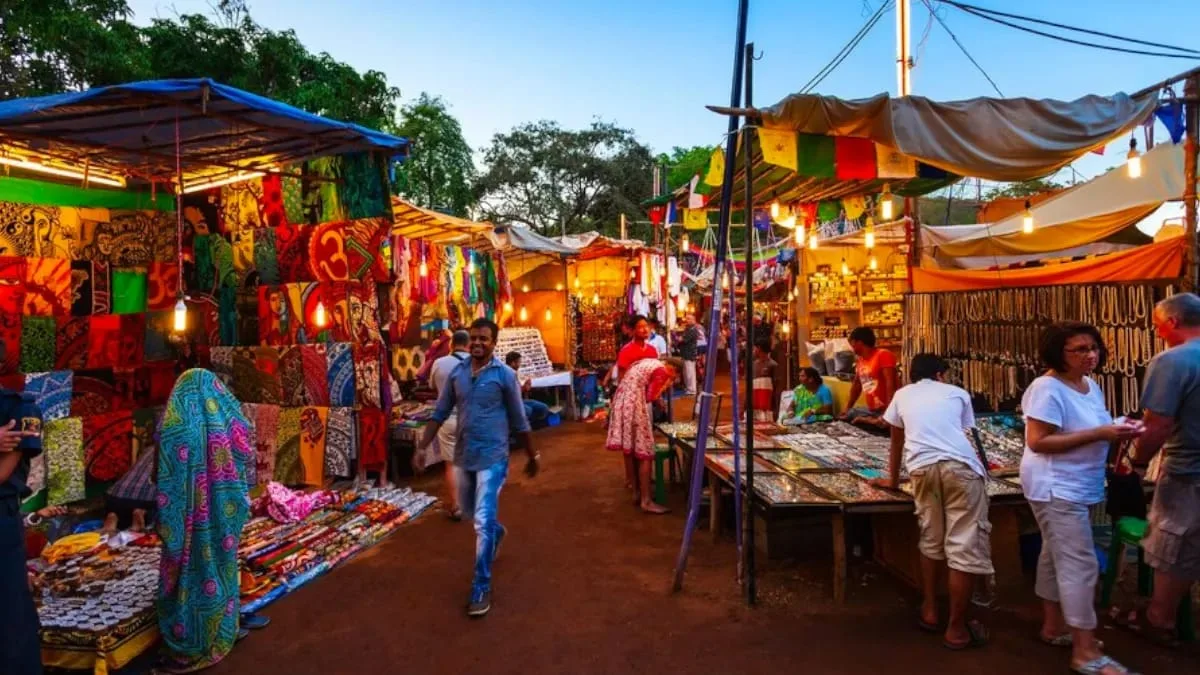
No fair in Rajasthan is complete without shopping, and Pushkar Mela is heaven for anyone who loves handicrafts. The market lanes and temporary stalls brim with Rajasthani treasures, silver jewellery, tie-and-dye textiles, embroidered bags, leather goods, colourful turbans, and miniature paintings. Every item tells a story of craftsmanship passed down through generations.
The food, too, deserves a special mention. Because Pushkar is a pilgrimage town, most eateries serve vegetarian fare, but don’t be fooled by the simplicity. From hot kachoris and malpuas to steaming cups of masala chai, the flavours are rich, earthy, and comforting. Try local Rajasthani thalis or street snacks as you wander through the fairground. More than just a marketplace, Pushkar Mela is a celebration of living traditions. Even as modern tourism brings changes, the essence remains true, a gathering rooted in community, spirituality, and the desert’s rhythm.
Pushkar is well connected by air, rail, and road. The nearest airport is Kishangarh (near Ajmer), about 40 km away, while Jaipur International Airport is around 150 km away. Ajmer Junction, about 15 km from Pushkar, is the closest major railway station, with taxis and buses available for the final leg.
Every November, the desert town of Pushkar becomes a living, breathing festival, a place where spirituality meets spectacle, where tradition dances with tourism, and where the simple act of gathering turns into something extraordinary. The Pushkar Mela is not just an event; it’s an experience, one that captures the soul of Rajasthan and the timeless spirit of India.










Comments