





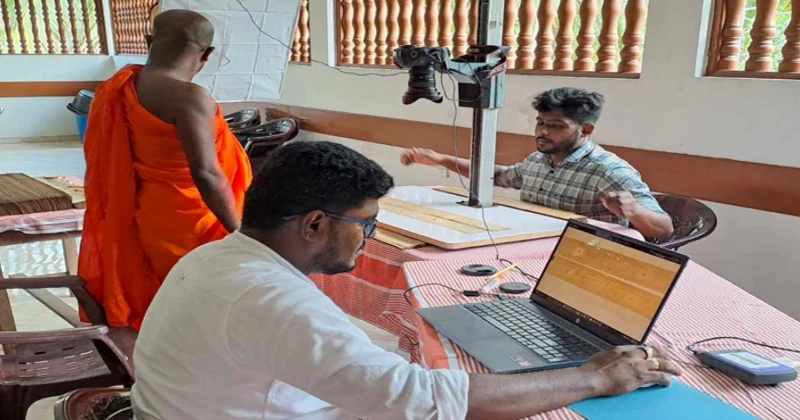
This age-old insight gets new relevance today as India, with the current BJP government at the center, it sets out a process to restore and digitise its intellectual legacy in the “Manuscripts to Metadata” project. This initiative represents greater than a technological shift, it is a mission of civilisational scale that aims to connect India’s glorious past with its digital future.
“विद्याधनं सर्वधनप्रधानम्”
(Knowledge is truly the supreme wealth)
Reviving the Bharatiya Gyaan Parampara
India is estimated to possess ten million manuscripts on varied subjects such as Ayurveda, astronomy, mathematics, linguistics, architecture and philosophy. Each manuscript is a living testament to the Bharatiya Gyaan Parampara, the unbroken flow of indigenous knowledge that has nurtured Indian civilisation for millennia. While the earlier initiatives were driven primarily by conservation, the current drive under the BJP government is towards digitisation, accessibility and innovation.
Prime Minister Shri Narendra Modi has repeatedly emphasised the necessity of combining Indian strengths of civilisation with contemporary technology. The Gyan Bharatam Mission is one of the flagship initiatives in this endeavour, embodies the vision centered around AI-powered digitisation, tagging metadata and digital repository creation, that can be accessed by scholars and citizens alike.
Policy Momentum and Institutional Drive
It started with the National Mission for Manuscripts (NAMAMI) in 2003 under the Atal Bihari Vajpayee government. This farsighted move created a momentum for a countrywide preservation movement. Nearly more than 3.5 lakh manuscripts have been digitised and over 90 conservation and resource centers set up across India.
The Modi regime has stepped up this pace with programs such as AIKosh and the Traditional Knowledge Digital Library (TKDL). This website will incorporate artificial intelligence to document and protect ancient knowledge from international patent abuse while ensuring scholarly access. IIT-Bombay partnership under AIKosh, in which more than two lakh sentences from ancient texts have been digitised is an example of this initiative.
Initiatives with the Asiatic Society of Kolkata, IIT and CDAC also reflect the BJP government focus on preservation through technology. Hyperspectral imaging and machine learning now assist in deciphering deteriorated manuscripts, reclaiming ancient texts believed lost. This intersection of tradition and technology reflects how India is becoming a world leader in digital research based on heritage.
Spiritual Continuity and Cultural Revival
What gives this project depth, is its spiritual nature. In Bharat learning has always been revered. By introducing such projects on festivals like Guru Purnima, the government reiterates that technology cannot substitute for reverence it must only enhance it. The tradition of guru–shishya Parampara now expresses itself in the digital space, where teachers and students can access ancient wisdom on contemporary platforms.
Civilisational self-esteem and cultural pride drive support this movement. Digitised manuscripts are not merely repositories but dynamic resources that drive scholarly research, traditional medicine and cultural studies. BJP government vision express through initiatives such as Digital India and Viksit Bharat@2047, is to transform India into both a knowledge superpower and a cultural beacon in the digital world.
Empowering Youth and Building Research Capacity
The Gyan-Setu national challenge invites young innovators to innovate AI tools for accessing manuscripts and preservation, giving rise to a new generation of digital custodians of heritage. The Manuscript Research Partner (MRP) programme educates students in palaeography, translation and digital archiving, promoting skill development and employability in a culturally rich but technologically driven field.
These initiatives are aligned with the BJP government’s focus on youth entrepreneurship, as seen in its larger policies on startups, digital literacy and higher education-industry interfaces. The manuscript project is therefore a microcosm of India’s self-reliance mission Aatmanirbhar Bharat, where knowledge, culture and technology meet.
The upcoming New Delhi Declaration on Manuscript Heritage will provide for global cooperation in this area. India’s initiative in digital archiving can lead the world to adopt global standards of ethical access, data sovereignty and cultural preservation. The diplomatic vision of the Modi government based on the philosophy of Vasudhaiva Kutumbakam (the world is one family) finds resonance here, as ancient Indian wisdom becomes a common human heritage.
Tradition Meets Technology
This project represents the confluence of shloka and software, sutra and science. The government emphasises on indigenous technology platforms means that India maintains control over its cultural information. Sanskrit linguistics, AI-based translation and digital humanities research projects demonstrate how ancient knowledge can power new innovation. From deciphering mathematical concepts coded into old treatises to synthesising Ayurvedic wisdom into new models of healthcare the possibilities are enormous.
Preservation of manuscripts is not simply an academic or bureaucratic exercise, it is a national act of faith. Every digitised page brings back to life a lost conversation between ancients and contemporaries. The government initiative in restoring and digitising the works is a metaphor for the resurrection of Bharat’s civilisational self-confidence and regaining its historical position of being the “Vishwa Guru”.
The manuscripts that were previously relegated to temple vaults and collectors’ shelves are today becoming a part of India’s living digital awareness. They are no longer quiet artefacts but talking texts that bridge past knowledge and current innovation.
Manuscripts to Metadata is a pioneering combination of preservation, innovation, and nationalism. Under the current administration, it represents an explicit attempt to convert India’s cultural capital into a vibrant, accessible and internationally respected knowledge base.
As India travels from palm leaves to digital clouds from ink to AI, it is not only digitising ancient wisdom its redefining its intellectual identity. This effort captures the spirit of a rising Bharat where tradition fuels technology and technology renews tradition. It is a digital odyssey towards the rediscovery of India’s timeless wisdom, that the lamp of knowledge may lead humanity for centuries to come.













Comments