





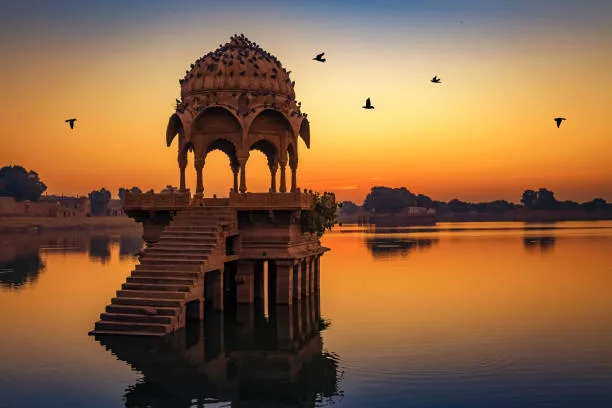
In what could be described as one of the most comprehensive and forward-looking tourism initiatives in independent India, the Modi government has announced its Tourism Vision 2029, a master plan to develop 50 globally competitive tourist destinations by the end of the decade.
The vision reflects the government’s intent to project India not merely as a destination but as an experience, one that celebrates its millennia-old civilisation, diverse ecology, and emerging modernity.
From the snow-laden valleys of Kashmir to the emerald backwaters of Kerala, and from the rugged terrains of the Northeast to the sun-washed shores of Gujarat, these sites are expected to meet global benchmarks in accessibility, cleanliness, infrastructure, and visitor experience.
Each selected location will reflect the essence of India’s cultural, spiritual, and ecological wealth while embodying modern hospitality standards that can rival the best in Europe or Southeast Asia.
Blueprint for transformation
Under the plan, the Union Ministry of Tourism has directed all states and union territories to submit proposals identifying potential sites that could be upgraded into international tourism hotspots.
The Centre will provide a uniform framework to guide these transformations, focusing on sustainable infrastructure, responsible tourism, and cultural preservation. Once approved, states will have three to four years to complete development under central supervision.
Officials said that each state will have at least one flagship destination, ensuring regional balance and inclusive growth. This model not only decentralises tourism development but also ensures that lesser-known regions, such as Ziro in Arunachal Pradesh or Chitrakote in Chhattisgarh, may find global recognition.
“The idea is not just to beautify or brand. It is to build sustainable ecosystems that attract international visitors, empower local communities, and protect our heritage,” said a senior tourism ministry official involved in drafting the policy.
Self-reliance to cultural confidence
The initiative follows a larger national narrative of Atmanirbhar Bharat (self-reliant India), extending beyond manufacturing and defence to cultural and economic domains.
After Operation Sindoor, Prime Minister Narendra Modi urged Indians to not only strengthen domestic industries but also promote India’s own culture and destinations as symbols of pride and soft power. The call gained momentum when the Indian tourism sector boycotted countries like Turkey, following its controversial stance on India’s internal matters.
This, officials say, was a turning point that encouraged the government to reimagine tourism as a strategic instrument of national identity and diplomacy.
Tourism already contributes around 5% to India’s GDP and supports over 80 million jobs. With Vision 2029, the government expects these numbers to double.
The 50 identified sites are expected to become employment hubs, stimulating demand in hospitality, handicrafts, transport, and local services.
The Centre also plans to link these hubs with local artisans and micro, small and medium enterprises (MSMEs) to ensure that the benefits of tourism trickle down to the grassroots.
In states like Rajasthan and Tamil Nadu, where tourism drives entire rural economies, officials believe the new destinations will create sustainable livelihood opportunities for women and youth through self-help groups and homestay networks.
“Tourism is not just about monuments and hotels. It is about people, about stories, skills, and traditions that deserve global audiences,” said an official from the NITI Aayog, which has been assisting the Ministry of Tourism in planning the framework.
Global standards meet Indian spirit
At the heart of Vision 2029 lies a push to upgrade India’s tourist experience to meet international standards.
The project will align with the UN Sustainable Development Goals (SDGs) and emphasise eco-tourism, digital ticketing, smart navigation, waste management, and green energy integration.
Destinations will undergo transformation through:
1. World-class infrastructure (air connectivity, highways, and visitor facilities)
2. Sustainability measures (plastic-free zones, solar-powered systems)
3. Immersive cultural experiences (craft villages, heritage walks, gastronomy hubs)
4. Smart digital integration (AR/VR-guided tours, multilingual apps, online booking systems)
The model follows successful frameworks from nations like Japan, Thailand, and Italy, where local experiences are globally branded without losing authenticity.
Reimagining heritage from temples to terrains
The Ministry’s preliminary list includes both historic and natural sites, ranging from Varanasi’s ghats and Hampi’s ruins to the Rann of Kutch, Kaziranga National Park, Andaman Islands, and Leh-Ladakh’s Buddhist circuits.
A special focus will also be placed on religious and spiritual tourism, with plans to integrate destinations across the Ramayana, Buddha, and Sikh circuits, creating cohesive experiences for domestic and international pilgrims.
Similarly, states like Kerala are expected to spotlight wellness and Ayurveda tourism, while Madhya Pradesh will focus on heritage and wildlife corridors.
To fund the massive infrastructure overhaul, the government will adopt a Public-Private Partnership (PPP) model. Major hotel chains, travel companies, and CSR wings of corporations are expected to participate in developing amenities like resorts, transport networks, and cultural centres.
The Centre has also hinted at offering tax incentives and single-window clearance to attract foreign investors and global hospitality brands.
“India’s tourism expansion cannot rely on government budgets alone. We need private innovation and global expertise to make these destinations truly world-class,” said a senior tourism ministry source.
Inspiration from the past, vision for the future
The plan draws inspiration from India’s historic “Swadeshi” movement, which redefined national identity through local products and self-reliance. Vision 2029 aims to recreate that spirit for the modern age, positioning tourism as a soft power tool and a pillar of cultural diplomacy.
By 2029, the government expects India to feature prominently among the top five global tourist destinations, not just in numbers but in experience and reputation.
The Indian Railway Catering and Tourism Corporation (IRCTC) has already launched pilot projects, including a seven-day Kerala air tour package, covering flights, accommodation, meals, and transport starting at Rs 55,800 per person.
Similar packages are being planned for the North-East, Ladakh, and spiritual circuits to make travel more accessible and structured.
State tourism boards have been asked to synchronise their policies with the national framework, focusing on safety, hygiene, and digital integration, lessons learned during the post-pandemic recovery phase.
Notably, the execution will be the key challenge. Past schemes like PRASAD and Swadesh Darshan showed strong intent but faced bottlenecks in land acquisition, inter-departmental coordination, and maintenance.
To avoid delays, the Tourism Ministry is introducing a real-time project monitoring dashboard that tracks progress and public feedback through digital metrics.
50 reasons to explore India by 2029
If implemented effectively, Vision 2029 could redefine India’s global tourism narrative, from a country of monuments to a nation of experiences.
Each of the 50 destinations will tell a story of ancient civilisation meeting modern innovation, of resilience meeting creativity, of India’s timeless diversity brought alive for the world to witness.
As one senior official summed up, “By 2029, we don’t just want tourists to visit India; we want them to understand it.”
The initiative stands as a testament to India’s belief in its own potential, a journey from being a destination to becoming a world in itself.














Comments