





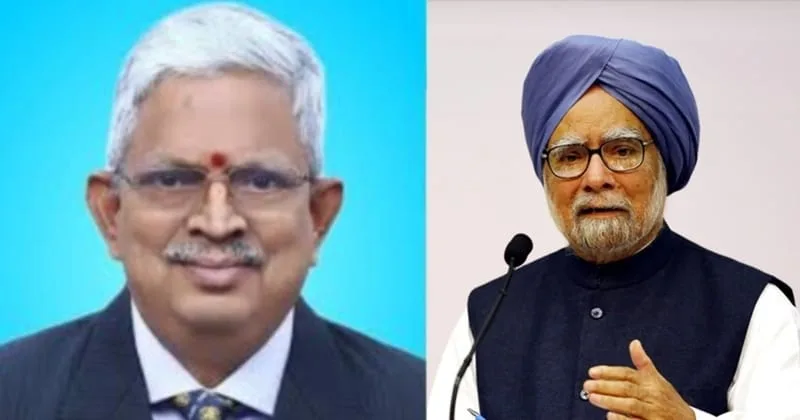
In the chronicles of India’s democratic institutions, few episodes capture the clash between power and principle as starkly as the Coal Block Allocation Scam, better known as Coalgate. This was not just another tale of corruption or bureaucratic failure, it was a profound confrontation between constitutional morality and political expediency, embodied in the standoff between the Comptroller and Auditor General (CAG) of India, the guardian of public accountability, and the formidable political apparatus of the United Progressive Alliance (UPA) government led by Dr Manmohan Singh.
As P Sesh Kumar’s compelling new book, Unfolded: How the Audit Trail Heralded Financial Accountability and International Supreme Audit Institution, reveals, integrity came at a steep price, marked by humiliation, isolation, and even stench. Quite literally.
P Sesh Kumar, who served as the Director General of Audit in the CAG during the coal block audit, recounts an episode that symbolised the hostility his team faced. Tasked with conducting one of the most significant audits in India’s history, they were allocated a cramped, dimly lit room adjacent to a foul-smelling toilet in the Coal Ministry. The symbolism was unmistakable; it was a pointed reminder from the establishment: you are not welcome here.
“The audit was not welcomed; we were seen as a nuisance,” Kumar told sources. “We were given a tiny room next to a stinking toilet. Maybe toilets have improved now, but back then, it was unbearable.” This was the reality of governance under an economist Prime Minister who often prided himself on the ‘independence of institutions.’
The CAG’s team was investigating the opaque and arbitrary allocation of India’s coal blocks, a resource of immense strategic and economic value, to private companies. What they uncovered would shake the very foundations of the UPA government: a potential windfall gain of Rs 1.86 lakh crore for private players, stemming from a non-transparent allocation process.
The Rs 86 lakh crore bombshell
Contrary to the UPA’s dismissal of the figure as “speculative math,” Kumar’s book makes it clear that the number was neither arbitrary nor politically motivated. It was meticulously calculated using data from Coal India Ltd., covering 57 out of 75 private coal block allocations. The auditors assessed extractable reserves, applied industry-standard price and cost metrics, and conservatively adjusted for expenses. Every assumption was fully disclosed.
“The CAG disclosed its assumptions upfront. Anyone questioning the figure could test them,” Kumar emphasises. It is important to note: the Rs 1.86 lakh crore was not claimed as a direct loss to the exchequer. It represented a foregone opportunity, a measure of how much the government could have earned had the coal blocks been auctioned transparently, a principle later validated by the Supreme Court when it cancelled all such allocations.
Interestingly, the now-famous term “windfall gain” did not originate from the CAG. It came from an internal note by the then Coal Secretary, acknowledging that the allocation process had the potential to confer “windfall gains” on private firms. The CAG merely quantified what the government’s own documents had already recognised.
The path to truth, however, was littered with obstacles. The auditors faced stonewalling, non-cooperation, and missing records at every turn. Of more than 200 Screening Committee meetings in which critical coal allocation decisions were made, the CAG’s team could access only 2 or 3 sets of minutes. The message was unmistakable: the government had much to hide. Files mysteriously vanished, delays were engineered, and bureaucratic hurdles were deliberately piled high to frustrate the audit. Yet, the auditors persisted. Even during holidays like Durga Puja, they pressed on. And one day, their perseverance paid off, they uncovered a policy file that would become the cornerstone of the scandal, exposing the systemic flaws and the scale of the misallocation.
The file contained internal communications dating back to 2004, including notes from the Coal Secretary, the Law Ministry, and even the Prime Minister himself, who briefly held the coal portfolio. It revealed that as early as 2006, the Law Ministry had cleared the concept of competitive bidding for coal blocks. Yet inexplicably, the government sat on it for years, favouring an opaque, discretionary allocation process that enriched a select few private players. This revelation shattered the UPA’s claim that auctions were “legally impossible” at the time. The truth, the CAG report showed, was far simpler: the system was deliberately structured to benefit the chosen few.
The corridors of power reacted swiftly and brutally. Prime Minister Manmohan Singh, long seen as a clean technocrat, publicly criticised the CAG report in Parliament. Senior ministers held press briefings dismissing the findings as “deeply flawed” and “misleading.” The goal was clear: discredit the institution, not the numbers.
The Congress party, aided by a friendly media ecosystem, launched a smear campaign against the CAG and its then head, Vinod Rai. They were labelled “politically motivated,” “anti-growth,” and “anti-UPA.” The attempt was nothing less than an effort to undermine the very concept of independent audit scrutiny. Yet history vindicated the auditors. The Supreme Court upheld the CAG’s findings, calling the coal allocations “arbitrary and illegal” and cancelling all 214 coal blocks allotted between 1993 and 2010. The constitutional watchdog had been right all along.
Kumar emphasises that the CAG’s coal audit was never just about numbers. It was about transparency, accountability, and the sanctity of public resources. In a democracy, natural resources belong to the people, not to politicians or corporate cronies. By exposing how a secretive Screening Committee parcelled out coal blocks without competitive bidding, the CAG restored faith in constitutional oversight. It proved that even amid political dominance and media manipulation, institutions could stand tall when led by people of conviction. “The real victory was not in a number printed on a report,” Kumar writes, “but in reaffirming that accountability in public finance is not an act of politics—it is an act of democracy.”
The saga of the coal scam and the shabby treatment meted out to the CAG team serves as a sobering lesson for anyone who talks glibly about “independent institutions.” Under the UPA, institutions of accountability were not strengthened; they were stifled. When the CAG did its job, it was ridiculed. When investigative agencies probed corruption, they were accused of being “politicised.” Yet, despite literal and metaphorical filth, the auditors in that stinking Coal Ministry room held their ground. Their courage ensured that India’s democracy did not lose its moral compass.
Today, as India strives for more transparent and accountable governance, it is worth remembering the CAG’s fight during the UPA era. It was not just a battle for clean audits; it was a battle for clean governance. The smell from that toilet room may have faded over time, but it remains a powerful metaphor for what the CAG stood against: the stench of corruption and political deceit. By standing firm, the CAG ensured that the Constitution, not the coalition, had the final word.
















Comments