





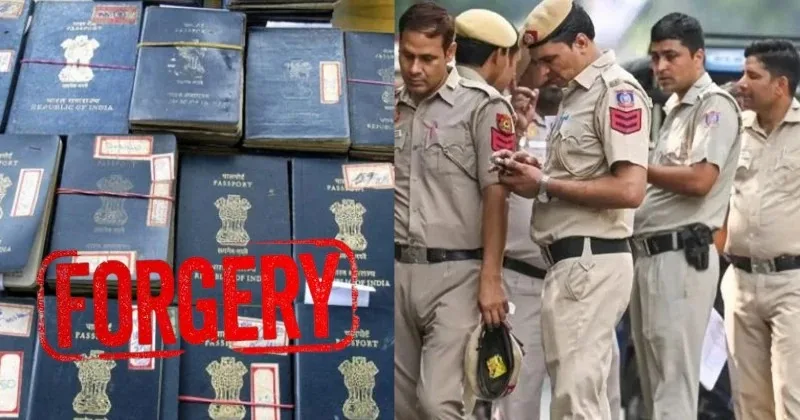
The Delhi Police Special Cell has apprehended a 59-year-old suspect identified as Adil Hussaini, also known by multiple aliases Syed Adil Hussain, Mohammad Adil Hussaini, and Nasimuddin from Seemapuri, a densely populated area in East Delhi. The arrest, made the day before October 28, has exposed what officials are calling a highly sophisticated espionage racket with potential international links.
A resident of Jamshedpur, Tata Nagar (Jharkhand), Hussaini has emerged as a key suspect in an ongoing intelligence investigation into the supply of sensitive national information to foreign entities, allegedly in collusion with his brother, Akhtar Hussaini.
During the operation, the Special Cell recovered one original Indian passport and two forged copies from Hussaini’s possession. Investigators revealed that the accused had procured multiple passports using forged documents, a tactic often employed by intelligence mules and cross-border agents to evade tracking and establish alternate identities.
Sources said Hussaini had undertaken multiple foreign trips, including visits to Pakistan, over the past few years. His pattern of travel to high-sensitivity destinations, coupled with fake documentation, triggered suspicion among counter-intelligence units.
“His frequent foreign visits and possession of multiple forged passports raised red flags. Preliminary findings suggest that he may have been involved in collecting and transmitting sensitive information pertaining to national security,” said a senior officer from the Delhi Police Special Cell.
Following the arrest, Delhi Police secured a seven-day police custody (PC) remand to interrogate the accused. The Intelligence Bureau (IB) and other central intelligence agencies have also been roped in to jointly question Hussaini about his activities, connections, and the nature of his foreign interactions.
“Multiple intelligence inputs indicate a wider network may be operating behind Hussaini’s movements. His brother, Akhtar Hussaini, is also under the scanner for suspected involvement in information leakage and forged document procurement,” officials confirmed.
Investigators are now scrutinising digital footprints, travel history, and potential financial trails linked to Hussaini’s activities. His connections abroad, possible handlers, and communication networks are under detailed forensic analysis.
The arrest has once again drawn attention to the growing threat of espionage networks operating within Indian cities, often using fraudulent identity documents and exploiting weaknesses in passport issuance systems. Sources suggest that the ongoing probe could unveil a larger web of operatives working to channel sensitive strategic information to foreign intelligence networks, possibly linked to hostile agencies.
“This is not an isolated case. The modus operandi suggests a pattern similar to previous espionage operations uncovered in the capital, involving fabricated identities, transnational movements, and covert data exchange,” a counter-intelligence official said.
















Comments