India’s 2047 roadmap for maritime and seaborne trade
June 23, 2026
  • Read Ecopy
  • Circulation
  • Advertise
  • Careers
  • About Us
  • Contact Us
Android AppiPhone AppArattai
Organiser
  • ‌
  • Bharat
    • Assam
    • Bihar
    • Chhattisgarh
    • Jharkhand
    • Maharashtra
    • View All States
  • World
    • Asia
    • Europe
    • North America
    • South America
    • Africa
    • Australia
  • Editorial
  • International
  • Opinion
  • RSS @ 100
  • More
    • Op Sindoor
    • Analysis
    • Sports
    • Defence
    • Politics
    • Business
    • Economy
    • Culture
    • Special Report
    • Sci & Tech
    • Entertainment
    • G20
    • Azadi Ka Amrit Mahotsav
    • Vocal4Local
    • Web Stories
    • Education
    • Employment
    • Books
    • Interviews
    • Travel
    • Law
    • Health
    • Obituary
  • Subscribe
    • Subscribe Print Edition
    • Subscribe Ecopy
    • Read Ecopy
  • ‌
  • Bharat
    • Assam
    • Bihar
    • Chhattisgarh
    • Jharkhand
    • Maharashtra
    • View All States
  • World
    • Asia
    • Europe
    • North America
    • South America
    • Africa
    • Australia
  • Editorial
  • International
  • Opinion
  • RSS @ 100
  • More
    • Op Sindoor
    • Analysis
    • Sports
    • Defence
    • Politics
    • Business
    • Economy
    • Culture
    • Special Report
    • Sci & Tech
    • Entertainment
    • G20
    • Azadi Ka Amrit Mahotsav
    • Vocal4Local
    • Web Stories
    • Education
    • Employment
    • Books
    • Interviews
    • Travel
    • Law
    • Health
    • Obituary
  • Subscribe
    • Subscribe Print Edition
    • Subscribe Ecopy
    • Read Ecopy
Organiser
  • Home
  • Bharat
  • World
  • Operation Sindoor
  • Editorial
  • Analysis
  • Opinion
  • Culture
  • Defence
  • International Edition
  • RSS @ 100
  • Magazine
  • Read Ecopy
Home Bharat

India’s 2047 Roadmap for Maritime and Seaborne Trade: Navigating the blue century

As India charts its course toward Amrit Kaal and envisions a developed nation by 2047, the maritime sector has emerged as a defining pillar of its economic and strategic roadmap

Vedika ZnwarVedika Znwar
Oct 29, 2025, 08:00 am IST
in Bharat, World, Sci & Tech
Follow on Google News
Representative Image

Representative Image

FacebookTwitterWhatsAppTelegramEmail

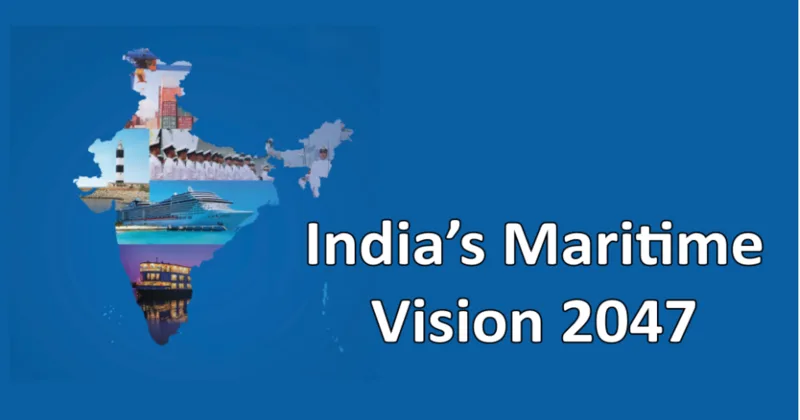
India’s recent calls to become a major maritime power by 2047 are not just political talk. They respond to a moment when geography, technology, and geopolitics come together to make the sea vital for economic security. Union ministers have set an ambitious goal: to manage about one-third of global seaborne trade by 2047, the year of India’s centenary. This goal reshapes national planning around ports, shipping, shipbuilding, logistics, and the broader “blue economy,” grounding these ambitions in solid infrastructure and policy commitments.

A credible plan must start with measurement. Global seaborne trade was around 12.7 billion tonnes in 2024, recovering after pandemic disruptions but facing slower, more unpredictable growth ahead. This situation highlights the need for scale and resilience to go hand in hand. Domestically, India’s maritime system already handles most of its foreign trade by volume. Major ports managed about 855 million tonnes in FY2024–25, showing a steady upward trend that points to both existing capacity and the pressing need to expand and modernize. These baseline figures illustrate why planners see a chance to grow faster than the underlying market, provided India improves ports, hinterland connections, and maritime services.

The articulated strategy combines major infrastructure projects with regulatory changes and industry incentives. Over the past decade, India has nearly doubled its declared port capacity—growing from about 871.5 million tonnes to roughly 1,629.9 million tonnes between 2014–15 and 2023–24. This increase shows that targeted investment can quickly enhance supply. Initiatives like Sagarmala (focused on port modernization, connectivity, and industrialization), a push for green shipping, inland waterway development under the National Waterways program, and incentives for domestic shipbuilding and recycling form the foundation for this growth. Public-private partnerships and corporate capital expenditure are now fueling regional development, from major gateway ports to planned transshipment and logistics hubs.

Also Read: Oceans are pivotal pillar of Amrit Kaal vision, Bharat is beacon for seaborne globalisation: Sarbananda Sonowal

Projects with strategic goals, such as the USD 5 billion Great Nicobar development and port-linked industrial corridors, aim to do more than increase capacity. They seek to reposition India on important east-west and north-south shipping routes and offer alternatives for transshipment that currently go through foreign hubs. If executed with environmental protections and community approval, these projects could boost India’s share of higher-value maritime services like transshipment, bunkering, ship repair, and logistics, not just raw tonnage. Capturing this value chain is crucial: handling a larger share of global trade means more than moving goods—it involves providing the services that make trade efficient and successful.

The geostrategic context highlights the urgency. Growing tensions at key choke points, longer rerouted journeys, and tariff fluctuations have raised the importance of diverse, resilient supply chains. Global organizations and analysts warn of increasing shipping volatility, emphasizing that states which combine port scale with reliable hinterland connectivity and alternative routes will attract global shipping partners. India’s goal to be a resilient hub acts as a buffer against both commercial and geopolitical disruptions.

The 2047 maritime discussion is timely because the combination of scale, supply-chain vulnerabilities, and geopolitical changes makes ports and shipping strategically important in ways they weren’t a generation ago.

Topics: sagarmalaIndia Maritime Vision 2047Greater Nicobar
ShareTweetSendShareSend
✮ Subscribe Organiser YouTube Channel. ✮
✮ Join Organiser's WhatsApp channel for Nationalist views beyond the news. ✮
Previous News

UP: Yogi government executes mandate of ECI, begins statewide voter list overhaul through special intensive revision

Next News

India-Pakistan War: Shaheedgarh Diwas celebrations marked by tributes to those who fought in Nowshera in 1947-48

Related News

Representative image

Mumbai cruise terminal inauguration opens gateway to growth in Indian tourism, trade & maritime innovation

Multi-purpose cargo berth and container terminal in Deendayal Port in Gujarat will benefit many states: PM Modi

Load More

Latest News

Kamakhya Mandir

Kamakhya Mandir’s Ambubachi Mela: The ancient tradition that honours the menstruation of mother Earth

Amazon in dock for mocking Hindu Gods

Amazon File: From Ganesha to Aryabhata-Has Amazon India become a platform for Anti-Hindu narratives?

The West Bengal Budget 2026–27 aims to drive growth through infrastructure, industry, innovation and welfare

Reimagining Bengal: How the West Bengal Budget 2026–27 seeks to balance growth, welfare & economic transformation

Pratiraksha is Gujarat Police's Aadhaar-based verification platform designed to identify illegal workers and prevent identity fraud in industrial sectors

Pratiraksha: How Gujarat police uses Aadhaar verification to secure industrial workforce against identity fraud

Israel-Iran crisis has highlighted not only shifting dynamics of West Asia but also growing confidence of India's foreign policy

India, Israel and the rise of strategic autonomy in an era of global geopolitical realignment

Saleem and Jaleel arrested in forced religious conversion case

Karnataka Conversion Case: Forced conversion of Hindu woman and minor son sparks outrage; Saleem and Jaleel arrested

Bareilly Cantonment Emerges as Model for Sustainable Urban Development in India (Image Source X)

Uttar Pradesh: Bareilly Cantonment becomes India’s first carbon-negative cantonment

CM Yogi Adityanath making industry, investment and the connectivity revolution in Eastern Uttar Pradesh

The Purvanchal Growth Story: How industry, infrastructure, tourism & exports are fueling development in eastern UP

(Left) Fire at the coaching centre in Lucknow (Right) Members of ABVP extending all possible help

Lucknow Coaching Centre Fire tragedy is heartbreaking and deeply unfortunate: ABVP seeks action against culprits

Andhra Pradesh Minister and TDP National General Secretary Nara Lokesh

Nara Lokesh dismisses rumours of TDP sabotaging Modi government, reaffirms unconditional NDA support

Load More
  • Privacy
  • Terms
  • Cookie Policy
  • Refund and Cancellation
  • Delivery and Shipping

© Bharat Prakashan (Delhi) Limited.
Tech-enabled by Ananthapuri Technologies

  • Home
  • Search Organiser
  • Bharat
    • Assam
    • Bihar
    • Chhattisgarh
    • Jharkhand
    • Maharashtra
    • View All States
  • World
    • Asia
    • Africa
    • North America
    • South America
    • Europe
    • Australia
  • Editorial
  • Operation Sindoor
  • Opinion
  • Analysis
  • Defence
  • Culture
  • Sports
  • Business
  • RSS @ 100
  • Entertainment
  • More ..
    • Sci & Tech
    • Vocal4Local
    • Special Report
    • Education
    • Employment
    • Books
    • Interviews
    • Travel
    • Health
    • Politics
    • Law
    • Economy
    • Obituary
  • Subscribe Magazine
  • Read Ecopy
  • Advertise
  • Circulation
  • Careers
  • About Us
  • Contact Us
  • Policies & Terms
    • Privacy Policy
    • Cookie Policy
    • Refund and Cancellation
    • Terms of Use

© Bharat Prakashan (Delhi) Limited.
Tech-enabled by Ananthapuri Technologies