





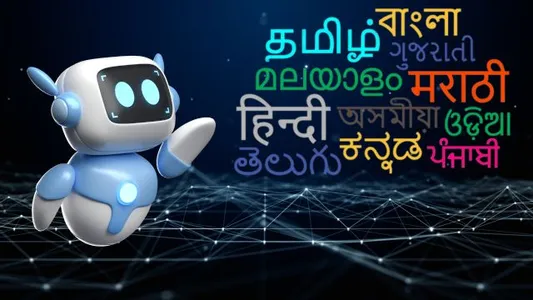
Making India’s digital transformation truly inclusive, the government is using artificial intelligence (AI) to bridge the nation’s linguistic divide. Through AI-powered platforms like Bhashini, BharatGen, and Adi-Vaani, all 22 Scheduled Languages, along with dozens of tribal and endangered dialects, are being integrated into the country’s expanding digital infrastructure.
This transformation is not just technological; it’s cultural. As Prime Minister Narendra Modi has often remarked, “A language is not just a means of communication, it is the soul of a civilisation.” That belief lies at the heart of India’s effort to ensure that no citizen is excluded from the digital revolution because of language.
AI-powered inclusion for every Indian
Over the last decade, advancements in Natural Language Processing (NLP), speech recognition, and machine translation have helped India move closer to its dream of Digital Bharat. The flagship platform Bhashini, launched under the National Language Translation Mission (NLTM), provides real-time translation and voice assistance in 22 Indian languages, as well as several tribal ones.
From government portals to parliamentary debates, Bhashini is ensuring that information is accessible to all citizens, not just English or Hindi speakers. Projects such as Sansad Bhashini have even made parliamentary proceedings multilingual, allowing people to listen to debates in their mother tongue.
Complementing Bhashini is BharatGen, an advanced AI initiative that develops text-to-text and text-to-speech translation models. Using datasets sourced from the Scheme for Protection and Preservation of Endangered Languages (SPPEL) and Sanchika, BharatGen is training large multilingual models that enhance accessibility in governance, education, and healthcare sectors where linguistic barriers have long excluded millions.
Preserving the voices of India’s tribal communities
India’s linguistic map is not limited to the 22 scheduled languages. The country is home to hundreds of tribal and endangered tongues, many spoken by fewer than 10,000 people, and many at risk of extinction.
To preserve and empower these languages, the government launched Adi-Vaani in 2024, India’s first AI-driven system for real-time translation and preservation of tribal languages such as Santali, Bhili, Gondi, and Mundari. By combining NLP with speech recognition, Adi-Vaani records oral traditions, digitises tribal literature, and enables local-language use in education and administration.
This builds upon the foundation laid by SPPEL, implemented by CIIL Mysuru since 2013, which documents and digitally archives endangered Indian languages. Its companion platform Sanchika stores dictionaries, storybooks, folk songs, and audiovisual recordings, all used to train AI models that can understand and translate rare languages with greater accuracy.
Further, the Ministry of Tribal Affairs’ TRI-ECE scheme deploys AI-based translation tools to render English and Hindi educational and administrative content into tribal languages, ensuring both linguistic precision and cultural sensitivity.
AI’s role in the NEP vision
India’s education system is also witnessing a linguistic transformation. In line with the National Education Policy (NEP) 2020, which promotes learning in one’s mother tongue, AI is playing a crucial role in breaking linguistic barriers in education.
The AICTE’s e-KUMBH portal offers free access to technical books and learning materials in multiple Indian languages, giving students from smaller towns the same opportunities as those in metros. Similarly, the Anuvadini app uses AI to translate complex engineering, law, and medical textbooks into regional languages, making higher education more inclusive and equitable.
Platforms like SWAYAM, which already has over five crore learners, are now being integrated with AI translation tools to ensure that digital courses can be accessed in local languages. Together, these initiatives are reshaping the educational landscape, creating a truly multilingual learning ecosystem.
India’s AI backbone
Behind India’s multilingual leap lies a robust technological ecosystem. AI technologies such as automatic speech recognition (ASR), text-to-speech synthesis (TTS), neural machine translation (NMT), and natural language understanding (NLU) form the backbone of platforms like Bhashini and BharatGen.
AI models like IndicBERT, mBART, and other India-specific language models are trained on massive datasets drawn from digitised manuscripts, folklore, government records, and educational materials. This ensures that the AI not only translates words but also understands context, tone, and cultural nuance, an essential factor in India’s linguistically diverse environment.
Moreover, the integration of datasets from SPPEL and Sanchika ensures that even the most remote and rare dialects are not left behind. The government’s open-source AI policy encourages innovation and collaboration among research institutions, universities, and startups to further strengthen India’s multilingual AI capacity.
Digital governance for every citizen
The multilingual transformation is already reshaping how citizens engage with the government. From voice-based digital assistants on government websites to multilingual chatbots that help people file grievances or check welfare benefits, AI is making governance more accessible than ever.
For rural and semi-literate citizens, language is no longer a barrier to digital access. AI-driven platforms can translate, transcribe, and even speak government notifications, agricultural advisories, and health information in native languages, empowering citizens at the grassroots level.
This aligns with the government’s Digital India mission, which envisions a society where every Indian can participate in the digital economy, regardless of geography, literacy, or language.
Preserving the past, powering the future
Language preservation isn’t just about documentation; it is about keeping cultural memory alive. Initiatives like the National Translation Mission (NTM) and National Mission on Manuscripts (NMM) are digitising India’s ancient texts and manuscripts, ensuring that the wisdom of Sanskrit, Pali, Tamil, and Prakrit traditions is accessible in the digital age.
By integrating these heritage efforts with modern AI translation tools, India is ensuring that ancient knowledge systems coexist with contemporary innovation, a fusion of tradition and technology that defines the spirit of Atmanirbhar Bharat.
Future that speaks every Indian language
As India moves toward becoming a trillion-dollar digital economy, its success will depend not just on connectivity and innovation but on linguistic inclusion. Platforms like Bhashini, BharatGen, and Adi-Vaani are redefining what digital access means, turning India’s linguistic diversity from a challenge into an opportunity.
From the bustling cities to the remotest tribal villages, the digital India of tomorrow will speak in many voices, yet act as one.
In this multilingual revolution, every Indian language finds its space online, and every Indian finds their voice in the nation’s digital story.












Comments