





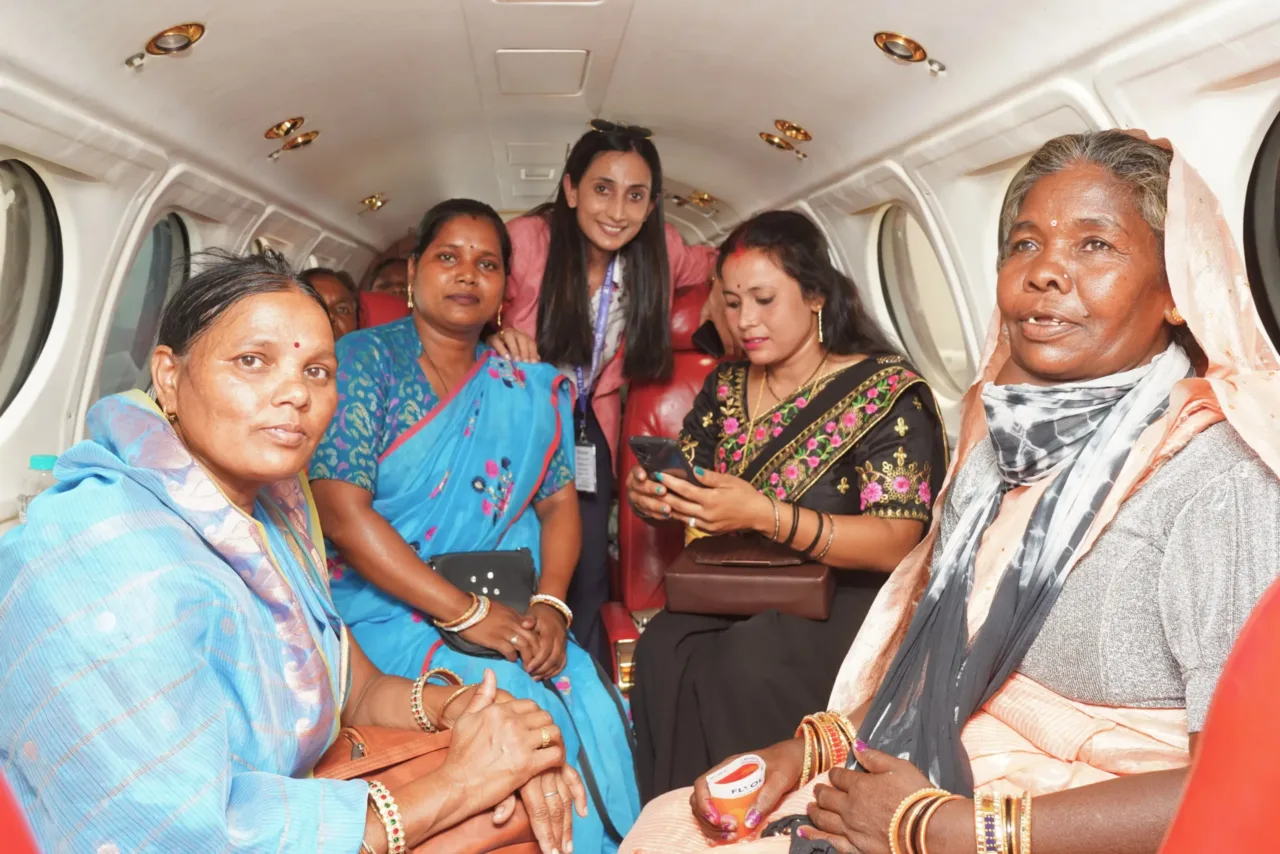
A decade ago, the idea of flying was a distant dream for most Indians. Today, that dream hums through the air across the subcontinent, from the lush valleys of the Northeast to the bustling coasts of Gujarat. India’s aviation story is no longer one of luxury; it’s a story of access, inclusion, and ambition.
Prime Minister Narendra Modi, speaking about the country’s aviation transformation, once said, “Our dream is not just to connect cities but to connect the aspirations of every Indian.” That vision took shape in 2016 with the launch of UDAN (Ude Desh ka Aam Nagrik), a mission that turned air travel into a democratic mode of transport, not just a privilege for the few.
From runways to lifelines
When UDAN was launched, regional air routes between smaller cities were few and far between. For millions, flying between places like Hubballi, Darbhanga, Kullu, or Shillong was unthinkable. The scheme changed that narrative forever.
By 2025, UDAN is set to have operationalised 649 new routes, connecting 93 airports, heliports, and water aerodromes across the country. Over 1.56 crore passengers have already flown on 3.23 lakh UDAN flights, bridging the distance between India’s heartlands and its economic centres.
This is not just a story of new flights, it is one of new opportunities. Every connection has meant more tourism, more jobs, and more business for local economies once cut off from the mainstream. From boosting homestay tourism in the Northeast to opening trade corridors for small industries in tier-3 towns, UDAN has lifted more than planes, it has lifted livelihoods.
Affordable, Accessible, Aspirational
At the heart of UDAN lies a simple promise: make flying affordable for the common citizen. The fares on many regional routes are capped, ensuring a ticket can often cost less than a long-distance train journey.
Even the airport experience is being reimagined to suit the everyday Indian. The introduction of UDAN Yatri Cafes, where tea costs Rs 10 and a samosa Rs 20, is a small but symbolic gesture of inclusion. These cafes serve as reminders that India’s aviation boom is not just about infrastructure but about dignity and equality of access.
The next phase of UDAN aims to add 120 new destinations and serve nearly 4 crore passengers, expanding the reach of affordable air travel deeper into rural and semi-urban India.
India’s Airports multiply from 74 to 163 and counting
India’s broader aviation infrastructure has grown at an unprecedented pace. In 2014, the country had just 74 operational airports. Today, that number has more than doubled to 163, and by 2047, India’s 100th year of independence, the target is to reach 350-400 airports.
According to the International Civil Aviation Organisation (ICAO), India’s aviation sector already supports 7.7 million jobs. By 2040, that figure could touch 25 million, as new airports, maintenance hubs, and flight schools emerge across the country.
This growth has transformed the skies into the new highways of India, where cargo and commuters travel faster, and where small towns are no longer isolated but interconnected engines of growth.
Innovation at altitude: Digi Yatra, Krishi UDAN, and More
Technology has been a powerful co-pilot in India’s aviation journey. The Digi Yatra initiative, which allows passengers to board flights using facial recognition, has already been adopted by over 52 million travellers. The paperless, queue-free experience is a leap towards smarter, faster airports.
Meanwhile, Krishi UDAN is enabling farmers from remote areas to send their fruits and vegetables by air, ensuring they reach markets faster and fresher. For regions like the Northeast and the Andaman Islands, this has turned perishable produce into profitable trade.
The Greenfield Airports Policy has invited private investment and public-private partnerships (PPP) in airport construction, ensuring that new hubs are not just built but sustained as engines of local development.
Lifeline UDAN during COVID-19
The true test of India’s aviation strength came during the COVID-19 pandemic. With the country under lockdown, the Lifeline UDAN initiative stepped up as India’s aerial lifeline.
Between March and June 2020, 588 flights covered 5.45 lakh km, transporting over 1,000 tonnes of medical supplies, PPE kits, and essential medicines. These flights connected even the remotest corners of India, ensuring hospitals stayed supplied and people stayed hopeful.
It was a moment when India’s skies carried not just planes, but compassion and resilience.
New Laws, New Wings
India’s aviation laws have undergone a complete overhaul. The Bharatiya Vayuyan Adhiniyam, 2024, replaced the century-old Aircraft Act of 1934, aligning Indian aviation standards with global benchmarks.
From the Drone Rules, 2021 to the PLI scheme for drone manufacturing, India is now encouraging aerial innovation beyond passenger travel, into logistics, surveillance, agriculture, and emergency services.
The country is also investing heavily in flight training and aviation education, anticipating a demand for nearly 30,000 skilled pilots over the next decade. The government’s target of 25 percent women representation in aviation roles by 2025 reflects a commitment to gender-inclusive growth in one of the fastest-expanding industries in the world.
The Road to 2047: Soaring toward a connected Bharat
India’s aviation revolution is more than an economic story, it is an emotional one. Every new runway built in a small town, every airport terminal that opens in a once-remote region, every youth trained as a pilot or technician represents a new chapter in the nation’s march toward equality and empowerment.
By 2047, when India celebrates a century of independence, the goal is not just to have hundreds of airports or millions of flights, it is to have an inclusive ecosystem where every citizen, regardless of geography or income, feels connected to the rest of the nation.
From the bustling metros to the Himalayan hamlets, the UDAN scheme continues to embody the spirit of Ude Desh ka Aam Nagrik the ordinary citizen rising, quite literally, to extraordinary heights.
The story of India’s aviation revolution is ultimately one of shared progress. What began as an initiative to make flying affordable has evolved into a nationwide movement that touches lives, creates jobs, and connects hearts.
As the engines roar above India’s towns and cities, they carry with them the sound of transformation, a nation taking flight, together.
Because in the India of today, the skies are not just for the privileged few, they belong to every aam nagrik who dares to dream.















Comments