





When COVID-19 swept across the globe, it exposed the fragility of even the strongest health systems. In India, the pandemic triggered an urgent national dialogue on health infrastructure and preparedness. Out of this necessity emerged one of the largest public health initiatives in independent India’s history, the Pradhan Mantri Ayushman Bharat Health Infrastructure Mission (PM-ABHIM), launched by Prime Minister Narendra Modi in October 2021.
With a total financial outlay of Rs 64,180 crore for 2021-26, PM-ABHIM represents a forward-looking vision: to make India’s healthcare system resilient, accessible, and self-reliant, capable of effectively managing both everyday health needs and unforeseen global health emergencies.
Bridging the gaps exposed by COVID-19
The pandemic was a wake-up call for nations worldwide, revealing critical deficiencies in disease surveillance, diagnostics, and health infrastructure. PM-ABHIM was conceptualised precisely to plug these gaps. The mission seeks to ensure that India never again faces a public health emergency without the tools, institutions, and preparedness needed to respond rapidly and effectively.
Its focus areas are comprehensive, ranging from primary health centres and laboratories to critical care units and research hubs, making it one of the most integrated health missions in India’s post-independence history.
Transforming India’s healthcare network
Under PM-ABHIM, India’s healthcare delivery architecture is undergoing a massive transformation. The initiative is building and upgrading facilities at every administrative level:
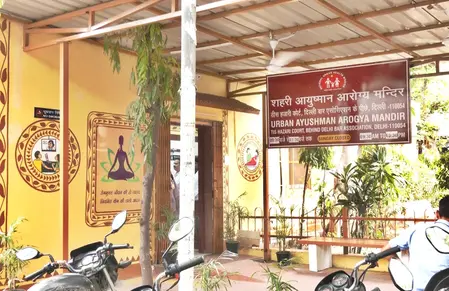
Ayushman Arogya Mandirs (AAMs): 17,788 Sub Health Centres without permanent structures are being upgraded into AAMs, while 11,024 Urban AAMs are coming up in underserved and slum areas to improve primary care delivery.
Block Public Health Units (BPHUs): 3,382 BPHUs are being established to strengthen block-level health management, supervision, and coordination.
Integrated District Public Health Labs (IPHLs): Each of India’s districts will soon have its own Integrated Public Health Laboratory, 730 IPHLs in total, for enhanced diagnostics, data collection, and disease surveillance.
Critical Care Hospital Blocks (CCBs): 602 new Critical Care Blocks are being built in districts with populations over five lakh to expand tertiary care capacity, ensuring timely treatment during outbreaks or medical crises.
Administrative approvals amounting to Rs 32,928.82 crore have already been granted to States and Union Territories, reflecting significant on-ground progress.
Investment in resilience and research
PM-ABHIM is not just about infrastructure; it is about future-proofing India’s health ecosystem. The mission promotes the One Health approach, acknowledging the deep interconnection between human, animal, and environmental health. This holistic framework is crucial in an era where zoonotic diseases (originating from animals) are on the rise.
The mission also promotes innovation and research through institutional strengthening, creating a platform for India to develop indigenous diagnostics, vaccines, and therapeutics—reducing dependency on foreign supplies during crises.
Synergy with national and global health agendas
PM-ABHIM complements and expands upon the National Health Policy (2017), which emphasised community-based healthcare and local participation in health planning. It also builds on the foundation of Ayushman Bharat (2018), a comprehensive initiative comprising four major components:
Pradhan Mantri Jan Aarogya Yojana (AB-PMJAY), India’s largest health insurance scheme;
Ayushman Arogya Mandirs (AAMs), providing comprehensive primary care;
Ayushman Bharat Digital Mission (ABDM), digitising health records and services;
Pradhan Mantri–Ayushman Bharat Health Infrastructure Mission (PM-ABHIM), the backbone of pandemic preparedness.
Together, these four pillars ensure a continuum of care from preventive to curative levels, anchored in accessibility and affordability.
Funding the future of health
Between FY 2021-22 and FY 2025-26, Rs 64,180 crore has been earmarked for the mission:
1. Rs 54,204.78 crore for the Centrally Sponsored Scheme (CSS) component, shared between the Centre, States, and the Fifteenth Finance Commission.
2. Rs 9,339.78 crore for the Central Sector (CS) component, dedicated to national-level research and surveillance initiatives.
This financial structure ensures both accountability and flexibility, enabling tailored implementation across States and Union Territories.
Aligning with WHO’s global pandemic preparedness goals
PM-ABHIM also resonates with global health frameworks. In May 2025, the World Health Organisation (WHO) adopted the Pandemic Agreement, aimed at equitable access to vaccines, diagnostics, and treatments during global health emergencies. The mission’s structure mirrors this approach, focusing on preparedness, coordination, and equity in response mechanisms.
It also strengthens India’s compliance with the International Health Regulations (IHR), which were amended to improve early outbreak detection and coordinated global response.
Advancing India’s commitment to Sustainable Development Goals
By reinforcing health infrastructure and surveillance, PM-ABHIM directly contributes to Sustainable Development Goal 3 (SDG-3), which envisions ending epidemics, achieving universal health coverage, and ensuring access to affordable healthcare by 2030.
With its multi-layered interventions, PM-ABHIM is not just a mission, it is a roadmap toward resilient health governance and global health leadership.
Four years on: A visible transformation
Four years into its implementation, PM-ABHIM has already begun reshaping India’s health landscape. From district hospitals equipped with new intensive care facilities to real-time surveillance labs detecting emerging infections, the mission’s progress reflects a major leap in India’s healthcare capacity.
The establishment of AAMs, BPHUs, and IPHLs has brought health services closer to citizens, while CCBs are ensuring that critical care is no longer confined to metropolitan hospitals.
As India aims for universal health coverage and preparedness against future pandemics, PM-ABHIM stands as a testament to the nation’s proactive and visionary approach. It integrates technology, community participation, and institutional strength, positioning India not just to respond to health crises, but to prevent them.
PM-ABHIM is more than a government initiative; it is India’s commitment to safeguarding the health of its 1.4 billion citizens against future pandemics. By weaving together policy, infrastructure, and innovation, the mission reflects a confident, self-reliant, and prepared India, ready to lead global efforts in pandemic resilience and equitable healthcare.
















Comments