





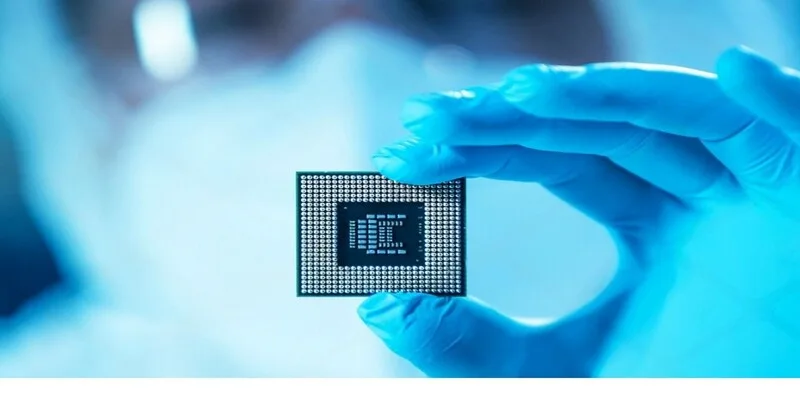
Union Minister for Electronics and IT, Ashwini Vaishnaw, announced on October 18, 2025 that India had made its indigenous 7-nanometre processor. It was India official joining of the world leading semiconductor design league. Ten years of unstoppable work from developing homegrown expertise to constructing open-source architecture and creating an ecosystem set to match the might of global technology powers.
India semiconductor journey has progressed steadily over the last decade. Under SHAKTI program, at IIT Madras the foundation for indigenous processor design took place. First initiated in 2013, SHAKTI was India first open-source processor design based on the RISC-V architecture, a framework that permitted free global usage and collaboration.
The adoption of RISC-V was strategic. Unlike architectures dominated by global giants, RISC-V offers openness, flexibility and independence. It gave Indian researchers, startups and chip designers the freedom to innovate without licensing barriers. Over time, SHAKTI medium-range open-source processors became a launchpad for Indian startups, enabling them to experiment, prototype and develop chips suited to various applications from embedded systems to high-end computing.
Strengthening the Ecosystem for 7nm Breakthrough
The indigenous 7nm processor being developed by IIT Madras, with the backing of the Ministry of Electronics and Information Technology (MeitY), with transition from capability to leadership. The size of transistors is 7 nanometres chips get exponentially faster and more power-efficient and can drive compute-intensive uses in AI, 5G, defence and supercomputing.
The 7nm chip is built for server-grade applications in communications, financial services and national security systems as per MeitY. This jump not just enhances India computational power but also reduces strategic vulnerability arising due to dependency on foreign semiconductors which is a major focus of the Aatmanirbhar Bharat (self-reliant India) vision.
The 7nm is one of the milestones of the larger India Semiconductor Mission (ISM), a Rs 76,000 crore flagship initiative announced to create an end-to-end semiconductor and display manufacturing ecosystem. Through this mission, the government has sanctioned 10 semiconductor projects spread across six states with over Rs 1.6 lakh crore in investment in institutes and PPP model.
Also, MeitY Design Linked Incentive (DLI) programme has provided financial and infrastructure assistance to more than 288 academic institutions and several hundred start-ups. These programmes connect academia and industry, making Indian designers not only as a consumer of technology but as an active participant in the worldwide chip value chain.
The impact of supporting ecosystem is visible, so far 24 chip design projects have been sanctioned under ISM and 87 companies are already using advanced electronic design automation (EDA) tools through government-supported programmes. These efforts are gradually positioning India as a trusted partner in global semiconductor supply chains, especially as geopolitical shifts drive companies to diversify beyond East Asia.
Why 7nm processor Matters
The significance of the 7nm processor is that it marks India entry into advanced node semiconductor research and design. In the world, there are very few countries that have achieved or exceeded this level of technological advancement, including the United States, Taiwan, South Korea and Japan.
Smaller nodes provide more transistors in the same chip space, resulting in quicker computation as well as reduced power consumption. The expertise in this technology is essential for its digital sovereignty especially a demand for chips in defence electronics, telecommunication and artificial intelligence continues to grow.
The decision of integrating India Digital India vision with different programmes supported by Government of India to develop supercomputing, AI and IoT ecosystem. As industries are designing from smart cities to autonomous driving grow, locally developed high-performance chips can drive innovation while maintaining sensitive data and infrastructure within domestic borders.
Building from Design to Fabrication
India advancement in chip design is lesson for developing nations, the next step would be fabrication or constructing semiconductor fabs that can make chips locally. At present chips designed in India are still being made in countries such as Taiwan or the United States.
To fill this void, the Semicon India Programme was formed in 2022, it has been actively trying to encourage international producers to establish fabs in India. By 2025, several billion dollars of proposals have been submitted, including tie-ups with Micron Technology, Tata Electronics and IGSS Ventures. The Micron Semiconductor Assembly and Test plant in Gujarat, is India first big-sized semiconductor packaging factory, set to generate more than 5,000 direct and 15,000 indirect jobs once operational at full capacity.
The government Production Linked Incentive (PLI) Scheme for Large Scale Electronics Manufacturing has already triggered significant investments by companies such as Foxconn, Dixon and Vedanta in electronics and display manufacturing. These developments are building the foundation for a full value chain from design and fabrication to testing and packaging.
Talent and Research Backbone Building a Self-Reliant Future
India is emerging as a center of semiconductor design with its large pool of engineering talent. With almost 20% of the globe chip design engineers in India, the nation already contributes to global design of chips for use in smartphones, cars and data centers. Large R&D facilities of multinationals such as Qualcomm, Intel and AMD are in Bengaluru, Hyderabad and Noida in partnerships with Indian academia and startups.
Government initiatives such as the Chips to Startup (C2S) initiative target skilling 85,000 engineers in semiconductor design and embedded system development. This upskilling keeps India’s institutions at the forefront of research domains such as EDA tools, photonics and materials science.
The indigenous 7nm chip is not just a demonstration of technical capability, it is a show of work efficiency. It is an indicator of a policy-driven merger of innovation, collaboration and intent. With help of open architectures, encouraging private-sector participation and building strong academic collaborations, India is establishing a strong and competitively positioned semiconductor ecosystem.
Over the next few years, the spotlight will be on sub-7nm nodes, leading-edge chip testing and packaging and the development of semiconductor clusters integrated with electronics manufacturing parks. These clusters will provide chips of lower costs and positions India as a globally competitive destination for semiconductor investment.
Road Ahead of Processors
As Minister Vaishnaw explained when making the announcement, “India will make chips in India for the world”. The 7nm project is a stepping stone to India’s vision of technological sovereignty where innovation is not only consumed but produced locally.
With consistent policy push, world-leading research and growing talent pool, India is ready to shift from being the back office of chip designing to a frontier center of semiconductor innovation. With global demand for chips heating up in the age of AI-led transformation, India’s moment could not have been better.
From the original SHAKTI processor to the advanced 7nm chip, India semiconductor success echoes the nation transition from technology imitator to technology innovator. Driven by the India Semiconductor Mission, Digital India vision and Atmanirbhar Bharat resolution, this success shows how strategic investment and open partnership can power national advancement.
The 7nm milestone is not an ending-but the beginning of India semiconductor age, where innovation, researchs and self-reliance conjoin to transform the nation into a world player of the chip revolution.
















Comments