





Pakistan DNA is ingrained with a commitment to unleash terror atrocities in its neighbouring countries. Its repeated violations of sovereignty and territorial integrity in adjacent nations have rendered huge cost to Islamabad itself. The nation is entangled in poverty, economic crisis, completely disoriented domestic landscape and chaotic political instability. Yet it seems Pakistan doesn’t learn its due share of lessons.
In the aftermath of the horrific Pahalgam terror attack stimulated by Pakistan, India decided to keep the Indus Water Treaty in abeyance. Prime Minister Narendra Modi asserted that “blood and water cannot flow together”. With this, the water flow to Pakistan is completely regulated as per the necessities of India. The decisions of India are not bound to be answered to Pakistan. Keeping Indus Water treaty in abeyance thus can create water chaos in Pakistan with uninformed or unanticipated or untimely floods and droughts. But, the terror state is just paying the price for its inhuman actions in Kashmir.
In lines with India’s decision, Afghanistan is also now considering to control the water flow to Pakistan. This comes in the wake of increased cross-border conflict between Kabul and Islamabad and Pakistan’s atrocities in Afghanistan. According to the Information Ministry of Afghanistan, the Taliban-led government is planning to construct a dam and thereby restrict the water flow to Pakistan. The supreme leader of Afghanistan Mawlawi Hibatullah Akhundzada reiterated that they are considering building a dam across River Kunar “as fast as possible”. Thus, Kabul aims to assert its “right to water”.
In this direction, swift discussions are underway with the domestic companies to ink the contract for dam construction, Muhajer Farahi, the Deputy Minister of Information in Afghanistan wrote on the X social media platform. It is also learned that the supreme leader of Afghanistan has instructed to rapidly sign the contract for the dam construction with domestic companies, instead of waiting for the foreign firms.
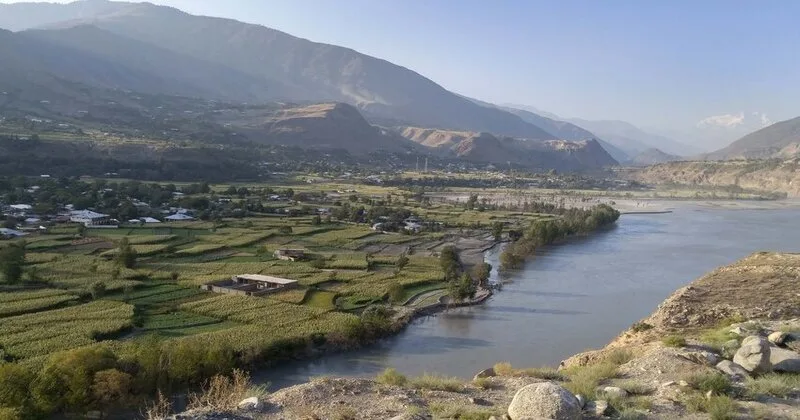
The 480 km long Kunar River takes birth in the Hindu Kush Mountains, which is close to Pakistan border. The river enters Pakistan through the province of Khyber Pakhtunkhwa. In Pakistan Kunar river is called as Chitral River. Apparently, this river is a long-standing flashpoint between Pakistan and Afghanistan. Since taking over of the administration in Kabul, the Taliban government has prioritized its sovereignty over rivers and hydropower. This decision comes to seek self-reliance in energy sector, agriculture and irrigation and thus reducing dependence on neighbouring countries.
Incidentally, unlike India and Pakistan, Islamabad and Kabul doesn’t have any bilateral river water sharing mechanism or treaty. Thus, it will be much easier for Afghanistan to take unilateral decision. However, the latest assertion by Kabul will indeed create a multi-front water hustle in Pakistan. A state hitherto entangled in the economic crisis and political instability is set to suffer from water tussle, because of its misadventure and terror atrocities.
















Comments