





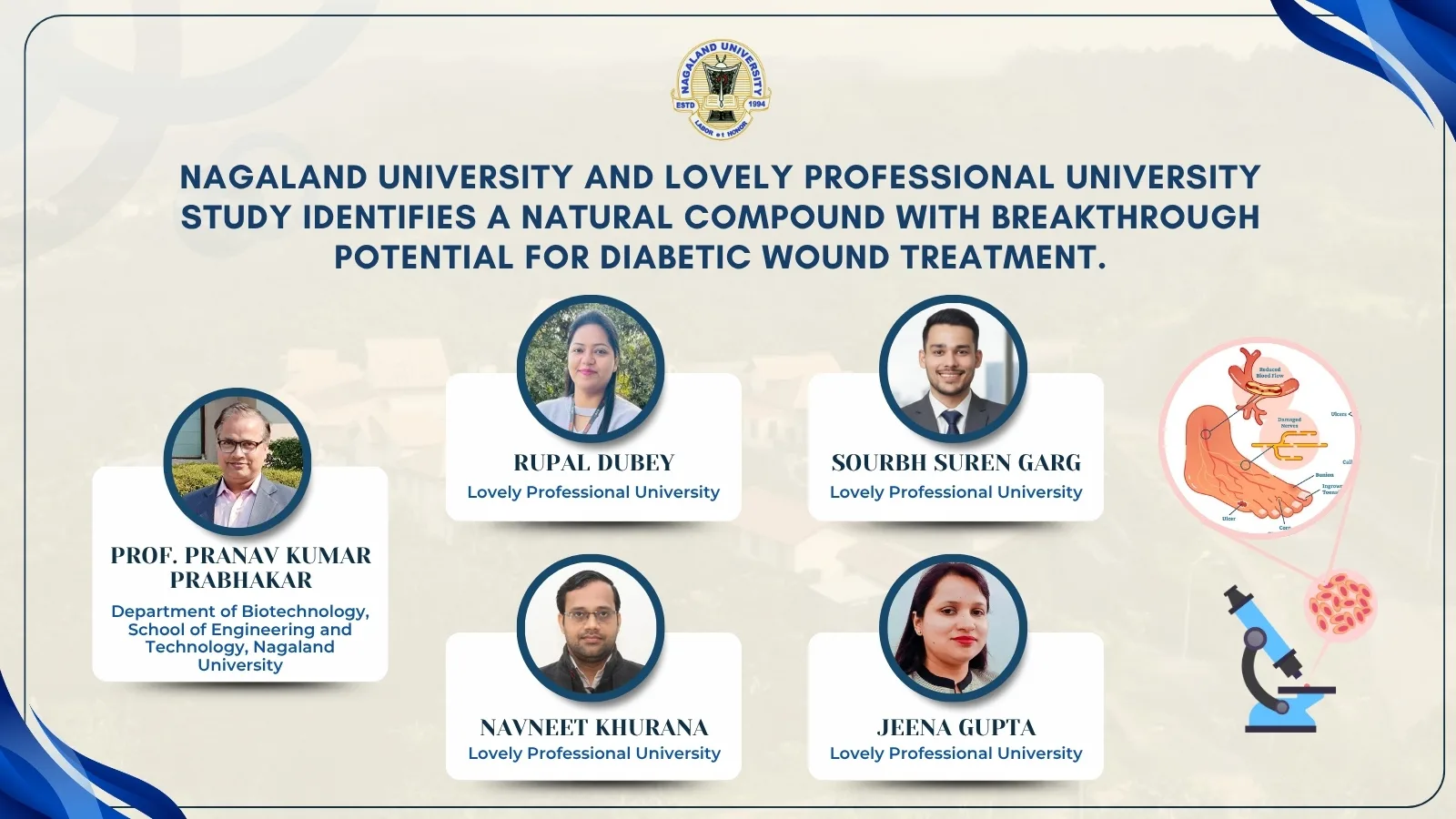
Nagaland University researchers have identified Sinapic acid, a natural compound found in edible plants, as a powerful agent that accelerates wound healing in diabetics, marking a global first in oral therapeutic discovery.
The study, published in Nature Scientific Reports (Springer Nature), revealed that Sinapic acid activates the SIRT1 pathway, promoting tissue repair, blood vessel growth, and inflammation control. Researchers found that a lower dose (20 mg/kg) worked better than a higher one, a rare “inverted dose-response”, paving the way for more precise and safer treatments.
Led by Prof. Pranav Kumar Prabhakar of Nagaland University, the study involved collaboration with Lovely Professional University (LPU), Punjab. Prof. Jagadish K. Patnaik, Vice Chancellor of Nagaland University, said the discovery underscores India’s potential in “solving global health challenges through innovation rooted in nature.”
Researchers are now developing a patentable oral formulation using Sinapic acid for low-cost, scalable diabetic wound therapy.
Why It Matters
Could reduce diabetic amputations by speeding up healing.
Offers an affordable, natural oral therapy for rural and resource-limited settings.
Aligns with Bharat’s traditional medicine and nutraceutical innovation goals.
Next steps include toxicity profiling, capsule formulation, and pilot clinical trials to validate safety and efficacy.
“This could change how diabetic wounds are treated — from costly synthetic drugs to safe, natural, plant-based medicine,” said Prof. Prabhakar.
Nagaland University Study identifies natural compound with breakthrough potential for Diabetic Wound treatment
The study, published in Nature Scientific Reports (Nature Portfolio), opens up new possibilities for affordable & natural diabetic therapies as it identifies Sinapic acid, a plant-based compound, that accelerates diabetic wound healing
This could potentially pave the way for affordable, sustainable oral therapeutics and reduce amputation risks worldwide
This is the first study globally to demonstrate that Sinapic acid, when administered orally, can accelerate diabetic wound healing in preclinical models















Comments