





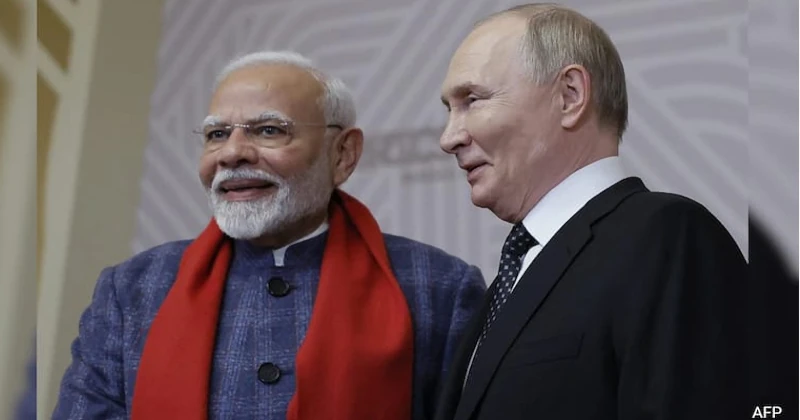
Amid US President Donald Trump’s repeated claims that India will completely stop importing Russian oil, New Delhi is moving in the opposite direction by strengthening its industrial and energy ties with Moscow. Defying Trump’s assertions, India has significantly increased its imports of Russian crude oil. From 1.6 million barrels per day in September, India’s purchases have risen to 2 million barrels per day this month.
According to market researcher Kpler, Russia continues to be India’s top oil supplier in October. India imported 1.01 million barrels per day from Iraq, which ranks second, while Saudi Arabia secured third place with 830,000 barrels per day. The United States has overtaken the UAE to become India’s fourth-largest oil supplier, sending 694,000 barrels per day compared to the UAE’s 394,000 barrels. The development comes amid escalating tensions between Washington and Moscow. President Trump has criticised Russian President Vladimir Putin for refusing to agree to a ceasefire in Ukraine and has announced sanctions on two major Russian oil companies to restrict the Kremlin’s war financing. Additionally, Trump imposed a 25 per cent tariff on Indian imports of Russian oil in an attempt to pressure New Delhi to reduce its energy dependence on Moscow.
However, India’s latest moves indicate that the tariff and sanctions have not deterred its cooperation with Russia. Instead, India is expanding its partnership beyond oil, with plans to set up a urea manufacturing plant in ammonia-rich Russia to secure fertilizer supplies. An official announcement is expected during President Putin’s scheduled visit to India in December. The decision comes against the backdrop of China imposing restrictions on fertilizer exports, which affected India’s Kharif season and worsened the fertilizer shortage across the country. By establishing a plant in Russia, India aims to ensure steady access to ammonia and natural gas, key raw materials for urea production, which are currently in short supply domestically.
State-run fertilizer companies such as Rashtriya Chemicals and Fertilizers (RCF), National Fertilizers Limited (NFL), and Indian Potash Limited (IPL) are reportedly leading the project. The proposed plant is expected to provide a long-term solution to India’s dependence on imported raw materials for fertilizer production. India’s urea output is projected to surpass 30 million tonnes by 2024, supported by six new fertilizer plants commissioned across the country in recent years. The government also plans to set up a new facility in Assam at a cost of ₹10,601 crore to boost fertilizer availability in the eastern region.
Despite being the world’s third-largest fertilizer producer and the second-largest consumer, India continues to grapple with raw material shortages and price fluctuations. The upcoming plant in Russia is expected to stabilise fertilizer supply and strengthen India’s agricultural sector amid growing global uncertainties.















Comments