





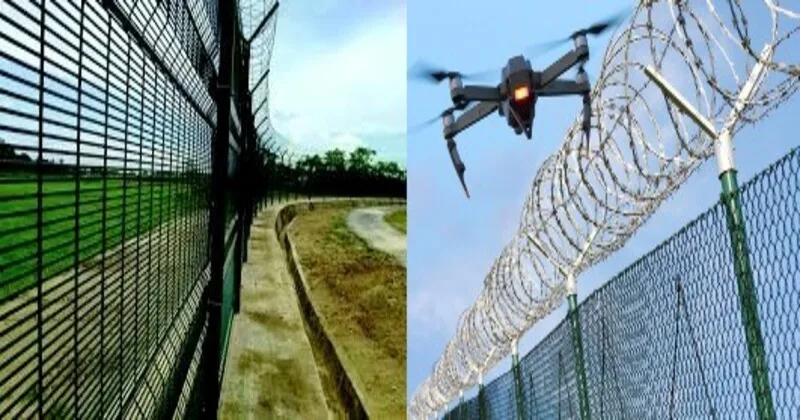
First ceasefire was declared through UNSC Resolution 211 between India and Pakistan. The ceasefire paid a heavy price in lives and in fragile peace. That memory still matters because it teaches us what a state must preserve, the safety of its people and the integrity of its borders. Six decades later India approaches border security very differently. The strategy now blends infrastructure and local development with sensors, drones, satellites and a growing domestic or Aatmanirbhar defence industry. It is a layered system designed to deter, detect and act before escalation of enemy becomes inevitable.
The scale of the problem
India land border stretches about 15,100 kilometres. The India-Pakistan border itself is roughly 3,323 kilometres long and covers deserts, plains and towns. A single tool cannot secure such varied ground. The border between India and China is 3,488 kilometres (2,167 miles) long and runs through several Indian states. The border between India and Bangladesh is 4,096 kilometres (2,545 miles) long, making it the longest land border India shares with any neighbour, this border is undisputed. But one has to prepare as of Geopolitics is changing at fast pace.
The modern approach combines four strands such as mobility, surveillance, local development and indigenous defence production. The Ministry of Home Affairs has framed this in its Comprehensive Integrated Border Management System that seeks to integrate manpower, sensors, networks, intelligence and command control.
Hard infrastructure and mobility with Sensors, satellites and Drones
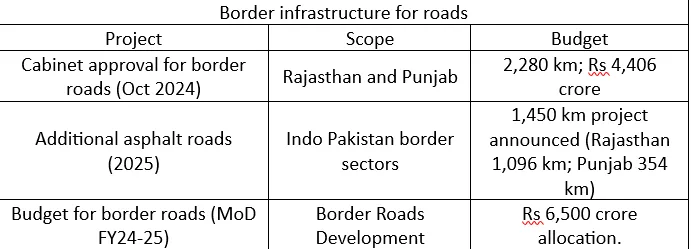
Physical connectivity remains foundational. In October 2024 the Union Cabinet approved construction of 2,280 kilometres of roads in Rajasthan and Punjab at an outlay of Rs 4,406 crore to improve movement and logistics in border areas. In early 2025 the government approved a further project to lay 1,450 kilometres of asphalt roads along key sectors of the India Pakistan border with work targeted at districts such as Barmer, Jaisalmer and Bikaner. These roads shorten response times for patrols, reduce logistical friction and extend the state’s presence to remote villages.
India uses a mix of ground sensors, radar, aerial surveillance and space assets. The RISAT family of radar imaging satellites gives synthetic aperture radar capability that works day and night and penetrates cloud cover. These satellites supply wide area, all weather imagery that support drones and ground sensors for detecting suspicious movement across difficult terrain. The government is expanding radar remote sensing capacity with new launches such as EOS-09 (RISAT-class) to add up the surveillance system.
Drones are now integral part India defence. In 2024 the United States approved a sale of 31 MQ-9B Sky Guardian drones to India in a deal worth nearly $4 billion. These long endurance platforms offer persistent coverage of maritime and sensitive border regions and are being procured alongside indigenous tactical unmanned systems and counter-drone measures developed by Indian agencies.
Data integration and command systems
Technology only helps when it is fused into operations. The Comprehensive Integrated Border Management System aims to bring every layer of border security together on one platform. It connects fence sensors, drone cameras, satellite images, ground reports and human intelligence into a single, clear view for those who make decisions on the ground. Experts and defence planners believe that success will depend on how agencies share information and how responsibilities are defined. When the system works in harmony, it cuts down on false alerts and helps the forces respond quickly and accurately. This means better safety for people living near the borders and less room for smugglers or hostile elements to move undetected.
Security is not only about fences and radars. It is also about state presence and livelihoods. The Border Area Development Programme and recent connectivity investments are meant to deliver roads, schools and health services to frontier communities. When villagers have secure incomes and better services, they are less vulnerable to the coercive tactics of cross-border criminal networks. This is a strategic approach of Vibrant Villages Programme aligned with the present government emphasis on infrastructure and welfare in sensitive districts. The move has been taken to counter the Chinese ‘model villages’ close to the LAC.
Make in India and the Swadeshi defence push
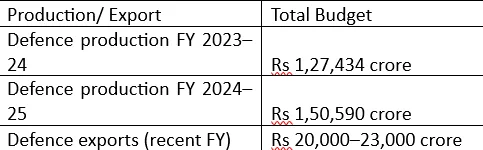
A truly resilient border posture must be backed by domestic defence capability. India’s Make in India defence drive is showing measurable results. Defence production rose to Rs 1.27 lakh crore in FY 2023–24 and reached Rs 1.50 lakh crore in FY 2024–25, a sharp rise from under Rs 50,000 crore a decade earlier. Defence exports have also grown, crossing the Rs 20,000 crore mark in recent years. The government has published positive indigenisation lists covering hundreds of items to prioritise local manufacture and reduce imports. These steps make procurement faster and deepen local industrial capacity for spares and maintenance which is crucial in sustained deployments along borders.
What Still Needs Steady Work
The government has been moving steadily in the right direction and that commitment is visible across every level of action. Yet, some tasks demand steady focus and time. The most important challenge ahead is to bring all our defence systems together in a way that they work as one living network. Information coming from satellites and drones must lead quickly to clear action for the soldiers on the ground. India has already started setting up counter-drone systems in sensitive regions, but more such installations are needed across the entire border. Local forces also need regular training in using these modern tools so that technology becomes a natural part of daily security practice. What matters equally is coordination among all security agencies.
The Army, BSF, ITBP and intelligence units must work together with clear communication and common protocols. Strong budgetary support will also be necessary so that our roads, border infrastructure, sensors and defence production continue to grow with new challenges. The direction is right and the progress is steady, but the journey requires patience, consistency and teamwork.
What are the Other Initiatives to Secure Borders?
The Border Area Development Programme (BADP):
BADP was launched in border regions of the western sector during the Seventh Five Year Plan (1985-90) for the purpose of balanced development of border areas by developing the infrastructure and generating a sense of security among the border population. The scheme is to address the unique development requirements of the population inhabiting far-flung and inaccessible areas located along the international border.
Smart Fencing in India (CIBMS):
Two pilot projects along approximately 71 Kms on Indo-Pakistan Border (10 Kms) and Indo-Bangladesh Border (61 Kms) of Comprehensive Integrated Border Management System (CIBMS) have been undertaken.
CIBMS entails the use of sophisticated surveillance tools like thermal imagers, infra-red and laser alarms, aerostats, ground sensors, radars, sonar systems, fiber-optic sensors and a real-time command and control system for border protection. BOLD-QIT (Border Electronically Dominated QRT Interception Technique) under CIBMS on Indo-Bangladesh border in Assam’s Dhubri district is also in use.
The first UNSC Resolution 211 ceasefire stands as a reminder that constant readiness and unity can prevent conflict and protect peace. The lesson from that time is clear. When a nation stays prepared, it does not have to fight to win. India’s present border strategy reflects this wisdom. Roads, bridges and welfare projects move side by side with radar satellites, drones and a fast-growing defence industry shaped by the Make in India mission. This steady progress shows the strength of a confident Bharat that values its past and learns from it. A nation that builds its security through its own effort not only safeguards its land but also creates lasting peace for the generations to come.
















Comments