





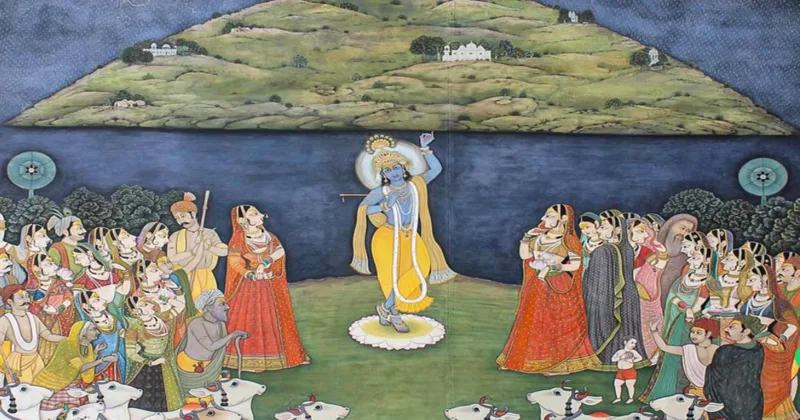
As the lamps of Diwali slowly fade, India welcomes another sacred day filled with devotion and meaning, Govardhan Puja, also known as Annakut. This year, Govardhan Puja will be celebrated on October 21, 2025, a day that is dedicated to expressing gratitude towards nature and celebrating the bond between humans, animals, and the environment. The origin of Govardhan Puja lies in the life of Bhagwan Krishna.
According to Hindu scriptures, the people of Gokul used to worship Bhagwan Indra, the god of rain, to ensure good harvests. But Krishna questioned this practice, urging the villagers to worship Govardhan Hill instead, as it symbolized nature’s nurturing power, providing them with fertile land, trees, rivers, and cattle. Angered by this, Bhagwan Indra unleashed heavy rains upon Gokul. To protect the villagers and animals, Krishna lifted Govardhan Hill on his little finger and held it up like an umbrella for seven days. When Indra realized his mistake, he stopped the rain and sought forgiveness. Since then, devotees have worshipped Govardhan Hill to honor nature’s generosity and Bhagwan Krishna’s compassion.
One of the most beautiful traditions of Govardhan Puja is Annakut, meaning “mountain of food.” Devotees prepare a grand feast including sweets, vegetables, rice, and chapatis and offer it to Bhagwan Krishna as a mark of gratitude. The offerings are arranged in a mountain-like form to represent Govardhan Hill and are later shared as prasad among family and friends.
Temples across India, especially in Mathura, Vrindavan, and Nathdwara, witness magnificent displays of Annakut, where hundreds of food items are offered to the deity. At home, people make small hills out of cow dung, decorate them with flowers and leaves, and perform puja with devotion, symbolizing their respect for nature and cattle.
A Festival of Nature and Gratitude
Beyond its mythological significance, Govardhan Puja conveys an extremely timeless message i.e. to live in harmony with nature. It teaches that both prosperity and happiness depend on maintaining balance with the environment. The festival also encourages people to be thankful for the gifts of the earth i.e. soil, water, air, vegetation, and animals that sustain all life.
In modern times, as concerns about pollution and climate change grow, Govardhan Puja reminds everyone to protect natural resources. Many families now celebrate it in eco-friendly ways, avoiding plastic, planting trees, using natural materials, and conserving water. The festival beautifully connects spirituality with sustainability.
In North India, devotees perform Govardhan Parikrama, a sacred walk around Govardhan Hill in Mathura district, Uttar Pradesh. The parikrama covers about 21 kilometers and is done with great devotion as devotees chant hymns and sing songs in praise of Bhagwan Krishna.
In Maharashtra and Gujarat, the day also marks the beginning of the new financial year for many traders. Farmers and businessmen offer prayers for good fortune and prosperity. In South India, the day coincides with Bali Pratipada or Bali Padva, which celebrates Bhagwan Vishnu’s victory in his Vamana avatar.
Though traditions vary from region to region, the underlying message remains the same, thankfulness for life and nature’s abundance.
Govardhan Puja in Today’s India
In recent years, the celebration of Govardhan Puja has taken on new meaning as India moves toward environmental awareness and sustainable living. Government initiatives and local community drives encourage citizens to plant trees celebrate festivals in harmony with nature.
The Indian government is also focusing on eco-friendly and cow-based initiatives that resonate with the true spirit of Govardhan Puja. Its efforts to encourage organic farming, use of natural fertilizers, and revival of traditional cow-related industries highlight the same principles of environmental respect and self-reliance that this festival celebrates.
At its core, Govardhan Puja is a celebration of faith, humility, and gratitude. It teaches that we must not take nature for granted but cherish and protect it. The story of Bhagwan Krishna lifting the Govardhan Hill stands as a reminder that true strength lies in compassion and unity, not arrogance or power.
As India celebrates Govardhan Puja on October 21, 2025, homes and temples will fill with devotion, laughter, and the aroma of freshly prepared food. The festival will once again remind people of their sacred duty to thank the Earth, nurture it, and live in balance with its rhythms. In essence, Govardhan Puja is a timeless lesson in gratitude, sustainability, and harmony with nature.















Comments