





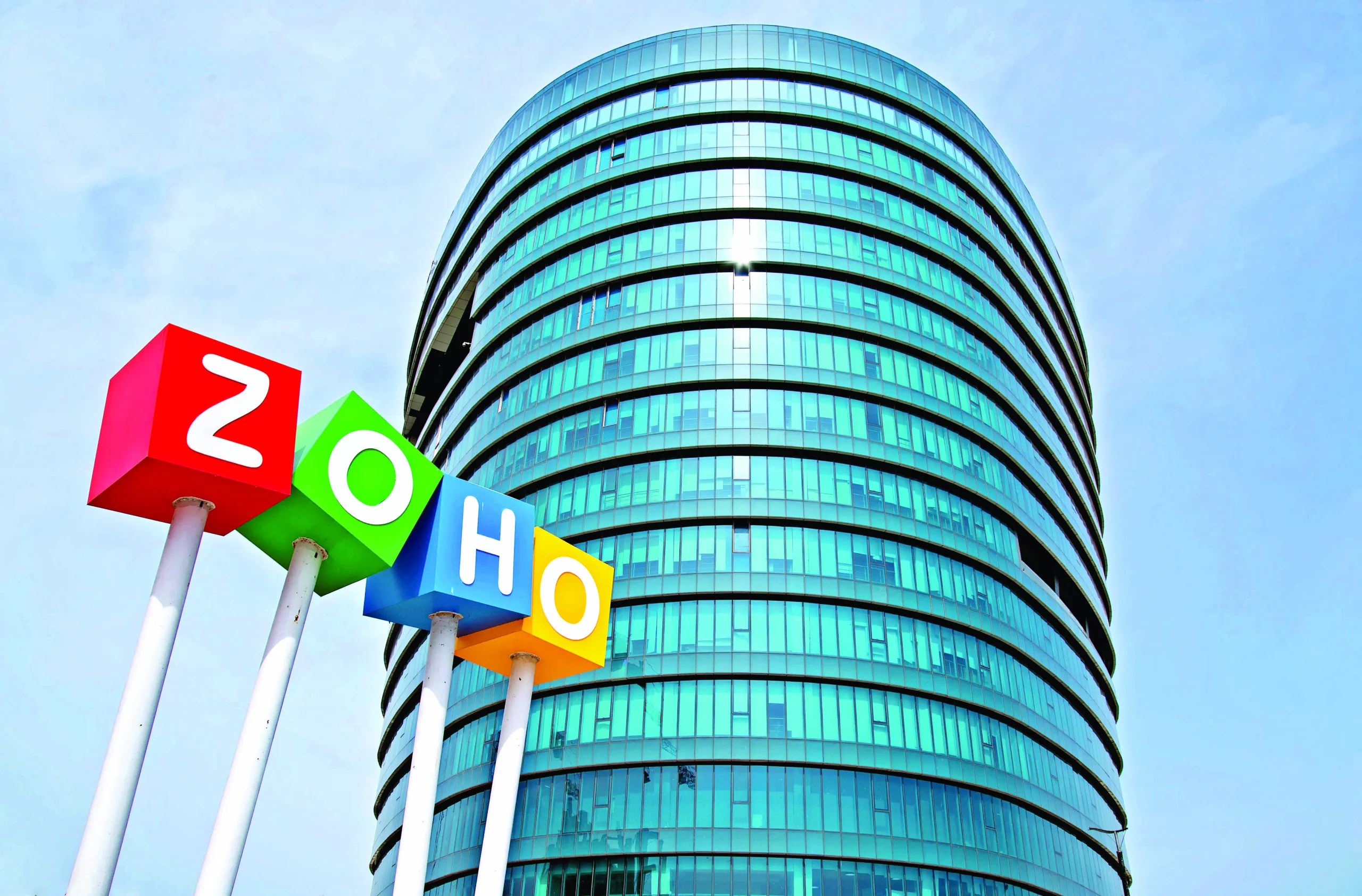
While Silicon Valley having venture-backed start-ups was dominating this world, a southern Bharatiya company with Swadeshi in thought has emerged to global stature with no fanfare, no venture capital and no pushy marketing.
Zoho Corporation, established in 1996 by Sridhar Vembu and Tony Thomas, has forged a distinctive brand that converges frugal innovation, robust values and profound responsibility to society.
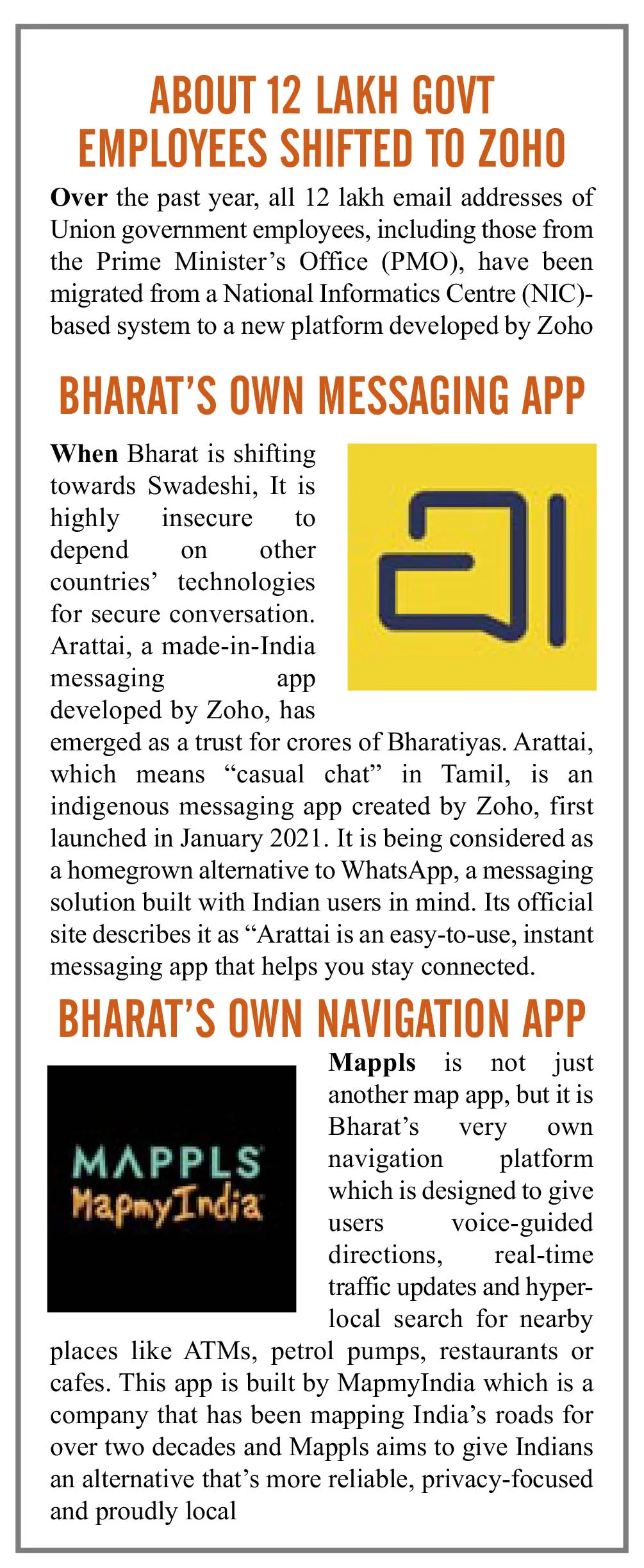
Today, Zoho is a global SaaS leader with more than 100 million users in 150+ countries, yet it remains very “Swadeshi” in thought, action and philosophy. This is the tale of Zoho — a company that demonstrates that it is possible to create world-class software from Bharat founded on Bharatiya values. Government bodies are now opting and embedding Zoho software in their offices.
The Birth of a Swadeshi Tech Company
Zoho started as AdventNet Inc in 1996 in Pleasanton, California. Vembu harboured the aspiration of creating technology instead of merely exporting skills. Initially, AdventNet concentrated on solutions for network management, but in the mid-2000s, it made a big move to cloud software.
The firm rebranded as Zoho Corporation in 2009 and slowly branched out its product set to a complete suite of business and productivity applications from email, customer relationship management (CRM) and accounting software to project management, analytics and AI-powered tools.
What gives Zoho an edge is its scope and integration. It has 60+ integrated apps within one platform, enabling a small business to be run completely on Zoho’s ecosystem. This vision of a cost-effective, end-to-end digital office has been appealing to startups, SMEs and even big firms across the globe.
Made in India for the World
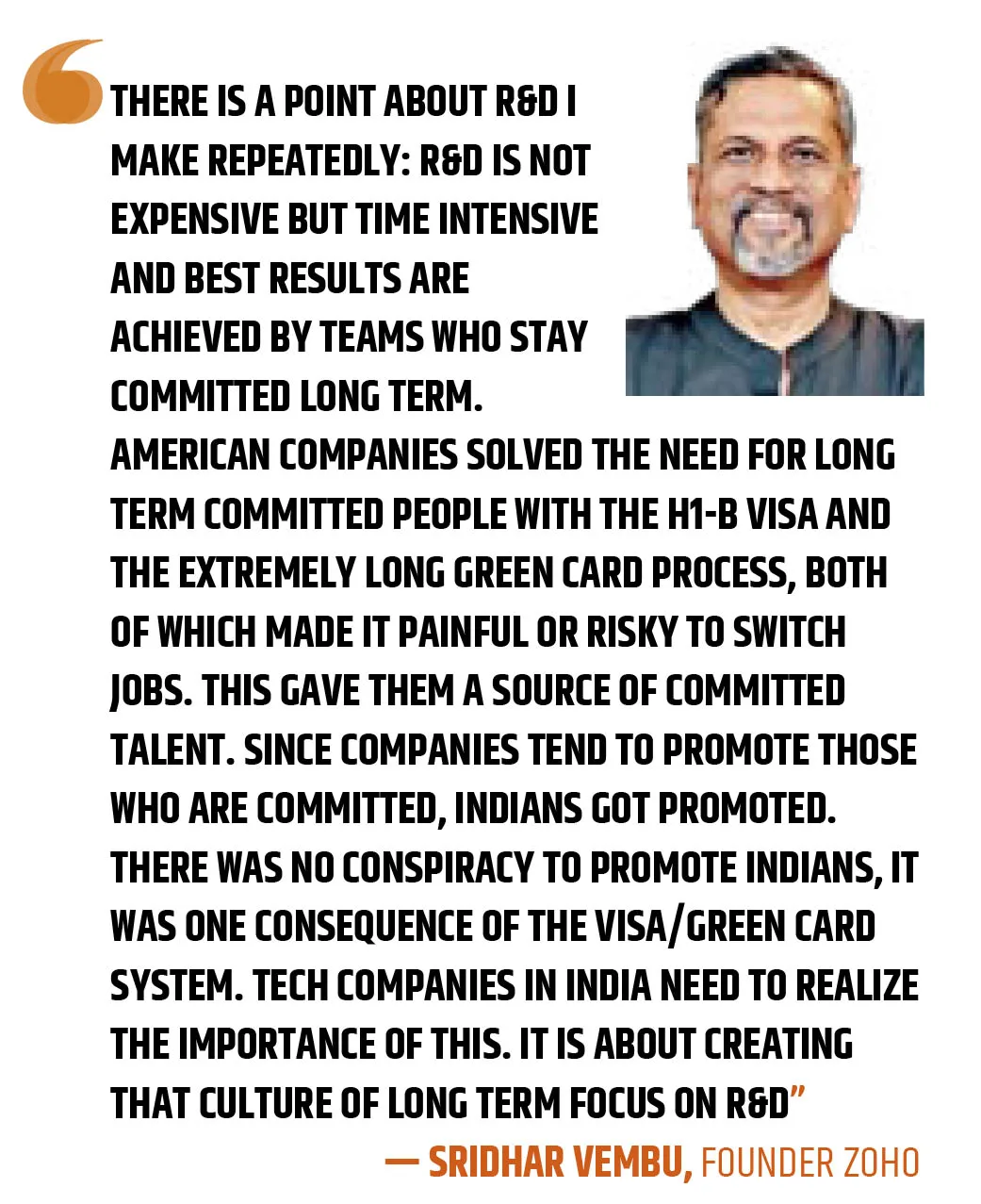
While most Bharatiya IT companies rely heavily on outsourcing models, Zoho develops all of its products in-house. Chennai, Tenkasi and other small towns in rural Bharat are the powerhouses of innovation through its R&D centers. A staff of more than 10,000, the majority of whom were trained from the ground up by the company, work on developing software that takes on American and European competitors head-to-head.
Rural area revival
Zoho’s “Swadeshi” commitment extends beyond software. Vembu moved to Tenkasi, a small town in the countryside of Tamil Nadu, and established a rural office. This defied the popular perception that world-class software needs metro offices and upscale campuses. Zoho currently operates several rural centers, hiring local youth, training them and turning urban migration on its head.
Self-Reliance
Zoho has expanded organically without taking a single rupee in external funding. This freedom enables the company to remain consistent with its purpose without being coerced by investors into generating short-term gains. By doing so, Zoho has redefined what it is to be Swadeshi not only Bharatiya-owned.
Goal is to Democratise Software Access
The vision of Zoho is to bring world-class software to everyone. Enterprise software has long been under the purview of major companies that could pay the high licensing costs and go through lengthy implementation procedures. Small and medium-sized businesses frequently lagged behind. Zoho saw this void and built its solutions with affordability and accessibility as the foundation.
Zoho is not merely distinct in what it creates but also in the way it functions. It is privately owned and does not have any plans of becoming otherwise
Its business model is entirely different from international competitors. For instance, Zoho CRM is offered at merely a fraction of Salesforce subscription costs. It also launched “Zoho One,” a suite of everything ranging from HR to accounting, offered in a manner that any startup can readily embrace.
Zoho even provides numerous tools to universities and schools, either gratis or at a low cost, allowing them to adopt digital transformation without breaking the bank. By reducing the barriers of cost, it enables small companies, particularly in developing countries, to compete internationally.
Security and Privacy
In a world where data privacy scandals make headlines, Zoho’s attitude towards security is very strong. Unlike most tech firms that live and breathe data monetisation, Zoho has adopted a no-ads, no-surveillance approach.
- No Ad Revenue from Third Parties: Zoho does not monetise its customers data through advertising or selling their information.
- In-House Data Centers: Zoho operates its own data centers in various regions with complete infrastructure control and less reliance on third-party cloud vendors like AWS, Microsoft Azure or Google Cloud.
- Data Sovereignty: Zoho believes in offering customers ownership of their data. This is especially appealing in data-protected regions where strong legislation exists.
By being a privacy-first business, Zoho attracts companies concerned about Big Tech surveillance capitalism.
Zoho is not merely distinct in what it creates but also in the way it functions. It is privately owned and does not have any plans of becoming otherwise
A Business based on Philosophy
Zoho is not merely distinct in what it creates but also in the way it functions. It is privately owned and does not have any plans of becoming otherwise. It has the liberty to focus on customers and employee well-being rather than shareholder value because of this independence.
Rather than investing millions in glitzy advertising campaigns like other Silicon Valley startups, Zoho is frugal and counts on engineering prowess and word-of-mouth marketing. Its development has been organic, gradually based on trust and dependability. It also goes for a long-term strategy by heavily investing in research and development, working on product innovation. Equally significant is its people-focused culture. Zoho hires much of its talent from rural locations and develops them through its own programme, the Zoho Schools of Learning. Not only does this create an educated and loyal employee base but also brings employees close to the bigger purpose of inclusive growth and self-reliance of the company.
Rural Revolution and Global Recognition
One of the most revolutionary contributions is its rural economic rejuvenation push. According to Vembu, there is no reason technology and opportunity have to be restricted to cities. By opening offices in Tenkasi and other rural towns, Zoho has:
- Provided jobs that stop rural-to-urban migration
- Introduced world-class infrastructure (internet, training, employment) to under-served areas
- Encouraged other firms to think about decentralised growth models
This rural-first strategy makes Zoho not only a tech tale, but a social revolution that redraws development.
While intensely Bharatiya in its origins, Zoho is far from a local company. With offices in Chennai and Austin (Texas), Zoho has built a robust global presence. Now, it caters to customers across healthcare, education, finance, retail, manufacturing and government industries across the globe. Affordability, integration and reliability are the three strengths of Zoho. With a broad base of customers, Zoho demonstrates that Swadeshi equals participating in the digital global economy in one’s own way.
Perhaps the greatest challenge for the company lies in fierce competition, as multinational conglomerates such as Microsoft, Google and Salesforce have much larger resources and stronger brand identity.
The other challenge is retaining talent. While Zoho business model of hiring employees from scratch is to be lauded, replicating this model across markets globally can be challenging. There is even a perception bias in the market that may deter major companies from opting for software from a non-US brand, even after establishing its credibility and dependability. The tech landscape is changing at a fast pace and advancement in artificial intelligence, blockchain and even quantum computing are transforming industries with a speed unparalleled in history. Zoho has to keep pace with these changes without compromising on its long-term vision.
















Comments