





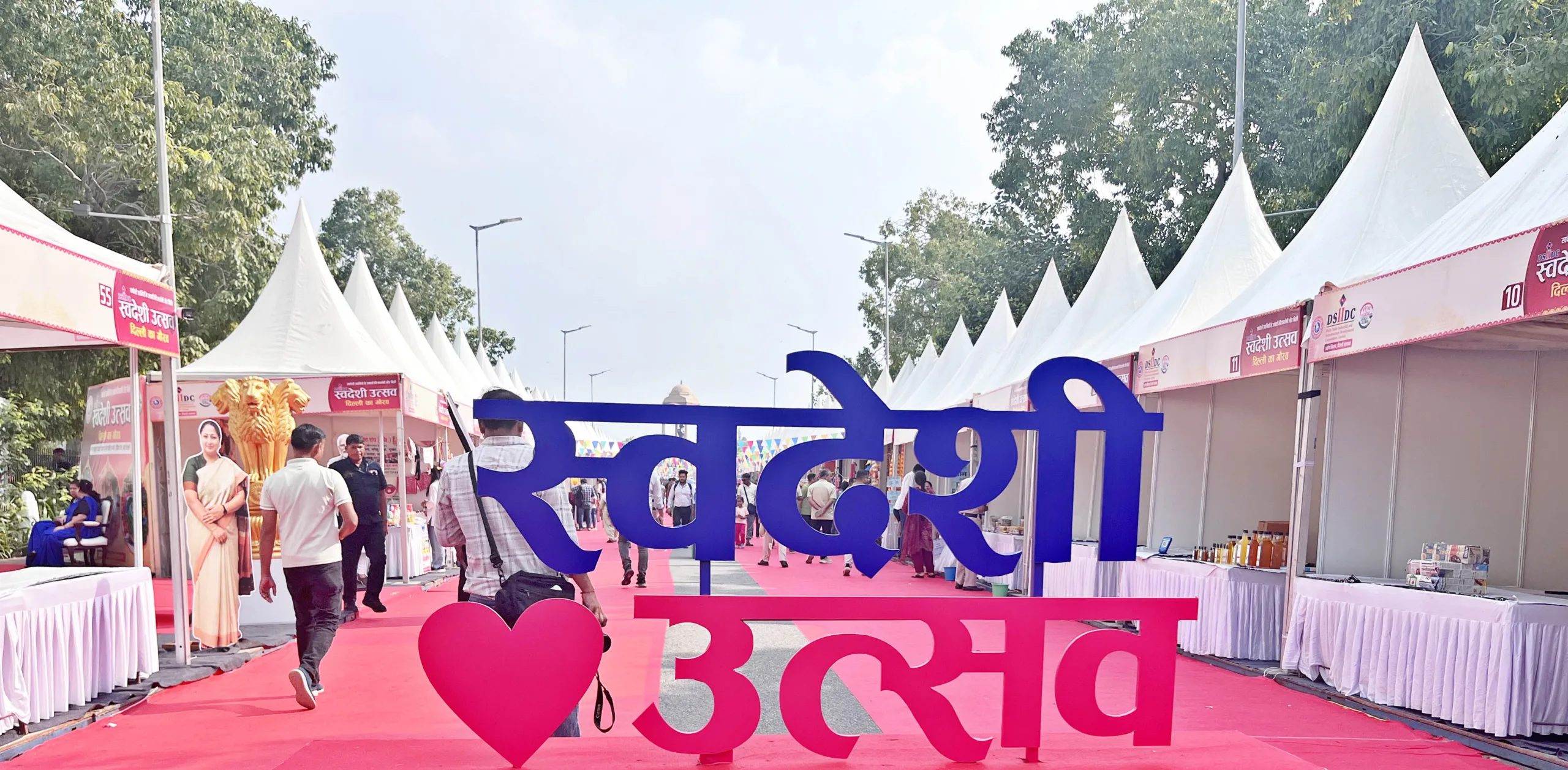
A head of colourful Deepawali, ‘Swadeshi Utsav 2025,’ held at Kartavya Path, New Delhi from October 9 to 11, brought alive unique handmade and indigenous products of various States and Union Territories. At this event, tradition and hard work harmoniously blended with innovation to highlight India’s growing self-reliance by showcasing handlooms with a modern twist.
The three-day event was productively utilised by local artisans, entrepreneurs, and self-help groups (SHG) to gain visibility, achieve economic empowerment and proudly promote their indigenous products to global markets.

The venue was excellently used as a platform to display talent of artisans, MSME businesses and SHG’s from across the country. Each stall was put up in an aesthetic way as the ‘Mela’ was aimed at promoting the concept of Swadeshi, encouraging the people to opt for locally made goods and support homegrown industries. The event featured over 50 stalls offering a range of products from handicrafts and traditional fabrics to kitchen products and jewellery.
Diversity and Creativity Galore
Amongst the most visited stalls was the Kanta Designer Fabrics, which exhibited an exquisite collection of traditional Indian suits made entirely from locally produced fabrics. Expressing his satisfaction with the event, owner Arpan Aggarwal said, “This was our first experience at such a fair. It gave us a new vision and valuable insights into innovations taking place across India. The Government’s approach towards supporting the MSME sector is highly encouraging.”
Arpan currently exports his products across the country. In fact, they are exported to over 25 countries. His business has achieved an annual turnover of more than Rs 10 crore, showcasing how Swadeshi entrepreneurship is thriving globally.
Adjoining it was a Tihar Jail stall, which displayed handmade products crafted by prisoners as part of a rehabilitation programme. The stall featured carved wooden models of the Ram Mandir, Golden Temple, souvenirs and bakery products. These drew immense attention for their detailing and craftsmanship. Yashpal, head warden at the Tihar Jail stall, told Organiser, “All these products whether made of wood, jute or bakery, are crafted by prison inmates. The revenue generated from these sales goes directly to the Tihar Jail Welfare Fund.”
This initiative not only displays artistic talent of inmates but also reflects a broader goal of empowering them through skill development.

Another stall was of Veda Nikhar, a brand promoting eco-friendly and chemical-free products such as soaps, shampoos, handicrafts, and cow dung-based incense sticks. Owner Shashi Prabha shared that the Swadeshi Mela proved extremely beneficial for her brand. “We received overwhelming appreciation from visitors, including foreigners, who admired the skin-friendly quality of our products as compared to imported skincare brands. Our sales doubled during this mela,” she said.
“The mela has helped us connect with a diverse customers and even opened new export opportunities, as several international visitors expressed interest in purchasing our products,” she added.
Opportunity to Join Mainstream
Another stall that drew a mammoth crowd was GSG Handicrafts, known for its designed chess sets made from brass, maple, and rosewood. Interestingly, the price range for these premium handcrafted chessboards starts as low as Rs 300. Explaining how her business has grown, stall owner Jasleen Kaur told Organiser, “This business started 20 years ago; it was originally started by my father-in-law. Together, we’ve given it a modern twist by expanding into online, hybrid, and social media platforms to reach a wider audience.” She noted that, “since the event was held near India Gate, it attracted a diverse audience. Earlier, we mainly dealt in B2B sales, but this mela gave us B2C exposure and direct customer feedback,” she said.
All materials are sourced from Amritsar, while manufacturing takes place in Delhi. Jasleen currently employs six skilled workers and plans to expand her team as demand continues to grow.
Fillip to Women Entrepreneurs
Another highlight of the fair was the stall of Eshar Virgin Oils, which attracted a large crowd due to its focus on health-conscious, unadulterated, and nutrient-rich products that cater to modern lifestyle needs. The brand is run by Neetu Bansal, who proudly described her range of oils as a “gift from nature.” She said, “We currently produce 11 varieties of oils, all made from Indian oil seeds. Each bottle represents traditional purity and essence of Indian agriculture.” Her vision aligns with the growing trend of choosing healthier, chemical-free alternatives food items rooted in traditional wisdom.

A similar spirit was seen at the Tript Masala stall, run by Rama, another woman entrepreneur. She sells more than 25 varieties of traditional Indian spices; all ground by hand with the help of six women in her home unit. “I source my spices directly from Khadi Bawli and grind them manually to maintain authenticity and aroma,” she said.
Swadeshi Mela has helped entrepreneurs to connect with a diverse customers & opened new opportunities, as several international visitors expressed interest in their products
Supporting Neetu Bansal’s thought, Rama added, “People today are becoming more aware of what they eat. They are shifting towards organic and naturally prepared food products because they understand that health begins with purity.” Her masalas start at just Rs 55 and are completely free from artificial colours, preservatives, and contamination. Both women shared that the Swadeshi Mela proved to be a turning point for their businesses because of the opportunity to connect with diverse customers.
Among the many other attractions, one stall that stood out was Gayatri Shakti, a self-help group led by an elderly woman named Gayatri Devi along with her eleven companions. The group creates beautiful handmade jewellery including necklaces, earings and complete jewellery sets, each crafted with precision and artistry. Every woman in the group has a specific role, from stitching to colouring and assembling pieces.
Sharing her experience, she said, “Our sales were much higher than usual during this mela, and we interacted with many new customers who appreciated our handmade work. Our marketing and branding are still lagging behind, but seeing other stalls here gave us new ideas and a broader vision on how we can improve our packaging, design, and presentation.”
The Mela also received heartwarming reactions from visitors. Aditi Goswami, a college student, said, “This fair is an eye-opener. It made me realise how many authentic and eco-friendly products are made in our country. I bought handmade soaps and herbal oils, they’re affordable and feel so genuine compared to imported ones.”

Another visitor, Rajesh Verma, a corporate professional, shared that he had come to the fair to buy Diwali gifts for his employees. “After looking at many beautiful hand-made items, I ended up purchasing eco-friendly office bags and folders made entirely from recycled materials. It feels great to gift something that’s both useful and 100 per cent Swadeshi,” he said.
To promote Swadeshi items and Indian businesses, such Swadeshi Melas are being organised across the country with the aim of encouraging people to buy local products and support indigenous industries, especially during festive season.















Comments