





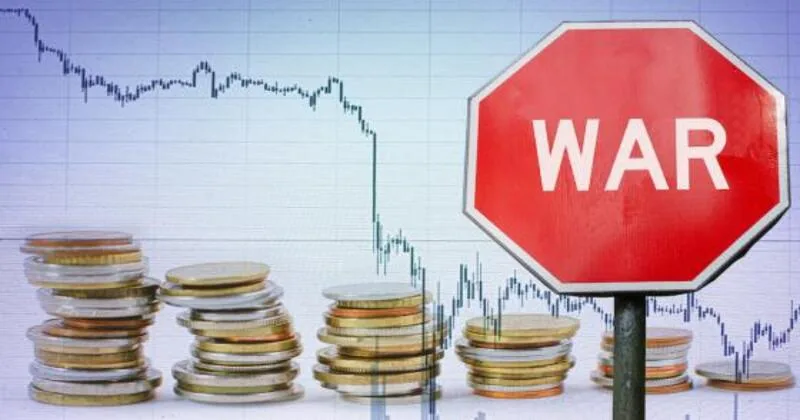
Since the early days of the Silk Route to the formation of the recent General Agreement on Tariffs and Trade (GATT) and the inception of the WTO, trade has played an important part in promoting global economic development and peaceful relations among nations. Indeed, as gleaned from history of the modern world since the beginning of 1940s, the desire for peace and security led to the creation of global economic systems existing today. The global rules that underlie our multilateral economic system were a direct consequence of the Second World War and an overwhelming desire that such global war may never occur again. The WTO’s creation on January 1, 1995 was a landmark reform and the most significant development in international trade since the end of the Second World War. This system, needless to say, has served the global community reasonably well over the decades gone by. But things are becoming suddenly and sharply different now.
Any deal in international trade depends on a mutually give and take situation and the deal is a win-win matter for both the countries involved in trade. Historically, import and export between global nations has been based primarily on deficit and surplus of products in specific countries and the prime purpose has been satisfaction or fulfilment of each trading nation’s need. However, international trade equations become widely distorted when political machinations entered the business.
Trade tariffs being employed as tools of economic warfare are prominent today. When hegemonic tendencies and economic arm-twisting enter the sphere of international trade, it no longer remains rule based or fair. The proverbial law of the jungle then reigns the realm of international business. Trade between countries is akin to buying and selling by individual human consumers at the retail level. At that micro level, there is a plethora of rules and regulations—quality enforcement norms, fiscal regulations, rules to restrict monopolistic business etc. applying to sale or purchase of goods. And individual’s consumer’s freedom and choice are fully protected. Also, rules protect the rights of retailers as sellers. So is the case at the macro level.
The above is well exemplified by the India’s trade deal with US. The fact is that the deal which supposedly would have benefitted both the countries was held up more because of intransigence of US than anything else. In the current context of Indo-US trade, it may be noted that India had a trade surplus with US to the tune of USD 45.7 billion in 2024-25. India’s top exports to the US include drug formulations and finished pharmaceutical products, telecom instruments, precious and semi-precious stones and gold jewellery. India’s main imports from the US include crude oil, petroleum products, coal, cut and polished diamonds and electrical machinery.
But the above figure of trade surplus pertains to only hard goods that exclude arms and ammunitions, and is, therefore, quite deceptive. The US smoothly collects a sizeable amount every year from India through education, digital services, financial operations, intellectual property royalties and sales of arms and ammunition. This amount is not highlighted. It is quite noteworthy that the US is aggressively pushing India to reduce its tariffs for goods which India produces abundantly and doesn’t need to import. These are dairy products and agricultural items.
It can also be seen that while India, in its trade with US, is globally price competitive in most of its export portfolio items, it has a wide choice of international sourcing of the items of its import portfolio. For instance, coal can be sourced to Australia and Mozambique while crude oil can be better sourced to Russia and Venezuela.
Everything in this world functions well if it runs in accordance with applicable rules of equity and fairness. If within a county, village, state, province or nation, business regulations serve well the interests of buyers and sellers alike, why can’t that happen at international level? There is enough historical evidence—from both recorded and unrecorded history to suggest that for long periods of time spanning many centuries, international trade was being conducted smoothly, peacefully and to the benefit of all participating countries through strict compliance with established trade rules enforced by a strong pivotal agency. In the absence of such a strong system, things go out of control and economic warfare ensues which witnesses big fish devouring the small. The present global situation seems to be quite similar to this. They say –everything is fair in love and war. When there are no rules or regulations in international business and trade based on the principles of basic equity and fairness, pursuits of self- interests by nations while exploiting other weaker nations is glibly justified.
In international trade, fairness can prevail if there is a strong regulating authority which has the powers to penalize the violation of established trade terms. More importantly, these terms of trade themselves have to be equitable and just for the trading partner countries. But if the business atmosphere is vitiated by the cartels and coteries as interest groups and weak or ineffective regulatory agency, there is great likelihood of terms of trade getting one-sided or partial towards a nation or group of specific nations. Even free trade is preferable to such trade which is regulated by iniquitous terms. There is today a crying need for establishment of a global fair-trade regime based on time tested principles of universal welfare and a strong regulatory agency. These time-tested principles are derived from the primeval, eternal divine code of conduct called Dharma which has guided humanity on this planet since the dawn of human civilization. Timeless principles from this divine code embodied in the famous ‘Arthashastra’ need to be applied to the business institutions and systems of the current turbulent times to create a healthy environment conducive to prosperity and growth of all.













Comments