





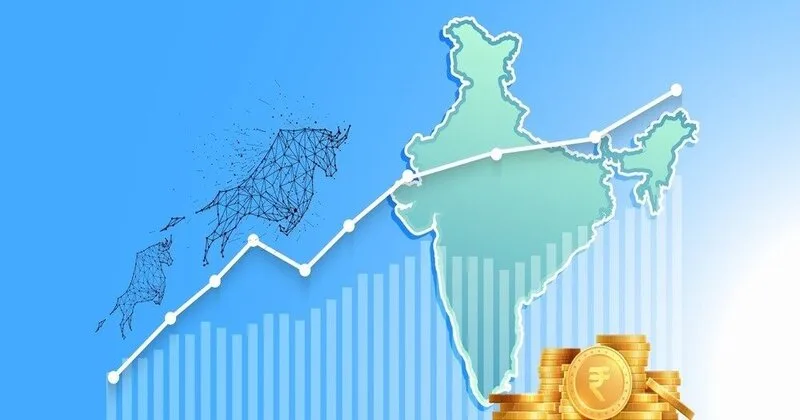
Bharat’s GDP has grown structurally as well as numerically, from ranking 11th in 2009 to fourth by the end of 2025. This growth has been fueled by domestic demand, a youthful and technologically savvy workforce and prudent Modi government policies. With a predicted GDP of $7.3 trillion, Bharat’s economy, currently the fourth largest in the world, is expected to rise to the third position by 2030. Visionary reforms, resolute governance and strong international engagement are the main drivers of this momentum. Growth is notably accelerating, which strengthens and elevates the Bharat’s standing internationally.
The government of Bharat started the widely used “Incredible India” international tourism campaign in 2002. If a similar effort were to be launched now, it might as well be dubbed “Global Bharat.” Bharat has been hailed as the next great economic power by a chorus of international analysts in addition to national enthusiasts: By 2075, it will rank as the second-largest economy in the world, according to Goldman Sachs, and by 2050, its purchasing power will be 30 per cent more than that of the United States, according to Martin Wolf of the Financial Times. The International Monetary Fund’s Kristalina Georgieva, MD, stated that Bharat is perceived as a “Growth Engine”.
Reasons international agencies and leading economists perceive Bharat as a potential growth engine
Over the past ten years, the percentage of jobs created in the services and agriculture sectors has risen to 36% and 19 per cent, respectively. Job creation in the manufacturing sector increased to 15% in the last ten years from 6% between 2004 and 2014. The backbone of Bharat’s development is its infrastructure, which affects every facet of daily living, including energy, water supply, transportation and telecommunications. It is the foundation upon which communities come together, businesses prosper and products are transported. A number of focused policies and efforts have been implemented by the Bharatiya administration to aggressively prioritize infrastructure development in recognition of its crucial significance. USD 117 billion will be reinvested in new projects as part of the Second Asset Monetisation Plan 2025–2030.
Three main factors are supporting Bharat’s economic outlook: a robust consumer base, an expanding investment landscape and a vibrant, tech-savvy workforce. Bharat’s tech-adaptive talent is pushing innovation and exhibiting its global skills, private capital expenditures are showing green shoots and urban spending is increasing. In addition to changing consumer spending trends, the steady increase in consumption expenditure is one of the most compelling signs that investors are keeping a careful eye on. With an estimated 61.4% contribution to GDP in fiscal year 2024–2025, this indicator in particular continues to be the key engine of economic growth in Bharat. Notably, two major pillars of this impetus are emerging: urban consumption and a shift in spending preferences toward luxury items.
Looking ahead, Bharat’s consumer landscape is about to undergo a major change. It is anticipated that by 2030, there would be about 75 million middle-class and 25 million wealthy households in the nation, making about 56 per cent of the total population. Bharat will become one of the world’s fastest-growing consumer markets as a result of this demographic transformation. Even while the rise of urban consumption spending in more developed nations is slowing, major Bharatiya cities are expected to become the main sources of consumer spending throughout Asia Pacific.
Bharat is rapidly changing its reputation as a center for low-skilled outsourcing to one of a tech-driven talent powerhouse. With more than half of its population under 30 and another 100 million predicted by 2030, the nation is establishing itself as a major hub for tech-enabled workforces by leveraging its youthful, tech-savvy populace. One of the world’s leading providers of talent in science, technology, engineering and mathematics, Bharat produces about 2.5 million graduates a year, significantly more than the majority of developing nations. A Stanford University report claims that Bharat is also rapidly catching up in terms of future technology skills, with an increasing emphasis on cybersecurity, cloud computing, data analytics, and artificial intelligence.
When compared to both developed and developing countries, Bharat has one of the highest rates of AI skill penetration, second only to the US. In addition to demography, structural changes and strong fundamentals support Bharat’s growth trajectory. According to the August 2025 issue of EY Economy Watch, Bharat is becoming one of the most dynamic of the world’s five major economies, with strong economic fundamentals like as favorable demographics, high rates of savings and investment, and a sustainable fiscal situation. Bharat is resilient because of its reliance on domestic demand and growing capabilities in modern technology, even in the face of global uncertainties like tariff pressures and declining trade.
With the second-highest savings rate, a median age of 28.8 years in 2025 and a government debt-to-GDP ratio that is expected to drop from 81.3% in 2024 to 75.8 per cent by 2030—in contrast to rivals whose debt levels are increasing—Bharat stands out among the greatest economies. The IMF estimates that by 2030, Bharat’s GDP might grow to $20.7 trillion (PPP). If the IMF’s average growth projections for 2028–2030 are followed, Bharat’s GDP is expected to reach $34.2 trillion by 2038, making it the second-largest economy in the world in PPP terms.
Bharat is in a unique position as compared to the US, China, Germany, and Japan. With an estimated $42.2 trillion economy (PPP) by 2030, China leads the world in size, but it faces difficulties due to its aging population and mounting debt. Despite weaker growth rates and unsustainable debt levels that surpass 120% of GDP, the US is nevertheless a great nation. Despite their advancements, Germany and Japan are limited by their high median ages and their reliance on international trade. On the other hand, Bharat has the most advantageous long-term economic trajectory due to its combination of young populations, growing domestic demand and a stable fiscal outlook.
Global rating agencies consistently give Bharat high marks and demonstrate increasing confidence in the Bharatiya economy, while macroeconomic indicators are on the rise. Our foreign exchange reserves are strong and inflation is under control now. The nation’s economy is rapidly growing to become the third largest in the world. A careful macroeconomic policy framework has supported the steady growth of Bharat. Despite the volatility of food prices, inflation expectations have been stabilized by the monetary policy’s adoption of a flexible inflation target regime in 2016. As demonstrated by increased bank capital, a decrease in non-performing loans, and an increase in profits, financial sector reforms that prioritized strengthening regulatory oversight, deepening financial markets and enhancing the resilience of banks and non-bank financial companies have improved financial stability.
Demand, supply and system-wide enabling variables are some of the positive trends that are convergent from various aspects of the Bharatiya business ecosystem. When combined, these trends can withstand macroshocks, policy reversals and economic cycles. The older ones are finally approaching critical mass and can reinforce one another to form a growth flywheel, while some are new. However, as with any flywheel, it’s crucial to be on the lookout for burning odors and rattling sounds, which are common with Bharat. Leaders in government and business must pay heed and take action before the flywheel breaks.
Deep state global market forces interfere to overthrow the government, create socioeconomic instability through a select few political leaders and their parties and then use some non-governmental organisations to incite unrest and spread false narratives against the government and its policies around the world in an effort to harm Bharat’s reputation. These forces of filthy flywheels should be rigorously handled by the government to ensure that no one uses any methods to block our progress.















Comments