





As the cool breeze of October sweeps across India and homes begin to sparkle with diyas and rangolis, the heart of every household is beating in anticipation of Dhanteras 2025. This year the date of Dhanteras is October 18. Long before the thrum of fireworks and the sweetness of Deepawali treats, Dhanteras reminds us of a deeper, more enduring wealth i.e. the wealth of health and well-being. For many years, Indian families have celebrated this day not just for wealth, but to worship Bhagwan Dhanvantari, the divine healer who blesses everyone with health and long life.
Dhanteras is a day filled with joy and preparation, polished utensils on shelves, gold and silver are bought with hope in the heart, and homes are scrubbed and decorated to welcome Ma Lakshmi. Amid all the festive excitement, there is a deep respect for health and life itself. After all, wealth means little without good health, and prosperity loses its meaning if illness enters the home. This simple truth is why Bhagwan Dhanvantari, the founder of Ayurveda, remains at the heart of Dhanteras.
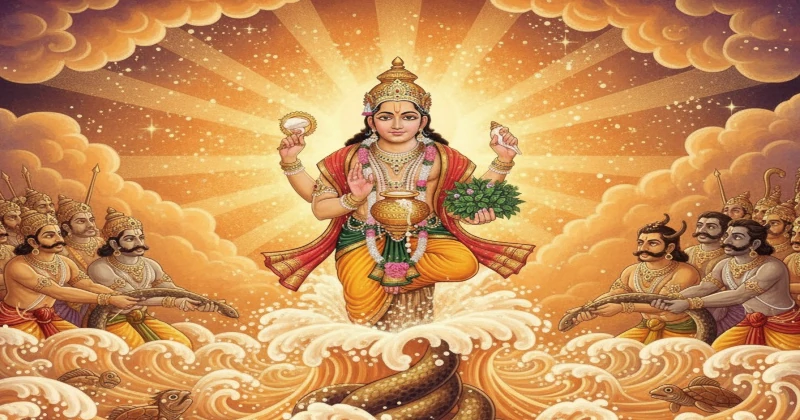
The story of Dhanteras comes from the famous tale of Samudra Manthan, the churning of the ocean by gods (Devas) and demons (Asuras). Both sides were trying to get Amrit, the nectar that gives immortality. During this churning, many valuable things came out of the ocean, and among them was Bhagwan Dhanvantari, holding a pot of Amrit. He is known as the doctor of the gods and is believed to have brought Ayurveda, the ancient Indian system that teaches how to keep the body, mind, and soul in balance for a healthy life.
It is said that worshiping Bhagwan Dhanvantari on Dhanteras protects one from ailments and ensures the family enjoys good health throughout the year. This belief holds special meaning in India, where traditions and spirituality blend with everyday life, offering not just rituals but valuable lessons for healthy and balanced living.
Bhagwan Dhanvantari’s gift of Ayurveda to humanity is priceless. The word “Ayurveda,” meaning “science of life,” teaches the importance of balance among the three doshas (Vata, Pitta, and Kapha), between mind and body, and between humans and nature. It promotes preventive care, simple living, natural healing, yoga, meditation, and eating habits suited to each person’s body type.
In modern India, as lifestyles grow busier and stress and lifestyle diseases rise, the wisdom of Ayurveda has found renewed relevance. On Dhanteras, families often incorporate Ayurvedic practices into their rituals: preparing herbal teas, detoxifying foods, or simply taking time for relaxation and rejuvenation. Lighting lamps and maintaining cleanliness are not just aesthetic acts, they reflect the Ayurvedic principle that purity and order promote health, physically and spiritually.
The very name “Dhanteras” is evocative, ‘Dhan’ means wealth, and ‘Teras’ refers to the 13th day of the lunar fortnight. Traditionally, families purchase gold, silver, utensils, or other valuable items, symbolizing material prosperity. Yet, in the heart of every household, this act carries a symbolic recognition of another kind of wealth, the wealth of health, which, according to Indian philosophy, is priceless.
Homes are cleaned meticulously, rangolis adorn doorsteps, and oil lamps are lit in every corner. Alongside these preparations, many families conduct special Dhanvantari pujas, offering flowers, turmeric, and Ayurvedic herbs. In some regions, devotees prepare herbal remedies and medicinal foods as part of the ritual. These acts are more than symbolic; they reflect a deep-seated understanding that health and spiritual prosperity are intertwined.
It is also common for families to pay attention to personal well-being on this day. Ayurvedic practices like Abhyanga (oil massage), drinking herbal decoctions, or performing light yoga and meditation are encouraged, echoing the belief that honoring the divine healer begins with caring for one’s own body and mind.
In 2025, Dhanteras carries renewed significance in the Indian consciousness. While gold and silver continue to dominate shopping lists, there is an increasing awareness that true wealth cannot exist without health. Ayurveda’s global recognition has also transformed Dhanteras into a celebration of cultural pride. Wellness centers, Ayurvedic clinics, and health practitioners organize special events, workshops, and consultations during this time, encouraging people to integrate traditional practices into modern lifestyles.
Dhanteras is also about reflection and gratitude. It is a time to recognize the blessings of life and health, to extend care to loved ones, and to recommit to habits that ensure physical and mental well-being. Lighting diyas, buying precious metals, and cleaning homes are all acts that carry deeper meaning: they symbolize light overcoming darkness, health overcoming illness, and mindfulness in the midst of life’s bustle.
As India celebrates Dhanteras 2025 on October 18, it is important to remember that the festival is far more than a prelude to Deepawali ’s lights and festivities. It is a celebration of life itself, a day to honor Bhagwan Dhanvantari, the divine healer who reminds us that health is the true foundation of wealth. In the glitter of gold and the warmth of diyas, the timeless lesson resonates: prosperity is incomplete without well-being.
This Dhanteras, let every diya, every ritual, and every purchase act as a reminder that true riches are measured in health, happiness, and harmony. By honoring the divine healer of Ayurveda, let us all celebrate a tradition that values both health and spirituality and keep alive the customs that remain meaningful even today.
















Comments