





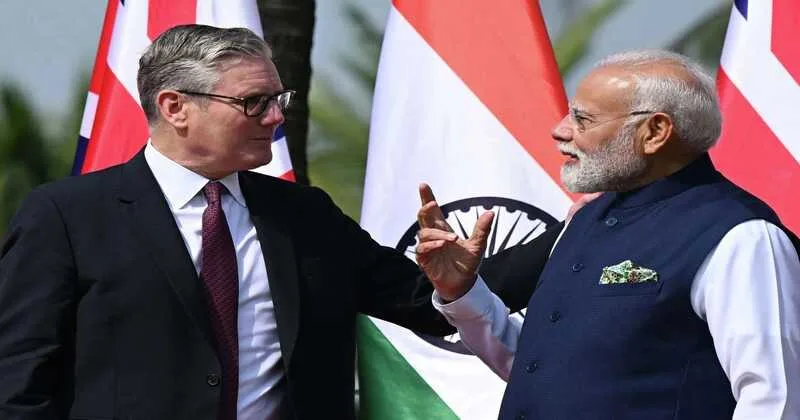
It may be called poetic justice preserved by time, or perhaps divine irony. The British, who once ruled India through the power of arms, are now turning to India to train their own soldiers. Under a new defence agreement, pilot instructors of the Indian Air Force (IAF), classified as Category A1 and A2, will train pilots of the Royal Air Force (RAF) of Britain. As part of this landmark pact, experienced IAF instructors will serve as trainers for RAF pilot cadets, aiming to enhance their operational knowledge and flight expertise. These Indian instructors, drawn from the top echelons of the Air Force, possess vast experience in handling advanced aircraft and in conducting high-level combat and tactical training.
The agreement marks a significant moment in the evolving India–UK defence relationship. It highlights India’s rising global stature in the field of air defence and military training. The two nations share a long history of military cooperation dating back to World War II, when Indian pilots served under the British Royal Air Force. Over the decades, this partnership has matured into a strategic alliance, encompassing joint military exercises, technology collaborations, and now, direct training exchanges. Beyond training cooperation, the new arrangement forms part of a broader defence and economic partnership between India and the United Kingdom. The initiative is also linked to the Comprehensive Economic and Trade Agreement (CETA), signed during Prime Minister Narendra Modi’s visit to the UK in July 2025. The CETA framework not only deepens trade ties but also enhances bilateral collaboration in technology, defence, and industrial development, promising to create new opportunities and employment in both countries.
In the coming years, India and Britain are expected to expand cooperation in aviation technology, defence innovation, and joint operational programmes. Defence analysts in Britain have welcomed the development, noting that Indian Air Force trainers bring valuable experience in adapting to rapidly changing security environments. Their training is expected to help RAF pilots strengthen readiness for modern aerial challenges. For India, the agreement represents more than just a diplomatic success. It reflects the country’s growing ability to project soft power through professional excellence in defence. By training pilots of one of the world’s oldest air forces, India not only affirms its technical and strategic capabilities but also redefines its global role, from a former colony to a trusted partner and mentor in international security cooperation.











Comments