




“The theory, at any rate, seems to me utterly absurd, for communism is like a forest fire; it goes on burning and consuming anything and everything that comes in its way. It is quite possible that countries which are far distant from the centre of communism may feel safe that the forest fire may be extinguished before it reaches them, or it may be that the fire may never reach them. But what about the countries which are living in the vicinity of this forest fire? Can you expect that human habitation and this forest fire can long live together?”
– Dr Babasaheb Ambedkar, Parliament Debates, Vol. 7A (Council of States), August 26, 1954, pp. 469-83
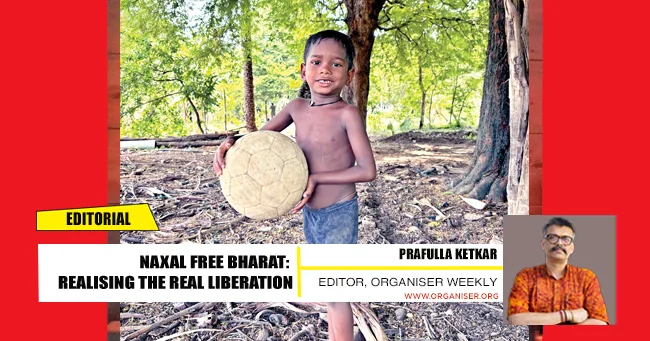
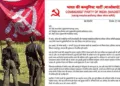
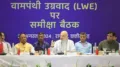
Union Home Minister Amit Shah, in his seminal address to the youthful audience attending the national conference on ‘Naxal Free Bharat’ organised by the Syama Prasad Mookerjee Research Foundation (SPMRF), has yet again reiterated the commitment of the Union Government to ‘liberate’ the country from the menace of the Red Terror. As per the Government data, Jharkhand and Bihar are by and large free from the Maoist violence; so are the States of Odisha, Andhra Pradesh and Telangana. Maharashtra is on the verge of being free of Naxalism, and a handful of leaders are fighting their battle for survival. Not surprisingly, the Communist parties and the fundamental drivers of Maoism, who enjoy air-conditioned luxury spaces in urban centres, immediately came out against the coordinated policy of the Union Government. The Maoist party came with the usual rhetoric of peace talks without surrendering its arms. However, the Union Government with a coordinated approach is determined to ensure liberation of people from the forceful occupation, extortion and recruitment industry called Naxalism. There is a need to understand the deeper meaning of a successful strategy to eliminate the inhuman and undemocratic illusion called revolution.
The real character of violent revolutionary ideology called Communism was always against democracy and the Constitution. Although some groups were compelled to engage in electoral democracy and seize power through democratic means, none genuinely believed in true freedom and democracy. The state of affairs in West Bengal and Kerala is a testimony to this. No other States have found so much antipathy towards multi-party democracy like the Communist dominated States. The monopolisation of state machinery, violent killings of opposition cadres – even the party cadres having little divergent views and normalisation of ideas like party villages – where no other political party is even allowed to exist – are typical of Communist governments across the world. For them, the party’s dictatorship is people’s democracy. The heinous attack on a Member of Parliament from Maldah Uttar constituency of West Bengal, Khagen Mumu, who comes from a Scheduled Tribe, by the Trinamool Congress goons is a continuation of the same policy. Communist leaders are in mute mode against this political intolerance.
The Maoist and Marxist-Leninist variants are open enough in denouncing parliamentary democracy, with a stated objective of overthrowing the so-called bourgeoisie democracy and taking over the state. Their journey of these self-proclaimed messiahs of the poor and downtrodden from the pre-independence period, starting from the Tebagha movement in West Bengal and the Telangana Armed Struggle in 1946-47, has been violent and undemocratic. Fortunately, then, the first Home Minister of Independent Bharat, Sardar Vallabhbhai Patel, was clear about their intent and decided to take decisive action. The Naxalbari movement in Bengal faced the same fate due to its unsustainable ideological position and internal divisions about the idea of ‘revolution’. Then Congress and later Communists in Bengal also found them to be a threat and first adopted the idea of Naxal mukt Bengal. Resultantly, Naxalism is dead in Naxalbari. The Peoples War Group (PWG) found ground in the Andhra-Telangana region. At the same time, the Maoist Communist Centre (MCC) used the caste feud in Bihar-Jharkhand to create a streak of violence. They also faced intense action against the first NDA government under Prime Minister Vajpayee. In 2003-04, CPI (Maoist) – the unified group of all variants – adopted a new strategy by occupying strategic bases in the Dandakaranya region and selling the dream of a red corridor from Tirupati to Pashupati. They could do that simply because, each time, they strategically opted for a twin strategy of going for peace talks to buy time, and their masters assisted them by employing the legal route to give cover in the name of human rights. The comprehensive and clear strategy of the Modi-led NDA government is not giving them any of these options.
Communists of all varieties are exposed in this game. The dream of Naxalism was never about tribals or the poor; it was an illusory idea nurtured in the campuses of Edward College, Presidency College, and later Osmania and Warangal Regional Engineering College, Jawaharlal Nehru University and Hyderabad Central University, etc. As Dr Babasaheb Ambedkar once called out, communists use the poor and downtrodden as cannon fodder for their political ends. Even forest dwellers who were once sympathetic or supportive out of force to the Naxal terror have realised this fact.
As the strategic bases of Maoists are being shattered and most of the leadership is on the verge of extinction, the fruits of development are reaching the people. They are realising the real meaning of liberation. Communication, banking, education, and other welfare schemes are effectively reaching the needy beneficiaries, and they are now active stakeholders in the democracy. The dual approach of comprehensive security and all-round development, with a systematic coordination between the Union and state governments, is giving these results. As the RSS Sarsanghachalak Dr Mohan Bhagwat articulated in his Vijayadashami address, we, at the administrative and societal levels, now need to be more sensitive towards the issues and grievances of the tribal regions.
The fight is not just limited to the Bastar region but also extends to urban centres, and the ideological battle to root out the seeds of an undemocratic and violent form of dissent should continue. The real beneficiaries of the extortion business called ‘Naxalism’ will try their best to mislead the youth and create a new form of virus for their violent actions. We need to have an effective mechanism to educate people, especially the youth, about the true intent of the Communists. Their exploitation of tribals and women, forest resources and attempts to derail development projects should be exposed persistently and explicitly. The surrendered Naxals should be given a voice in this regard, as they have first-hand accounts of Maoist atrocities. Any attempt to foil the coordinated actions by the security forces must be combatted collectively.
The fight to annihilate the Naxal menace from every corner of Bharat is being taken to root out the anti-democratic, violent ideology of Red terror. Unless we liberate the people and land occupied by the self-proclaimed revolutionaries and their urban masters who intend to take over the state through unconstitutional means, real development and independence for all cannot be ensured.












Comments