





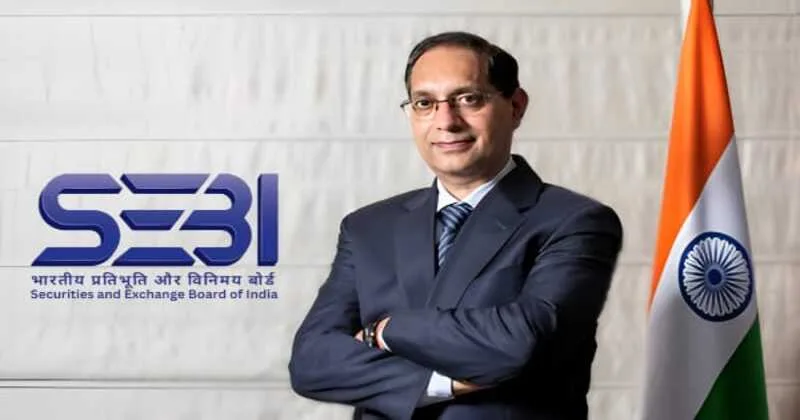
Securities and Exchange Board of India (SEBI) Chairman Tuhin Kanta Pandey has announced that the registration process for non-resident investors in the Indian stock market will soon be simplified. At present, expatriates are required to visit India in person to complete the Know-Your-Customer (KYC) verification as part of the registration process. To ease this procedure, the government will soon introduce video-based KYC verification for non-residents, in collaboration with the Reserve Bank of India (RBI) and the Unique Identification Authority of India (UIDAI). This move is expected to make market entry smoother for overseas investors.
According to data from the National Stock Exchange (NSE), India currently has about 11 crore active investors. In contrast, although the expatriate population stands at nearly 3.5 crore, their participation in the stock market remains negligible. India continues to be the world’s largest recipient of remittances, amounting to $135 billion (Rs 11.5 lakh crore) in the 2024–25 financial year. Simplifying the investment registration process is expected to encourage greater participation from expatriates, thereby boosting capital inflows into the Indian markets. Tuhin Kanta Pandey also revealed that a single-window portal would soon be introduced to streamline registration procedures for foreign portfolio investors (FPIs). The new system will feature simplified processes and faster approvals to attract more global investors.
Pump and dump scams to be curbed
The SEBI Chairman further stated that regulations governing stock brokerages would be revised by December 2025. With transactions worth around Rs 1 lakh crore taking place in the Indian stock markets daily, SEBI is prioritising stronger cybersecurity measures to safeguard investors. He also emphasised that the regulator will take strict action against “pump and dump” scams, fraudulent schemes where false claims are circulated to artificially inflate stock prices for profit. Such manipulative practices are most prevalent in low-priced or penny stocks, Pandey noted.
Pandey announced that SEBI will also review the framework of the Stock Lending and Borrowing Mechanism (SLBM). Under the current system, investors can lend their shares while retaining ownership rights and associated benefits such as dividends. The SLBM framework allows borrowers to sell the borrowed shares and later repurchase them when prices drop, returning them to the original owners at a profit. Lenders, meanwhile, earn interest or commission on the lent shares, along with any rise in their value and dividend income. Pandey said the upcoming revisions aim to make the system more transparent, secure, and beneficial for both lenders and borrowers in the stock market ecosystem.
















Comments