





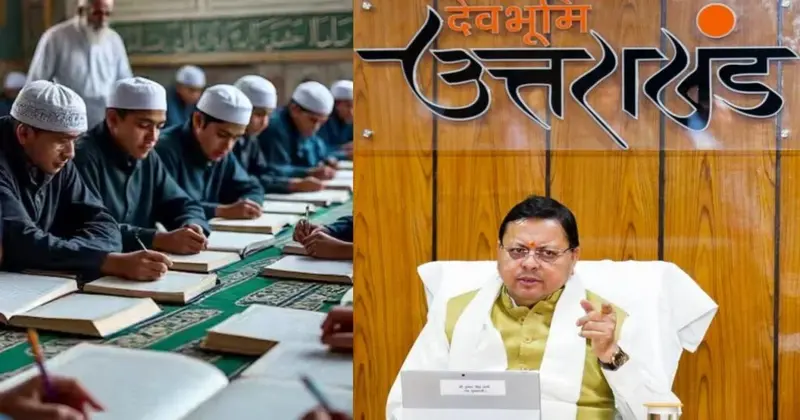
In a groundbreaking move that has sent waves across the nation, Uttarakhand has emerged as the first state in India to completely abolish its Madrasa Board, marking a watershed moment in the country’s educational reform journey. This decisive action, culminating in the approval of the Uttarakhand Minority Education Bill 2025 by Governor Lt. General Gurmit Singh in October 2025, represents far more than administrative restructuring, it shows a bold vision for educational equity, transparency and national integration that will resonate for generations to come.
The path to this historic decision was neither sudden nor arbitrary. It was the culmination of mounting concerns that had plagued Uttarakhand’s educational landscape for years, demanding urgent intervention. The state government, under the leadership of Chief Minister Pushkar Singh Dhami, identified systemic irregularities that had festered within the madrasa education system from scholarship distribution discrepancies to mid-day meal scheme violations and most critically, a troubling lack of transparency in institutional management.
What made this reform particularly significant was its comprehensive approach. Rather than targeting any single community, the legislation extends minority educational institution status to all six recognized minority communities: Muslims, Sikhs, Jains, Buddhists, Christians and Parsis. This inclusive framework dismantles the previous system that had inadvertently created educational segregation, where only Muslim institutions received formal recognition while other minority communities remained marginalized.
The crackdown that preceded reform
The legislative action was preceded by an extensive ground-level assessment that revealed the gravity of the situation. Between January and October 2025, Uttarakhand authorities sealed over 222 madrasas across the state, with the highest concentration in border districts: Haridwar (85 institutions), Udham Singh Nagar (66-67 institutions), Dehradun (44 institutions), and Nainital (24 institutions). These closures were not punitive measures against any community, but necessary interventions against institutions operating without proper registration, lacking building permits, or failing to meet basic educational standards.
The scale of the problem was staggering. Government estimates revealed approximately 500 unregistered madrasas operating alongside only 450 registered ones in the state. Many of these unregistered institutions were concentrated in sensitive border areas, raising legitimate concerns about oversight and accountability. The National Commission for Protection of Child Rights (NCPCR) had already raised red flags about the quality of education in many madrasas, noting that nearly 10% of students in some institutions were non-Muslims, highlighting the desperate need for quality educational alternatives in certain regions.
Constitutional foundation and legal framework
Critics have raised concerns about constitutional violations, but the legislation actually strengthens constitutional principles rather than undermining them. Article 30 of the Constitution guarantees minorities the right to establish and administer educational institutions of their choice. However, this right comes with the implicit responsibility to provide quality education that serves the best interests of children. The Supreme Court has consistently held that minority rights under Article 30 are not absolute and must be balanced with the state’s legitimate interest in regulating educational standards. In landmark cases like T.M.A. Pai Foundation and St. Xavier’s College, the apex court clarified that while minorities enjoy autonomy in administration, this cannot extend to maladministration or compromise of educational quality.
The Uttarakhand legislation aligns perfectly with these constitutional principles. It does not prohibit religious education but ensures that it coexists with standardized curriculum that prepare students for mainstream opportunities. The new framework mandates adherence to the National Curriculum Framework (NCF) and the New Education Policy (NEP) 2020, ensuring that every child, regardless of their religious background, receives education that equips them for success in the modern world.
The new educational architecture
The Uttarakhand State Authority for Minority Education (USMEA), established under the new legislation, represents a revolutionary approach to minority education governance. Unlike the previous Madrasa Board, which comprised 13 members with nine being Muslims or from Muslim institutions, the new 12-member authority ensures balanced representation with six academics from each minority community, a retired civil servant, a social worker and three ex-officio members.
This structural transformation addresses the fundamental flaw of the old system its narrow focus on a single community while neglecting others. The new authority will meet quarterly and make decisions through democratic voting, ensuring transparency and accountability that was previously lacking. More importantly, it will grant recognition for three academic sessions at a time, creating a system of regular review and quality assurance. The legislation’s emphasis on affiliation with the Uttarakhand Board of School Education is not about imposing uniformity but about ensuring quality. Students graduating from recognized institutions will receive certificates that are valued nationwide, opening doors to higher education and career opportunities that were previously limited.
Addressing long-standing inequities
Perhaps the most compelling aspect of this reform is its commitment to addressing historical inequities. For decades, the Congress-era policies had created a system that inadvertently promoted educational backwardness in the name of minority protection. The Sachar Committee report itself documented that Muslim educational backwardness, with literacy nearly twenty percentage points below the national average, was largely attributed to dependence on outdated educational institutions.The NCPCR’s comprehensive report, “Guardians of Faith or Oppressors of Rights,” exposed the harsh reality that many madrasas were failing to provide adequate education, with children missing out on modern subjects, extracurricular activities, and the structured protections guaranteed under the Right to Education Act. The report revealed that approximately 12 million Muslim children across India do not receive formal education, highlighting the urgent need for systemic reform. Uttarakhand’s legislation directly addresses these concerns by ensuring that religious instruction can continue alongside a comprehensive curriculum that includes science, mathematics, social sciences, technical education, and vocational training. This integration does not diminish religious identity but enhances educational outcomes, preparing students for success in an increasingly competitive global environment.
Security and national integration
The reform also addresses legitimate security concerns, particularly in border regions where unregistered institutions had proliferated without adequate oversight. The concentration of unregistered madrasas in towns along the Uttar Pradesh border had raised intelligence concerns, making regulatory oversight a matter of national security.
The new framework ensures that all educational institutions operate within a transparent legal structure, with clear funding sources and adherence to national educational standards. This approach strengthens both educational quality and national security without targeting any particular community.
Economic and social benefits
The economic implications of this reform extend far beyond the education sector. By ensuring that all minority students receive nationally recognized education, the legislation creates pathways to economic mobility that were previously restricted. Students will be able to compete for higher education opportunities, professional courses, and government positions on equal terms with their peers from mainstream institutions. The legislation also promotes social harmony by bringing different communities together under a unified educational framework. Rather than perpetuating educational segregation, the new system encourages integration while preserving cultural and religious distinctiveness.
The phased implementation beginning July 1, 2026, provides adequate time for institutions to adapt to the new requirements. The government has committed to supporting this transition, ensuring that no child’s education is disrupted during the changeover. District-level committees have been established to facilitate the registration process and provide guidance to institutions seeking recognition. The success of this initiative will likely influence other states to adopt similar reforms. Already, the NCPCR has recommended that all states dissolve their madrasa boards and integrate minority education into mainstream frameworks. Uttarakhand’s pioneering approach provides a template for achieving this integration while respecting minority rights and constitutional principles.
International perspectives and best practices
Globally, successful educational systems are characterized by standardization, quality assurance, and inclusion. Countries like Singapore, Finland, and South Korea have achieved educational excellence through unified frameworks that maintain cultural diversity while ensuring common standards. Uttarakhand’s approach aligns with these international best practices, creating a system that preserves minority identity while promoting educational excellence. While some opposition groups have criticized the legislation, many within minority communities have welcomed the reform. Mufti Shamoon Qasmi, Chairman of the Uttarakhand Madrasa Board, defended the reform, stating that it will integrate madrasa students into the mainstream education system while ensuring that religious education remains unaffected. His assertion that “the new law makes no provision to stop religious instruction” addresses concerns about cultural preservation while emphasizing the benefits of educational standardization.
The support from within the community itself demonstrates that this reform is not about suppression but about empowerment. By ensuring that students receive recognized degrees and access to modern educational opportunities, the legislation serves the genuine interests of minority communities rather than perpetuating systems that limit their potential. As Uttarakhand implements this groundbreaking legislation, the state stands at the forefront of educational reform in India. The success of this initiative will be measured not just in administrative efficiency but in the improved life outcomes of thousands of students who will benefit from quality education that prepares them for success in the 21st century.
The legislation represents a victory for evidence-based policymaking over vote-bank politics, for quality over quantity, and for inclusion over segregation. It demonstrates that protecting minority rights does not require perpetuating educational backwardness, and that true secularism lies in ensuring equal opportunities for all, regardless of religious background. This historic decision by Uttarakhand will be remembered as a turning point in India’s educational journey-the moment when the nation chose progress over prejudice, quality over compromise, and the future over the past. As other states watch and learn from Uttarakhand’s experience, this pioneering legislation may well mark the beginning of a nationwide transformation that ensures every Indian child, regardless of their community background, receives the quality education they deserve in preparation for India’s role as a global leader in the knowledge economy.
The courage to take this difficult but necessary step, despite inevitable criticism, demonstrates the kind of visionary leadership that transforms societies. Uttarakhand has not just banned madrasas it has liberated education itself from the constraints of outdated systems, creating a framework that honors both tradition and progress, both identity and excellence. This is the true mark of progressive governance: the willingness to make tough decisions today for a better tomorrow.















Comments