






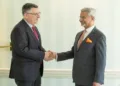
Afghan Foreign Minister Maulvi Amir Khan Muttahiki’s visit to India has emerged as a major point of international attention. This is the highest-level visit by the Taliban to India since their return to power in 2021. Muttahiki is on an eight-day visit during which he will hold discussions with senior Indian officials on diplomatic, trade, and economic issues. The visit is being interpreted as a continuation and reinforcement of India’s geo-strategic approach toward Afghanistan. Yesterday, Muttahiki met with External Affairs Minister S. Jaishankar and announced that India’s embassy in Kabul, which had been closed four years ago following the Taliban’s takeover, will be reopened. The announcement has drawn global attention, particularly from Pakistan, which is surprised at the improving ties between the Taliban and India. Muttahiki, who has been granted temporary exemption from UN sanctions, was allowed to travel and arrived in Delhi from Russia, currently the only country to fully recognize the Taliban-led government.
The visit represents a significant shift in regional dynamics. Until recently, few analysts had anticipated that the Taliban’s relations with Pakistan would deteriorate while India would begin establishing engagement with the new Afghan administration. India had historically supported the Western-backed Afghan government that was ousted by the Taliban in 2021. During his discussions, Muttahiki described India as a “close friend” and emphasized that his visit aims to strengthen bilateral relations. The Afghan delegation is also set to meet representatives of India’s business community to explore trade and investment opportunities, signaling a focus on economic diplomacy alongside political engagement.
https://twitter.com/DrSJaishankar/status/1976579944663683076?t=MzgqTq4YmAwI0sIdfp5ytw&s=19
Although India does not formally recognize the Taliban government, it is one of several countries that maintain diplomatic or informal ties with the regime. India continues to send substantial humanitarian assistance to Afghanistan, which remains one of the world’s poorest nations. The ongoing engagement has attracted global scrutiny, particularly in light of the strained relations between India and Pakistan. Many international observers and diplomatic experts consider Muttahiki’s visit as potentially a strategic setback for Pakistan in terms of regional influence. Following the Taliban’s capture of Kabul, India had initially closed its embassy and four consulates in Afghanistan and suspended visa issuance to Afghan citizens, including students, patients, traders, former government officials, and politicians. Within a year, India restored its diplomatic presence, and in 2022, it deployed a technical team to oversee the delivery of humanitarian aid. Last November, India permitted the Taliban to appoint an envoy in Delhi and allowed the opening of consulates first in Mumbai and subsequently in Hyderabad. These measures reflect India’s cautious but consistent effort to maintain channels of communication with the new Afghan administration.
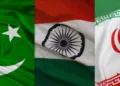
Earlier this year, Muttahiki had met Indian Foreign Secretary Vikram Mishri in Dubai, assuring that Afghan territory would not be used for terrorist activities targeting India. Engagement with the Taliban is also a strategic component of India’s broader regional policy, which seeks to strengthen ties with Iran and Central Asian countries as a counterbalance to growing Chinese and Pakistani influence. The Taliban leadership has repeatedly emphasized Afghanistan’s sovereignty in its interactions with India, reinforcing the principle of non-interference while pursuing closer bilateral ties.
https://twitter.com/DrSJaishankar/status/1976537194497024330?t=wTNYxhTCMpiUqQrROcYGpw&s=19
External Affairs Minister Jaishankar also announced that India’s Technical Mission in Kabul will be upgraded to a full-fledged embassy. He expressed appreciation to the Taliban-led government for extending invitations to Indian companies to engage in mining projects in Afghanistan. Both nations further agreed to expand direct flights between Kabul and Delhi, facilitating easier travel and deeper economic cooperation. Muttahiki’s visit therefore represents a landmark moment in India-Afghanistan relations. It highlights a recalibration of regional alliances and underscores India’s pragmatic approach toward engagement with the Taliban while maintaining a focus on development, trade, and security concerns. The visit is likely to have lasting implications for South Asian geopolitics and for India’s strategic positioning in the region.












Comments