






This Vijayadashami (October 2, 2025), the Rashtriya Swayamsevak Sangh will complete a century of its establishment. The Sangh was founded by Dr Keshav Baliram Hedgewar on Vijayadashami day of Vikram Samvat 1982 in Nagpur (Maharashtra). Dr Hedgewar was a born patriot who participated in all efforts of the Indian freedom movement. While pursuing medical studies in Kolkata, he was an active member of the Anushilan Samiti. In 1921, the British Government charged him with sedition, sentencing him to one year in prison. Once again, in 1930, he participated in the Jungle Satyagraha, for which he served nine months of imprisonment.
The Mission
Dr Hedgewar established the RSS with a view to organise and unify the entire Hindu society. He wanted to build a glorious Bharat on the foundation of Hindutva. To fulfil this noble mission, dedicated, disciplined, patriotic, virtuous, and committed workers were needed. To train and develop such individuals, he developed a simple, unique, yet highly effective daily routine called shakha (branch activity). Over the last century, this method has successfully created lakhs of capable Swayamsevaks. These Swayamsevaks have been contributing to various spheres of public life to fulfil the mission of glorious Bharat.
Expansion of RSS Programmes
During this journey, the Sangh has surged ahead of ridicule and opposition to achieve acceptance and support. Due to its noble foundation, excellent methodology, and the selfless, socially harmonious conduct of its volunteers, the RSS has won the trust of society. Today, RSS activities are visible and influential across the nation. Today our shakhas are operational in 98 per cent of districts and 92 per cent of talukas (sub-districts) in India. There are 83,129 daily shakhas in 51,740 locations and 32,147 weekly gatherings in 26,460 locations. Moreover, these numbers are steadily growing. It should be noted that 59 per cent of these shakhas are attended by youth (students).
Steps Towards Social Transformation
In its first phase, the RSS focused solely on building the organisation, instilling faith in society that Hindu society can unite, walk together in one direction, and raise the voice of Bharat Mata Ki Jai in unison. The Sangh succeeded in this. In the 1940 Nagpur camp, volunteers from all over India participated in training. Addressing them in his last speech, Dr. Hedgewar said, “I see a miniature form of the Hindu Nation before me.” After Bharat’s Independence, in 1948, the then Congress Government, for political reasons, imposed a ban on RSS and attempted to shut it down. In response, RSS volunteers engaged in a democratic Satyagraha, compelling the Government to lift the ban. Bharat’s freedom movement was inspired by the idea of the ‘Self’ (Swa), and it was essential that every aspect of society also be built on the same idea. In the second phase, inspired by RSS, volunteers began working in diverse areas such as education, students, labour, politics, farmers, tribals, arts, etc., through various affiliated organisations.
Today, over 32 independent, autonomous, and self-reliant organisations are active and effective in their respective fields. These include the likes of Akhil Bharatiya Vidyarthi Parishad (ABVP), Vidya Bharti, Bharatiya Mazdoor Sangh, Bharatiya Kisan Sangh, Vanvasi Kalyan Ashram, Seva Bharti, Sanskar Bharati, Laghu Udyog Bharati, Swadeshi Jagran Manch, and other activities.
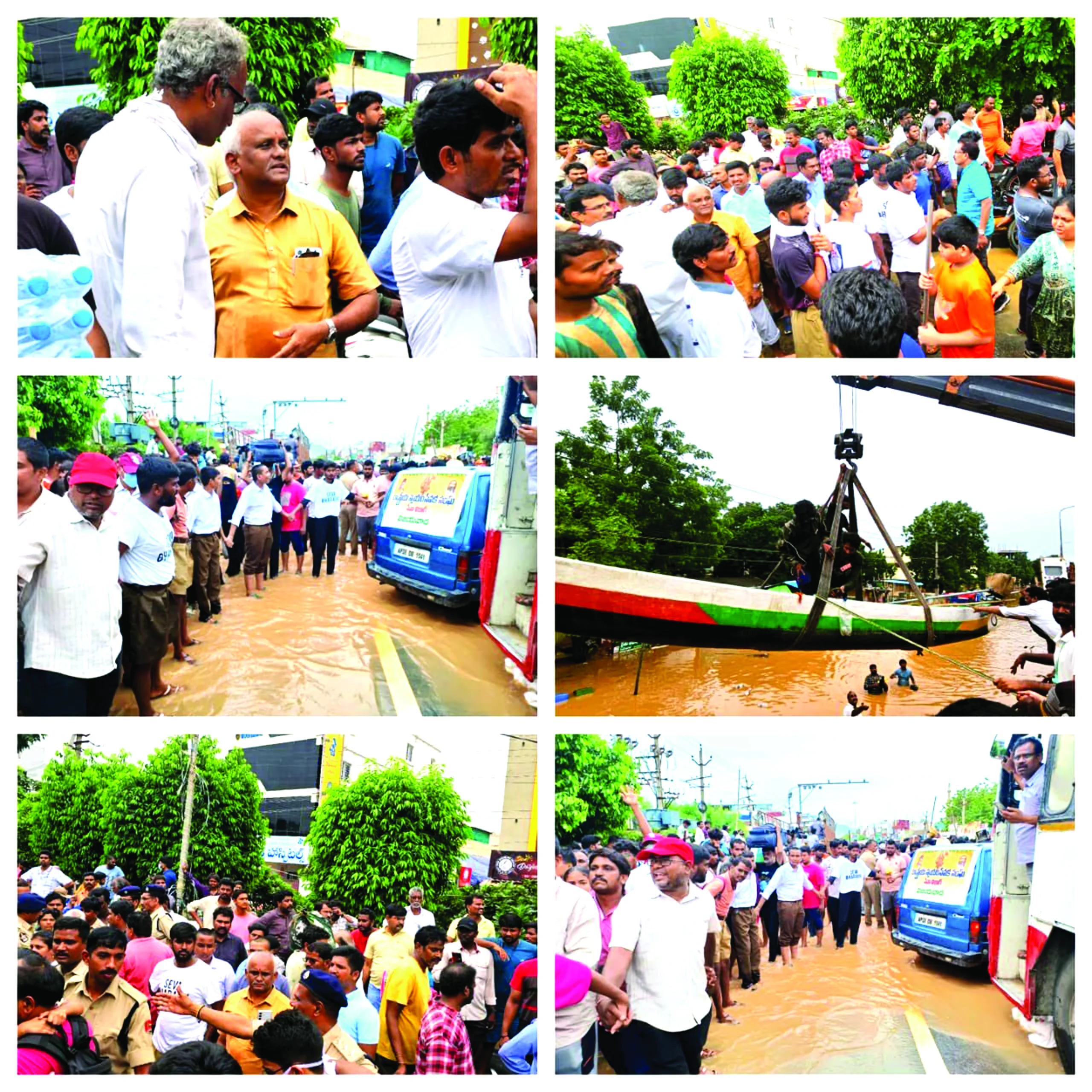
Swayamsevaks always stay alert to address social challenges according to their capacity and abilities. Steeped in patriotism and a spirit of service, they rush to help whenever they witness the suffering of society—especially during natural or other disasters, where they are often the first to arrive and serve the people. Not only in times of disaster, but in everyday life, they work to alleviate poverty, pain, and neglect in the community. In its third phase, during the birth centenary of Dr. Hedgewar in 1988-89, RSS decided to intensify and systematise service efforts. In 1990, the Seva Vibhag was formally launched. Today, Swayamsevaks are conducting over 1,29,000 service projects across rural and urban areas, focusing on education, healthcare, cultural values, and self-reliance for underprivileged sections.
In addition, volunteers are actively working on village development (Gram Vikas), encouraging villagers to take charge of their own comprehensive progress without relying on government or administration. They are also engaged in cow protection and promotion by preserving Bharatiya cattle breeds, improving their lineage, and promoting organic farming through farmer education and motivation.
Panch Parivartan or Five Transformations
RSS volunteers adopt a Sangh-oriented lifestyle in their families and consistently work towards positive changes in society. To bring about broader societal transformation, they regularly organise various programmes. As the RSS approaches its 100th year, it is preparing to launch the next phase—a large social awakening campaign. In this stage, volunteers will work with the virtuous and awakened sections of society. To raise awareness and integrate these ideas into personal and family life, RSS highlights five key focus areas, known as Panch Parivartan. These include:
Social Harmony (Samajik Samarasata)
- Environmental Conservation and Promotion (Paryavaran Sanrakshan evam Samvardhan)
- Family Awareness (Kutumb Prabodhan)
- Self-reliant Living (Swa-aadharit Jeevan)
- Civic Responsibility (Nagrik Kartavyabodh) Each of these issues is vital in today’s context for the unity, integrity, and welfare of humanity.
This great endeavour has been ongoing for the past 100 years. The Sangh aims to address all challenges faced by the nation through the power of a united society, and to bring about permanent societal transformation by building systems in tune with the current times.
However, our nation is vast, and no single organisation can bring about lasting change on its own. This Amrit Kaal is the time for all to rise above differences, come together, and make collective efforts to restore our sacred motherland to her rightful place as a Vishwa Guru.












Comments