





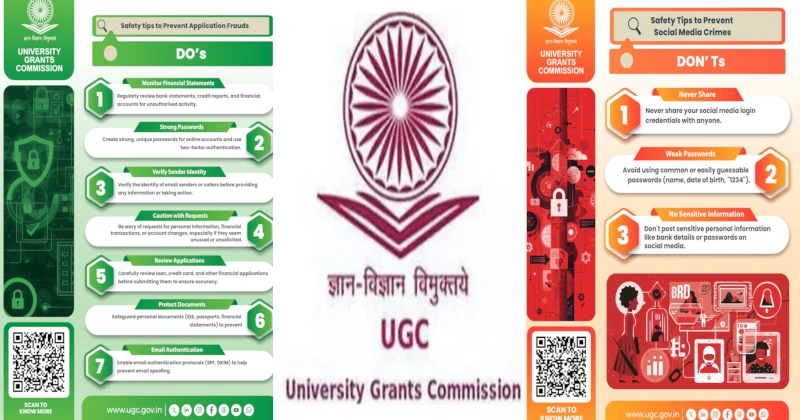
The University Grants Commission (UGC) has released a detailed advisory titled “Safety Tips to Prevent Social Media Crimes,” focusing on essential Do’s and Don’ts that can help the users in protecting themselves from online threats. In a world which is increasingly shaped by digital connectivity, social media has become an inseparable part of daily life. From sharing personal experiences and professional updates to building communities and spreading awareness, platforms such as Facebook, Instagram, X (formerly Twitter), and LinkedIn have transformed the way people interact with each other. However, as dependence on social networking sites has grown, so have the risks associated with them. Cybercrimes such as identity theft, online scams, impersonation, and data breaches have become alarmingly common.
According to cybersecurity experts, the increasing digitization of everyday activities from banking and shopping to education and social interaction has made individuals more vulnerable to online exploitation. Many users, especially students and young professionals, often underestimate the risks associated with oversharing or using weak passwords. Hackers frequently exploit such carelessness to access personal information, financial data, and even manipulate digital identities.
To address this issue, UGC’s awareness campaign aims to educate social media users particularly students and academic professionals about safe online behavior. The campaign not only highlights the importance of protecting personal data but also emphasizes the responsibility every user holds in creating a secure digital environment.
The UGC stated that “social media can be a powerful tool for learning, connection, and collaboration, but it can also become a gateway for cybercrimes if not used wisely. Awareness and preventive measures are the first steps towards ensuring digital safety.”
Stay safe online! 🌐
Follow these essential ✅ Do’s and ❌Don’ts of social media safety to protect yourself from cyber threats.
🔒Adjust privacy settings
🚫Avoid weak passwords
✅Log out after each session
📢Be mindful of what you share📖Read the UGC Handbook on Cyber… pic.twitter.com/DuDna07IRJ
— UGC INDIA (@ugc_india) October 6, 2025
Understanding the Do’s: Building a Safe Online Presence
The UGC’s guidelines begin with a clear message: prevention is better than cure. Simple steps, when followed regularly, can make a significant difference in protecting personal information and avoiding cybercrimes.
The first recommendation is to adjust privacy settings. Users are advised to set their profile privacy to the highest security level available on each platform. This ensures that personal posts, photos, and other sensitive data are only visible to trusted individuals. Many social media users are unaware that their default settings often allow public access to their information, which can be misused by cybercriminals for phishing or identity theft. Regularly reviewing and updating privacy preferences can go a long way in safeguarding online identities.
The second tip focuses on being mindful of what you share online. Social media thrives on openness, but this openness can sometimes become risky. Oversharing personal details like one’s location, daily routines, travel plans, or family information may seem harmless but can expose individuals to potential security threats. UGC’s advisory encourages users to think before posting and to avoid disclosing information that could be used for tracking or fraudulent purposes.
Another crucial practice highlighted is the importance of logging out after each session. This is especially vital for users who access social media accounts from public or shared computers, such as in internet cafés, colleges, or workplaces. Failing to log out can allow unauthorized access to personal profiles and lead to misuse of information. The Commission recommends that users not only log out but also clear their browser history and cache to prevent stored data from being exploited.
The fourth “Do” on the list is to use a profile guard or picture shield on platforms that offer this feature. For example, Facebook’s profile guard prevents others from downloading, sharing, or misusing your profile photo. By enabling this setting, users can add an additional layer of privacy to their social media accounts.
Don’ts: Avoiding Common Cybersecurity Mistakes
While proactive measures can enhance online safety, avoiding risky behaviors is equally important. The UGC’s “Don’ts” section provides practical advice to prevent users from falling into common traps that cybercriminals often exploit.
The first and most fundamental rule is never share your login credentials. Social media passwords and usernames should be treated as highly confidential. Cybercriminals often use fake messages or phishing links disguised as official communication to trick users into revealing their login credentials. UGC warns that no legitimate organization or support team will ever ask for personal login information.
The second key point is to avoid using weak or easily guessable passwords. Many people still rely on predictable passwords like “1234,” their date of birth, or even their own names. Such passwords can be cracked within seconds by automated hacking tools. Instead, experts recommend using strong, unique passwords combining uppercase and lowercase letters, numbers, and symbols. UGC further advises changing passwords regularly and avoiding the reuse of the same password across multiple platforms.
The third major caution is not to share sensitive personal information online. Details such as bank account numbers, OTPs, passwords, and PAN or Aadhaar details should never be posted or messaged on social platforms. Scammers often use social engineering tactics to extract such information by pretending to be friends, employers, or service representatives. Once shared, these details can lead to financial fraud, data theft, or other serious crimes.
The message is clear: as social media continues to influence education, communication, and governance, users must adopt safe practices to protect themselves and others. Awareness, vigilance, and adherence to guidelines are essential in preventing cybercrimes that often begin with a single careless click.
UGC’s “Safety Tips to Prevent Social Media Crimes” is a timely reminder for all digital citizens. By following the simple Do’s such as adjusting privacy settings, logging out after sessions, and being mindful of sharing and avoiding the Don’ts like weak passwords or sharing sensitive information individuals can take control of their online safety















Comments