





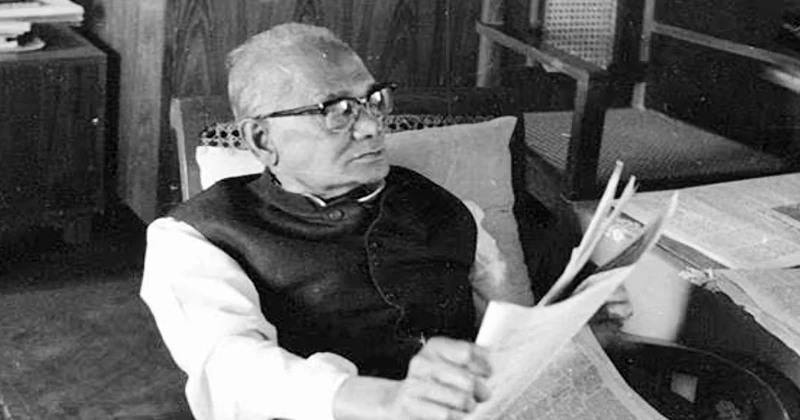
The nation commemorates the death anniversary of Jayaprakash Narayan, popularly known as “Lok Nayak,” who passed away on October 8, 1979. Revered as one of India’s most influential political leaders, social reformers, and independence activists, Jayaprakash Narayan’s life was defined by his unwavering commitment to justice, equality, and grassroots empowerment.
Born on October 11, 1902, in Sitabdiara, Bihar, Narayan was the eldest son of a government officer. He began his early education locally and later joined Patna College, where he was inspired by speeches of leaders like Jawaharlal Nehru and Abul Kalam Azad. His passion for India’s freedom struggle led him to leave Patna College just weeks before his exams, enrolling instead at Bihar Vidyapeeth, a nationalist institution established by the Indian National Congress. By the age of 18, he married Prabhavati Devi, daughter of an independence activist, solidifying his deep ties to the nationalist movement.
Jayaprakash Narayan emerged as a prominent figure during the Indian independence movement, notably in the Quit India Movement of 1942. He famously escaped from Hazaribagh Central Jail to organize underground resistance, earning him widespread recognition as a fearless freedom fighter. After independence, he initially devoted himself to social reform, joining Vinoba Bhave’s Bhoodan movement, and famously declined offers to join Jawaharlal Nehru’s government, prioritising public service over personal power.
The 1970s marked a pivotal period in Narayan’s life with his leadership of the “Total Revolution” (Sampoorna Kranti) movement in Bihar. The campaign, aimed at fighting corruption, misgovernance, and social inequities, gained nationwide attention and later became a rallying point against Prime Minister Indira Gandhi’s administration. During the Emergency (1975–77), Narayan was arrested along with other opposition leaders, but his relentless activism galvanized political opposition, culminating in the formation of the Janata Party, which defeated Indira Gandhi in the 1977 elections.
Narayan’s contributions were recognized both during his lifetime and posthumously. He received the prestigious Ramon Magsaysay Award for Public Service in 1965 and was posthumously awarded the Bharat Ratna, India’s highest civilian honor, in 1999.












Comments