





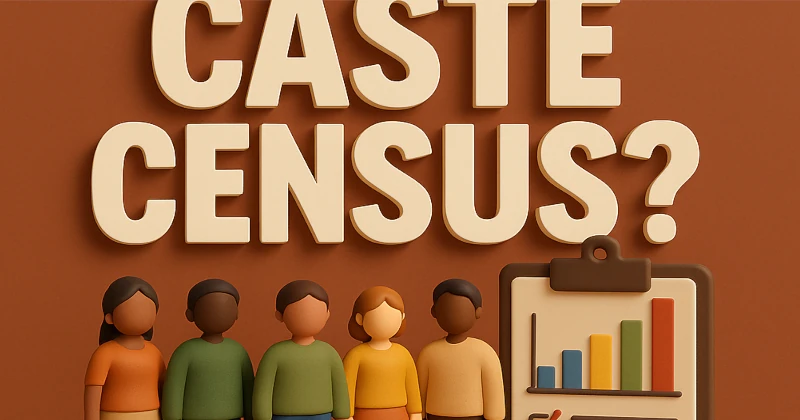
The ongoing social and economic survey conducted by the State Backwards Classes Commission has come under scrutiny after members of the Brahmin community expressed concerns over the absence of a specific “General Brahmin” option in the caste column. The omission has confused enumerators and survey participants, prompting calls for clarification from the government before any data is recorded.
Under the Revenue Department, caste certificates issued to the Brahmin community specifically list individuals as “General Brahmin.” However, in the current census, this option is absent. The survey application only provides three categories SC (Scheduled Castes), ST (Scheduled Tribes), and “Others.” Members of the Brahmin community are being asked to enter their names under the “Others” category. While people from other communities also list themselves under “Others,” they are still eligible for any reservations applicable to their caste when necessary, in addition to benefits under the general category.
This discrepancy has raised questions among the community: if a Brahmin is listed under “Others” during the census, will their certificate reflect “Other Brahmin” instead of “General Brahmin”? And what impact might this have on future access to rights, entitlements, and social benefits? These issues were first highlighted in Dharwad district by Mahesh Joshi, former president of Hebballi Gram Panchayat.
When enumerators attempted to clarify, they stated that Brahmins must be recorded under “Others,” a response that further aggravated the community. “If we are entered under ‘Others,’ why should the Revenue Department issue caste certificates stating ‘General Brahmin’? This inconsistency could create long-term complications for children’s education, employment opportunities, and legal entitlements,” Joshi said.
Joshi, who has been engaged in discussions with officials, emphasised that the Brahmin community has never sought any reservation benefits. “We do not request to be included in any reserved category, nor do we receive government advantages. Therefore, being categorised as ‘Others’ against our historical and administrative records is particularly frustrating,” he added.
Despite repeated inquiries over three days, Joshi claimed that neither the enumerators nor the higher authorities provided satisfactory answers. Staff involved in the census, including survey official Rupa Kubasad, reportedly sent written communication acknowledging that the census system does not allow the community to be recorded in the manner they requested.
Mahesh Joshi has reached out to Lakshman Kulkarni, the president of the Dharwad District Brahmin Association, to inform the community about the issue. Kulkarni has indicated that a Public Interest Litigation (PIL) may be filed soon to address the discrepancy. Joshi warned that if the problem is not rectified immediately, it could lead to broader issues affecting data integrity, social recognition, and future entitlements for the Brahmin community.











Comments