





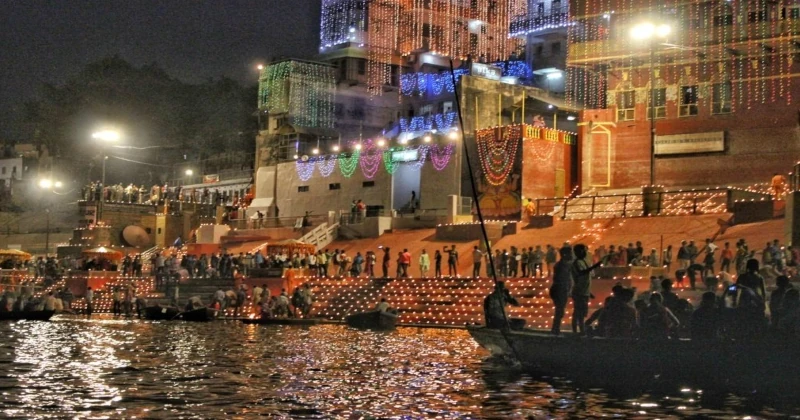
Varanasi has redefined Bharat’s tourism landscape. Once known solely as the spiritual capital of the country, the ancient city on the banks of the Ganga has transformed into a global tourism hotspot, surpassing traditional destinations like Goa and Shimla in visitor numbers. Official figures reveal an unprecedented 18.7 percent surge in tourist arrivals in 2024, with over 11 crore visitors marking Varanasi’s rise as India’s fastest-growing tourism hub.
Record-breaking footfall: 11 crore visitors in 2024
According to the Uttar Pradesh Tourism Department and the Ministry of Tourism, Varanasi recorded 11 crore visitors in 2024, marking a sharp rise from 9.3 crore in 2023. What makes this growth remarkable is the exponential increase in foreign tourist arrivals, which have surged over 120 times since 2021.
In 2021, only 2,566 foreign tourists visited the city. This number jumped to 83,741 in 2022, 2,01,904 in 2023, and 3,09,932 in 2024. By June 2025, the city had already welcomed 1.88 lakh foreign visitors, indicating an even stronger trajectory for the year ahead.
This consistent rise reflects not just domestic enthusiasm but global curiosity for the ancient city’s blend of spirituality, heritage, and modernity.
Outpacing traditional tourist destinations
With this unprecedented growth, Varanasi has now outperformed India’s long-standing tourism magnets such as Goa, Shimla, and Jaipur. Domestic footfall rose from 30.7 lakh in 2021 to over 10.97 crore in 2024, while 12.96 crore visitors were recorded in the first half of 2025 alone, surpassing the total numbers for all of 2024.
The data confirms what many travel analysts have been observing: India’s tourism focus is shifting from beaches and hill stations to heritage and spiritual destinations, with Varanasi leading the charge.
Cultural revival and infrastructure push fuel growth
Uttar Pradesh Tourism Minister Jaiveer Singh credited the city’s transformation to a combination of cultural revival and massive infrastructure development initiated by both state and central governments.
“The government’s sustained effort to project Varanasi as a global spiritual and cultural hub has paid off,” Singh said. “Along with Ayodhya, Mathura, and Prayagraj, Kashi has become part of a religious tourism triangle attracting visitors throughout the year.”
He further noted that Ayodhya alone recorded over 16 crore visitors in 2024, following the historic Pran Pratishtha of the Ram Temple, while Mathura and Prayagraj too reported significant growth in footfall.
Overall, foreign tourist arrivals in Uttar Pradesh jumped from 16 lakh in 2023 to over 22 lakh in 2024, with Varanasi contributing a major share to this record-breaking figure.
Economic ripple effect across Uttar Pradesh
According to senior tourism official Dinesh Kumar, quoted in media, the boom in Varanasi has had a cascading economic impact across the state.
“The development of Shri Kashi Vishwanath Dham and the growing prominence of Ayodhya and Vindhyachal have reshaped Uttar Pradesh’s religious tourism circuit,” he said. “The Mahakumbh 2025 has further boosted the momentum, acting as a catalyst for the tourism sector.”
Local businesses are witnessing unprecedented growth. Hotels, guesthouses, and homestays report near-full occupancy throughout the year. Restaurants, travel agencies, and transport services have expanded operations to meet the surge in demand. The tourism boom has also generated thousands of new jobs for local residents, from tourist guides and drivers to artisans and vendors.
Government initiatives such as Swadesh Darshan and PRASHAD (Pilgrimage Rejuvenation and Spiritual Heritage Augmentation Drive) have been instrumental in enhancing the city’s infrastructure and ensuring sustainable tourism growth.
World-class infrastructure transforming the visitor experience
Varanasi’s modern infrastructure has played a pivotal role in redefining visitor experiences. Official records show that in the first six months of 2025, more than 12.9 crore tourists have already visited the city, an extraordinary feat for a mid-sized Indian city.
The expansion of Lal Bahadur Shastri International Airport, new luxury hotels, riverfront beautification, and modern convention centers have made Varanasi not just a pilgrimage site but a destination for international conferences and cultural events.
Moreover, the Varanasi Smart City Project has improved civic amenities, waste management, and public safety, ensuring a cleaner and more organised experience for millions of visitors.
The Kashi Vishwanath corridor
Perhaps the most iconic catalyst in this transformation has been the Kashi Vishwanath Dham Corridor, inaugurated in 2021 by Prime Minister Narendra Modi. The corridor seamlessly connects the Kashi Vishwanath Temple with the Ganga River, dramatically improving crowd management, accessibility, and pilgrim convenience.
Its grand design, featuring wide walkways, spiritual plazas, and rest areas, has made the experience of visiting one of India’s holiest temples far more organised and visually spectacular.
Other projects, such as the Ganga Riverfront Revitalisation, LED street lighting, and 24-hour surveillance, have given the city a new sense of security and orderliness, a far cry from the chaos once associated with its narrow lanes and congested ghats.
A year-round tourism destination
Unlike earlier years when visitors flocked to Varanasi only during festivals like Dev Deepawali, Mahashivratri, or Ganga Mahotsav, the city now enjoys steady footfall throughout the year. Tour operators report that even in traditionally lean seasons, hotels are operating at over 80% capacity.
Foreign travellers, too, are exploring nearby attractions such as Sarnath, where Lord Buddha delivered his first sermon; Mirzapur, known for its scenic waterfalls; and Chunar Fort, a historic site on the Ganga’s banks. This expansion of travel itineraries has spread the economic benefits to surrounding districts, creating a holistic tourism ecosystem across the region.
Unique tourism blend
Experts quoted in a report by FPJ say, Varanasi’s success to its ability to blend timeless traditions with modern technologies. From online ticketing systems for temple entry to digital navigation boards across ghats and heritage sites, technology has streamlined pilgrim movement and enhanced accessibility for the elderly and differently-abled.
Digital campaigns under the “Dekho Apna Desh” initiative and collaborations with international travel influencers have further boosted global awareness about Kashi’s spiritual and cultural richness.
The soul of Bharat, rediscovered
Varanasi’s evolution into a vibrant tourism hub is more than just an economic success story, it’s a cultural renaissance. The city’s transformation mirrors India’s larger effort to reclaim and modernise its spiritual heritage while welcoming the world with open arms.
A senior tourism official summed it up perfectly: “The world is rediscovering Kashi, not just as a sacred city, but as the soul of India’s living heritage.”
Varanasi stands as a shining example of how vision-led development, cultural pride, and global connectivity can transform an ancient city into a world-class destination, one that not only preserves its timeless charm but also embodies India’s unstoppable march toward modernity.














Comments