





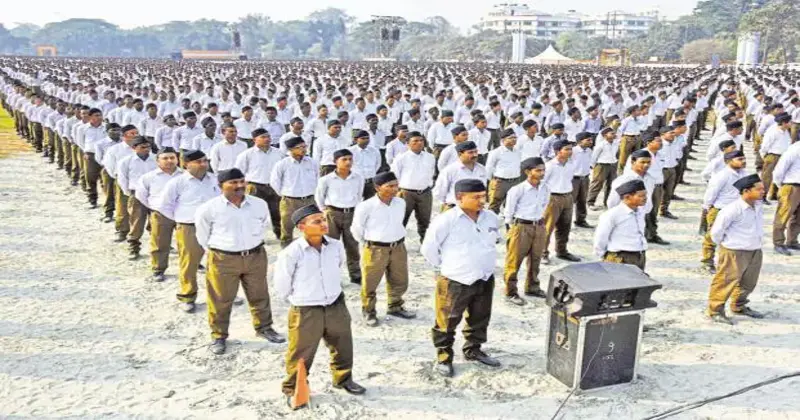
The Rashtriya Swayamsevak Sangh (RSS), founded in 1925 by Dr. Keshav Baliram Hedgewar, has completed a century of dedicated service to the nation. Over these 100 years, the RSS has emerged not only as a cultural and social organisation but also as a force that has shaped India’s national life through its work in the fields of nationalism, unity, education, social upliftment, disaster relief and nation-building. Its ideology of “Nation First” and vision of a strong, united and self-reliant India has inspired millions of swayamsevaks across the country.
Contribution to nationalism and integrity of the nation
The RSS has always emphasized Bharatiya values, traditions and culture as the foundation of national unity. It promotes the idea of “Akhand Bharat”—an integrated India beyond caste, creed, language or region. Through daily shakhas, training camps and mass movements, the Sangh has instilled discipline, patriotism and national character among citizens. The RSS has played a vital role in strengthening national integrity by uniting diverse communities under the idea of “Hindutva” as a cultural identity, not merely religious.
Role in Nation-Building
The RSS believes that true nation-building starts with the character-building of individuals. Through its various organizations like Bharatiya Mazdoor Sangh, Akhil Bharatiya Vidyarthi Parishad, Vidya Bharati schools, Seva Bharati and Vanvasi Kalyan Ashram, the Sangh has contributed to education, healthcare, rural development and social reforms. Its emphasis on self-reliance, social service and cultural pride has contributed significantly to India’s progress as a modern yet traditional nation.
Social Upliftment and Education
The RSS has worked extensively to eradicate untouchability, promote harmony among castes and uplift marginalized communities. Its educational initiatives through Vidya Bharati schools and Ekal Vidyalayas in rural and tribal areas have provided affordable quality education to millions of underprivileged children. Programs for women empowerment, healthcare camps, skill training and value-based education are part of its continuous effort toward social upliftment.
Role in North East India
The North East, with its diverse culture and unique challenges, has been a focus of RSS activities for decades. The border areas of North East has been a center of gravity of the RSS activities. In North East India, there are reportedly more than 1,000 shakhas, including 903 in Assam, 107 in Manipur, 36 in Arunachal, and 4 in Nagaland.
The key to success of the RSS in north-east, especially in states like Nagaland and Mizoram, where Christian population dominates the demography is its focus on preserving and protecting the indigenous faiths of the local populace and their tribal identity. Vanavasi Kalyan Ashram has played the lead role in this. It has revived Donyi-Polo and Rangfrah faiths in Arunachal Pradesh, Sanamahism in Manipur, the Zeliangrong Heraka movement in Nagaland and the Seng Khasi movement in Meghalaya.
To protect the indigenous identity, the RSS has collaborated with local tribal leaders, including Rani Gaidinliu, known for her resistance against British rule and Christian missionary influence on Zeliangrong Naga culture in Manipur.
Social Upliftment: The Sangh has established hostels, schools and healthcare centers in tribal and rural areas, addressing the needs of underprivileged communities. The organization has reached out to the remotest areas and worked amongst the people. People from all strata are happy
Education: Through Vidya Bharati schools, Ekal Vidyalayas and hostels, it has promoted education in remote areas, reducing illiteracy and empowering youth.
Poverty Eradication: Self-help groups, vocational training and agricultural support initiatives have enabled many families to achieve economic self-reliance.
Natural Calamities: During floods, earthquakes and landslides, RSS swayamsevaks are always among the first responders, providing food, shelter, medical help and rehabilitation.
Sacrifices: The RSS has borne the brunt of terrorist organisations and separatist movements in this region. In 2005 in Nalbari, RSS functionary Sukleswar Medhi, was shot dead by ULFA terrorists outside Balitara High School, where he taught. Four years before this incident in 2001, another senior regional level functionary Shyamal Sengupta and three pracharaks(full-time RSS workers)— Dinendranath De, Sudhamoy Dutta and Subhankar Chakraborty— were killed by the NLFT in Tripura after two years of their abduction and repeated tortures. There have been many such incidents where the RSS workers have been killed, harassed, assaulted, threatened by separatists and terrorists in the north-eastern region.
Role in Manipur
Manipur has been one of the important centers of RSS work in the North East.
Social Upliftment: The RSS has been establishing schools, hostels and vocational training centers for tribal and rural youth.
Education: Vidya Bharati institutions and Ekal Vidyalayas have been instrumental in spreading literacy and cultural education. Local Vidya Bharati units actively run programs and registration points in the state; these groups also organize coaching, cultural classes and sometimes local scholarships/fee-help through community funding (often organized locally by Swayamsevaks and Seva bodies).
Poverty Eradication: Encouraging self-employment schemes, organic farming and skill-based training for youth and women.
Promoting the legacy of Rani Gaidinliu (Rani Gaildelung): RSS and Sangh-affiliated groups have actively promoted the memory and recognition of Rani Gaidinliu (the Zeliangrong freedom-fighter from present-day Tamenglong, Manipur) — pressing for national recognition, public ceremonies and supporting centenary/commemoration activities and museums in her honour. The Sangh has campaigned publicly for her recognition and promoted celebrations/commemorations in the North-East. The Govt of India has now recognized her contributions.
Natural Calamities: During floods, earthquakes and landslides in Manipur, Swayamsevaks have actively participated in rescue and relief operations.
During COVID-19: During the 2020 COVID lockdown and afterwards RSS-linked Seva/Seva Bharati teams provided masks, food, awareness campaigns, help with oxygen/bed information, assistance to frontline workers and community support in the North-East. Seva Bharati’s national reporting cites such COVID response work and local teams in the region.
During the Ethnic Crisis of 2023: When the 2023 ethnic clashes hit Manipur, RSS teams (Manipur prant / Seva Bharati) visited affected villages, set up relief operations, distributed essentials and started skill/self-employment and rehabilitation activities in violence-hit districts.
Flood relief and disaster response: In recent floods in Manipur RSS Swayamsevaks and affiliated Seva groups ran relief camps, distributed food and essentials. They supported thousands of households and helped in many rescue operations.
Local social service programs (health camps, skill training, community work): RSS units in Manipur run regular shakha-based community activities: health camps, blood-donation drives, sanitation/clean-up drives, vocational and skill-development programs. These are part of wider Sangh social-service emphasis in the region.
Nation-Building in Manipur: By promoting patriotism, cultural pride and community service, the Sangh has contributed to strengthening Manipur’s role as an integral part of India.
As the RSS completes 100 years of service, its contribution to nationalism, social unity, education, disaster relief and nation-building stands out as an unparalleled example of voluntary social work in India. From the heart of Bharat to the farthest corners of the North East, including Manipur, the Sangh has continuously strived to uplift society and strengthen the nation. Its century-long journey is not only a tribute to its founders but also a roadmap for India’s future—rooted in cultural values, united in diversity and dedicated to building a strong and self-reliant nation.











Comments