





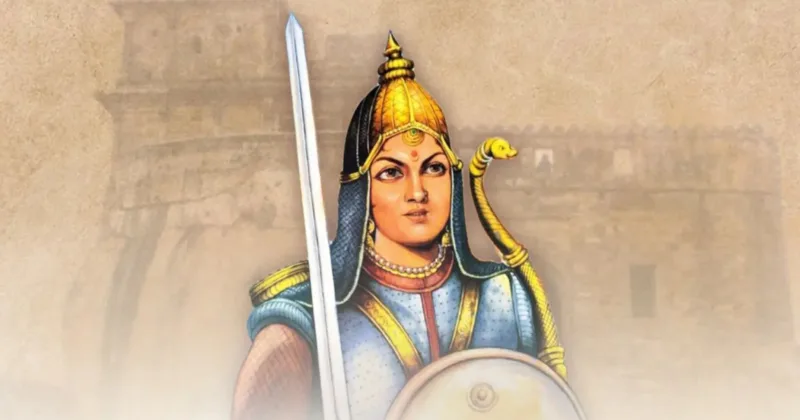
Jabalpur: Centuries may have passed, but the courage of Rani Durgavati — the warrior queen of Gondwana — continues to echo through the walls of the ancient Singorgarh Fort in Madhya Pradesh’s Damoh district. Her story, woven with valor, sacrifice, and indomitable spirit, remains one of the most remarkable tales of resistance in Indian history.
Born on Durga Ashtami in 1524 at Kalinjar Fort in present-day Banda, Uttar Pradesh, Rani Durgavati was the only daughter of Raja Kirti Singh Chandel of the Chandela dynasty. It was her birth on the auspicious day of Goddess Durga that earned her the name “Durgavati” — a name she would go on to embody through her strength and fearlessness.
Her beauty, intelligence, and unmatched courage soon became legendary. Hearing tales of her valor, Raja Sangram Shah of the Gond kingdom proposed her marriage to his son, Dalpat Shah, heir to the Gondwana throne. The marriage united two powerful dynasties — Rajput and Gond — creating one of central India’s most formidable alliances.
After Dalpat Shah’s untimely death, the young queen took charge of Gondwana, ruling in the name of her minor son, Prince Narayan. Under her rule, Gondwana witnessed unprecedented prosperity. She built reservoirs, temples, and rest houses, including the Rani Tal, Cheri Tal, and Adhar Tal in Jabalpur — each reflecting her commitment to public welfare and sustainable governance.
But it was her courage on the battlefield that made her immortal. When Mughal emperor Akbar sought to annex Gondwana, he sent his general Asaf Khan to invade. In the first encounter, Rani Durgavati’s forces defeated the Mughal army. Enraged, Asaf Khan returned in 1564 with a massive force. Undeterred, the queen donned a warrior’s attire and led her troops at Naraighat near Jabalpur.
Though heavily outnumbered, she fought valiantly, inflicting heavy losses on the Mughal army. Wounded by multiple arrows and facing inevitable defeat, she refused to surrender. On June 24, 1564, the queen chose death over dishonor, plunging her sword into her chest — securing her place in history as one of India’s greatest warrior queens.
Today, her memorial stands in Barela, near Jabalpur, where members of the Gond community and locals offer floral tributes every year. The Rani Durgavati University in Jabalpur continues to carry her legacy forward, while the ancient Singorgarh Fort, once her capital, stands tall as a silent witness to her bravery.
Interestingly, her descendants still live in Aanjani village in Damoh district, carrying forward the royal lineage of Gondwana. “Our ancestors taught us never to bow before injustice — that spirit still runs in our blood,” says Indur Shah, a descendant of the warrior queen.
Rani Durgavati’s life remains a timeless symbol of women’s strength, leadership, and patriotism — a tale that continues to inspire India’s daughters even five centuries later.
















Comments