Physics of light and lamps
December 5, 2025
  • Read Ecopy
  • Circulation
  • Advertise
  • Careers
  • About Us
  • Contact Us
Android AppiPhone AppArattai
Organiser
  • ‌
  • Bharat
    • Assam
    • Bihar
    • Chhattisgarh
    • Jharkhand
    • Maharashtra
    • View All States
  • World
    • Asia
    • Europe
    • North America
    • South America
    • Africa
    • Australia
  • Editorial
  • International
  • Opinion
  • RSS @ 100
  • More
    • Op Sindoor
    • Analysis
    • Sports
    • Defence
    • Politics
    • Business
    • Economy
    • Culture
    • Special Report
    • Sci & Tech
    • Entertainment
    • G20
    • Azadi Ka Amrit Mahotsav
    • Vocal4Local
    • Web Stories
    • Education
    • Employment
    • Books
    • Interviews
    • Travel
    • Law
    • Health
    • Obituary
  • Subscribe
    • Subscribe Print Edition
    • Subscribe Ecopy
    • Read Ecopy
  • ‌
  • Bharat
    • Assam
    • Bihar
    • Chhattisgarh
    • Jharkhand
    • Maharashtra
    • View All States
  • World
    • Asia
    • Europe
    • North America
    • South America
    • Africa
    • Australia
  • Editorial
  • International
  • Opinion
  • RSS @ 100
  • More
    • Op Sindoor
    • Analysis
    • Sports
    • Defence
    • Politics
    • Business
    • Economy
    • Culture
    • Special Report
    • Sci & Tech
    • Entertainment
    • G20
    • Azadi Ka Amrit Mahotsav
    • Vocal4Local
    • Web Stories
    • Education
    • Employment
    • Books
    • Interviews
    • Travel
    • Law
    • Health
    • Obituary
  • Subscribe
    • Subscribe Print Edition
    • Subscribe Ecopy
    • Read Ecopy
Organiser
  • Home
  • Bharat
  • World
  • Operation Sindoor
  • Editorial
  • Analysis
  • Opinion
  • Culture
  • Defence
  • International Edition
  • RSS @ 100
  • Magazine
  • Read Ecopy
Home Bharat

Physics of Light and Lamps – The dance of diyas and the colours of rangoli

Discover the hidden science behind the flickering flames of diyas and the vibrant colours of rangoli. From optics to thermodynamics, explore how physics brings festive traditions to life

Dr Punit KumarDr Punit Kumar
Oct 5, 2025, 12:00 pm IST
in Bharat, Opinion, Sci & Tech
Follow on Google News
Representative image

Representative image

FacebookTwitterWhatsAppTelegramEmail

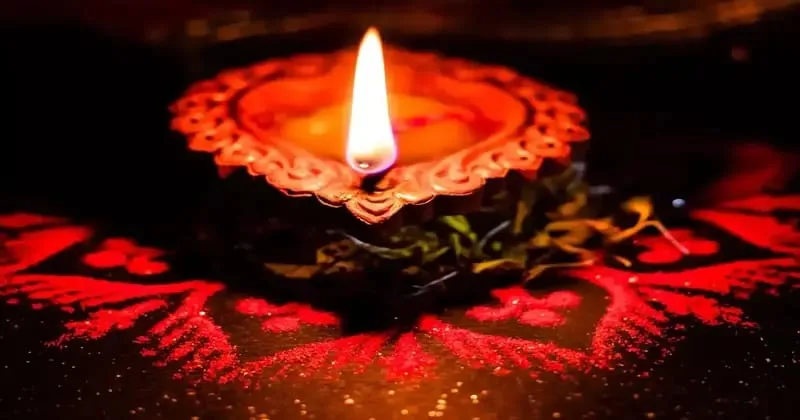
Every Indian festival is incomplete without the gentle glow of lamps and the vibrant patterns of rangoli. When the evening of Deepawali arrives, millions of oil lamps are lit across homes, streets, and mandirs. Their flickering flames cast shadows that seem to dance on the walls, creating a magical atmosphere that has fascinated people for centuries. On the ground, at doorsteps and courtyards, colourful rangoli patterns made of powders and pigments welcome guests and deities alike, adding another layer of beauty to the celebrations. While most of us enjoy these sights as tradition and art, the beauty of the lamp and the rangoli can also be explained through science. The physics of light, the behaviour of flames, and the optics of colours all combine to give us these experiences that feel both aesthetic and spiritual.

An oil lamp, or diya, is a simple yet elegant device. It consists of a small container, usually made of clay or brass, filled with oil or ghee, with a cotton wick drawing up the fuel. When the wick is lit, the flame burns steadily, but to an observer, it often appears to flicker and waver. The flickering is not random; it is a product of physical laws. The flame of a diya is affected by convection currents in the surrounding air. As the flame heats the air around it, the hot air rises while cooler air rushes in to take its place. These constantly moving air currents disturb the otherwise steady supply of oxygen, causing the flame to bend, dance, and flicker. Even the smallest movement in the room, a person walking by, a whisper of wind, or the turbulence caused by temperature differences creates changes in air pressure that the flame immediately responds to. This is why a row of lamps placed outdoors on Deepawali night often looks like a sea of shimmering points, each flame bending and flickering in its own rhythm, yet collectively producing a mesmerising spectacle.

The light produced by these lamps spreads in all directions because of the nature of electromagnetic radiation. A flame emits light through a process called incandescence, in which the heated particles of soot within the flame glow. These tiny carbon particles, reaching temperatures of over a thousand degrees Celsius, radiate visible light as a combination of wavelengths. This is why the flame appears yellowish or golden rather than pure white. The glow seems to fill a space because light rays radiate outward in straight lines until they hit surfaces, where they reflect or scatter. When a diya is placed in front of a wall, the light bounces off and creates soft illumination across the surface. When dozens of lamps are arranged in a row, their overlapping rays create a blanket of warm brightness that feels both calming and festive. The flickering nature of the flame enhances this effect, creating constantly shifting shadows and highlights that make the space appear alive.

Also Read: Bharat Eyes ‘Bodyguard Satellites’: Lessons from Operation Sindoor shape new space security doctrine

The symbolism of removing darkness is deeply tied to this physical property. Human eyes are extremely sensitive to variations in brightness, and our pupils adjust to even slight changes in light. The transition from darkness to the glow of a diya activates photoreceptor cells in the retina and stimulates the brain’s visual cortex, giving us a sense of relief, warmth, and even spiritual upliftment. What we often describe as a feeling of peace when watching the flame is, in part, a neurological response to light entering the eye after darkness.

While the diya is a story of fire and light, the rangoli is a story of colour and reflection. Rangoli designs are traditionally created using powders made from natural substances like rice flour, turmeric, vermilion, indigo, or flower petals. Modern rangolis often use synthetic pigments, but the science of how we see their colours remains the same. When light from the sun or from lamps falls on a rangoli, it interacts with the pigments. Each pigment absorbs certain wavelengths of light and reflects others.

The reflected wavelengths enter our eyes and determine the colour we perceive. For example, a rangoli filled with red powder appears red because the pigment absorbs most of the green and blue wavelengths of light while reflecting the red wavelengths back to our eyes. Similarly, turmeric appears yellow because it absorbs blue and violet light while reflecting yellow.

The richness of rangoli colours comes from the microscopic structures of the powders. Each particle scatters light in slightly different ways, producing subtle variations in brightness and shade. When these powders are placed next to each other in intricate patterns, the eye perceives a striking contrast. The human brain is especially sensitive to boundaries between colours, so the edges of rangoli designs appear sharp and vivid even though the powders themselves may be unevenly distributed. The texture of the powders also plays a role. Coarser grains scatter light diffusely, creating a softer matte look, while finer powders reflect light more uniformly, giving a brighter, smoother appearance.

Another fascinating aspect of rangoli is how lighting conditions change the way we perceive its colours. In the daytime, sunlight, which contains a balanced spectrum of all visible wavelengths, brings out the truest shades of pigments. At night, when rangoli is lit by diyas, the warm yellow light of the flame shifts the perceived colours slightly. Reds and yellows appear more vibrant, while blues and greens may look subdued. This is because the flame of a diya lacks strong blue and green components in its spectrum. The interplay of natural and artificial lighting adds layers of visual richness to the rangoli, making it appear different depending on the time of day.

In celebrating Deepawali or other festivals with lamps and rangoli, people unknowingly engage with science while expressing art and devotion. The diya represents how fire, air, and light interact, while the rangoli represents how pigments and optics shape perception. Together, they remind us that science is not confined to laboratories and classrooms but is alive in traditions, rituals, and everyday beauty. The next time you light a lamp or step over a rangoli, remember that you are standing at the meeting point of culture and physics, where the dance of flames and the brilliance of colours tell the timeless story of light conquering darkness.


Topics: Diwali ScienceDiyas And RangoliOptics In TraditionScience Behind FestivalsCultural PhysicsIndian festivalsPhysics Of Light
ShareTweetSendShareSend
✮ Subscribe Organiser YouTube Channel. ✮
✮ Join Organiser's WhatsApp channel for Nationalist views beyond the news. ✮
Previous News

Foreign funding, mass conversions, and a nationwide network — Steven Macwan under lens in Gujarat’s Nadiad case

Next News

No fee to update children’s Aadhaar biometrics till October 2026: UIDAI announces major relief for parents

Related News

Pushkar Mela

Pushkar Mela 2025: From world’s largest camel fair to Mandir bells— Experience the spirit of Rajasthan in full bloom

Representative image

Organising Chhath Puja: A commitment to good governance

Bhai Dooj 2025: Sisters pray for brothers long life & prosperity

Representative image

Swadeshi spirit dawns festival of light as India celebrates Deepawali 2025, vocal for local gets boost

Representative image

Dussehra 2025: A grand celebration of the triumph of good over evil

Representative image

Haritalika Teej: A festival of devotion, balance, and sustainability

Load More

Comments

The comments posted here/below/in the given space are not on behalf of Organiser. The person posting the comment will be in sole ownership of its responsibility. According to the central government's IT rules, obscene or offensive statement made against a person, religion, community or nation is a punishable offense, and legal action would be taken against people who indulge in such activities.

Latest News

BJYM leader Shyamraj with Janaki

Kerala: Widow of BJP worker murdered in 1995 steps into electoral battle after three decades at Valancherry

Russian Sber bank has unveiled access to its retail investors to the Indian stock market by etching its mutual fund to Nifty50

Scripting economic bonhomie: Russian investors gain access to Indian stocks, Sber unveils Nifty50 pegged mutual funds

Petitioner S Vignesh Shishir speaking to the reporters about the Rahul Gandhi UK citizenship case outside the Raebareli court

Rahul Gandhi UK Citizenship Case: Congress supporters create ruckus in court; Foreign visit details shared with judge

(L) Kerala High Court (R) Bouncers in Trippoonithura temple

Kerala: HC slams CPM-controlled Kochi Devaswom Board for deploying bouncers for crowd management during festival

Fact Check: Rahul Gandhi false claim about govt blocking his meet with Russian President Putin exposed; MEA clears air

Union Minister for Road Transport and Highways Nitin Gadkari (Right)

India set for highway overhaul as Union Minister Nitin Gadkari unveils nationwide shift to MLFF electronic tolling

RSS Akhil Bharatiya Prachar Pramukh Shri Sunil Ambekar

When Narrative Wars result in bloodshed, countering them becomes imperative: Sunil Ambekar

Ministry of Civil Aviation mandates emergency action: IndiGo ordered to stabilise flight operations by midnight

Chhattisgarh CM Vishnu Deo Sai at Panchjanya Conclave, Nava Raipur, Image Courtesy - Chhattisgarh govt

Panchjanya Conclave: Chhattisgarh CM Sai shares views on development projects in Maoist hotbed, women empowerment

Union Finance Minister Nirmala Sitharaman

‘TMC is holding Bengal back’: Sitharaman slams Mamata govt over industrial & healthcare setbacks

Load More
  • Privacy
  • Terms
  • Cookie Policy
  • Refund and Cancellation
  • Delivery and Shipping

© Bharat Prakashan (Delhi) Limited.
Tech-enabled by Ananthapuri Technologies

  • Home
  • Search Organiser
  • Bharat
    • Assam
    • Bihar
    • Chhattisgarh
    • Jharkhand
    • Maharashtra
    • View All States
  • World
    • Asia
    • Africa
    • North America
    • South America
    • Europe
    • Australia
  • Editorial
  • Operation Sindoor
  • Opinion
  • Analysis
  • Defence
  • Culture
  • Sports
  • Business
  • RSS @ 100
  • Entertainment
  • More ..
    • Sci & Tech
    • Vocal4Local
    • Special Report
    • Education
    • Employment
    • Books
    • Interviews
    • Travel
    • Health
    • Politics
    • Law
    • Economy
    • Obituary
  • Subscribe Magazine
  • Read Ecopy
  • Advertise
  • Circulation
  • Careers
  • About Us
  • Contact Us
  • Policies & Terms
    • Privacy Policy
    • Cookie Policy
    • Refund and Cancellation
    • Terms of Use

© Bharat Prakashan (Delhi) Limited.
Tech-enabled by Ananthapuri Technologies