






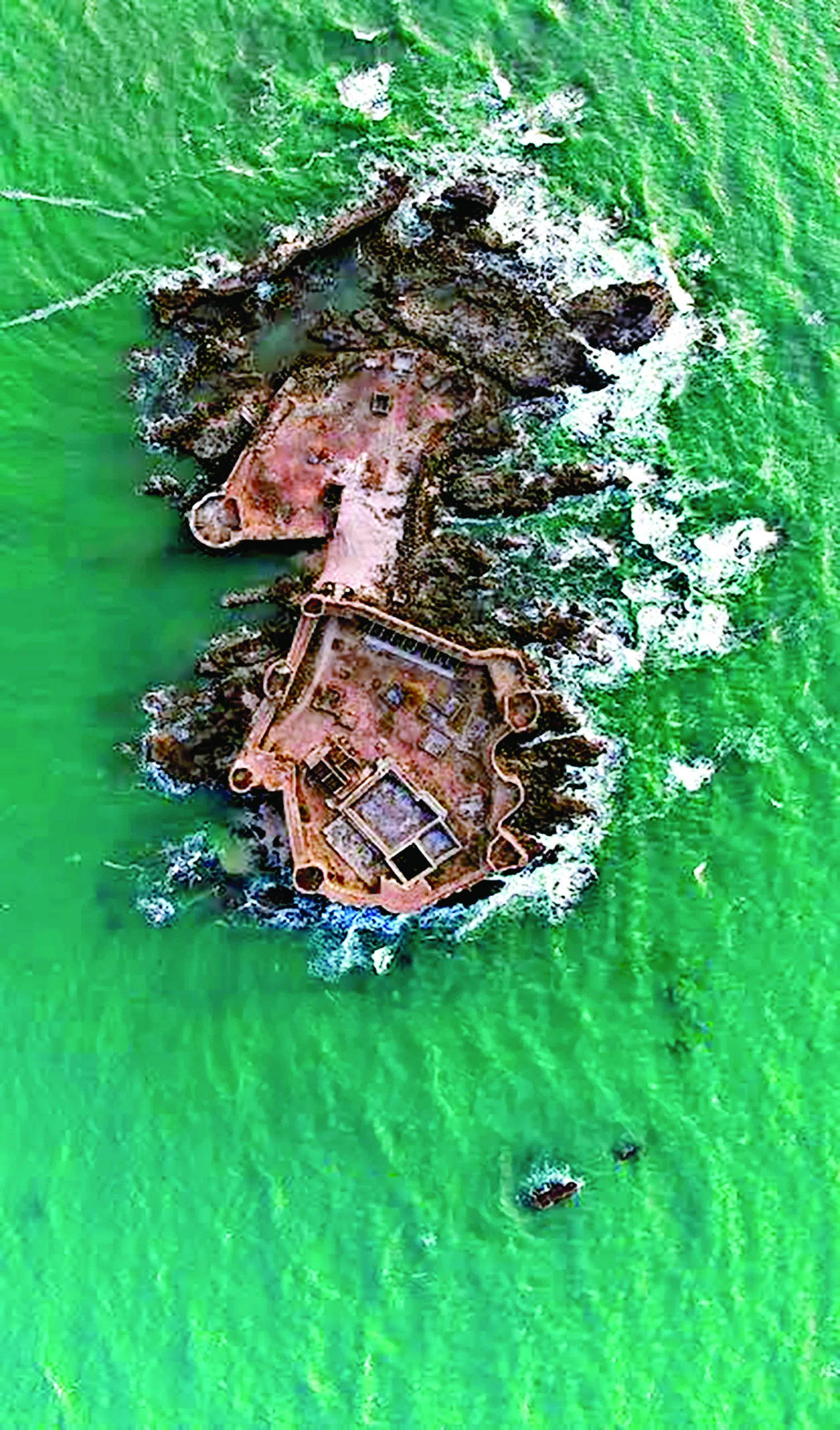
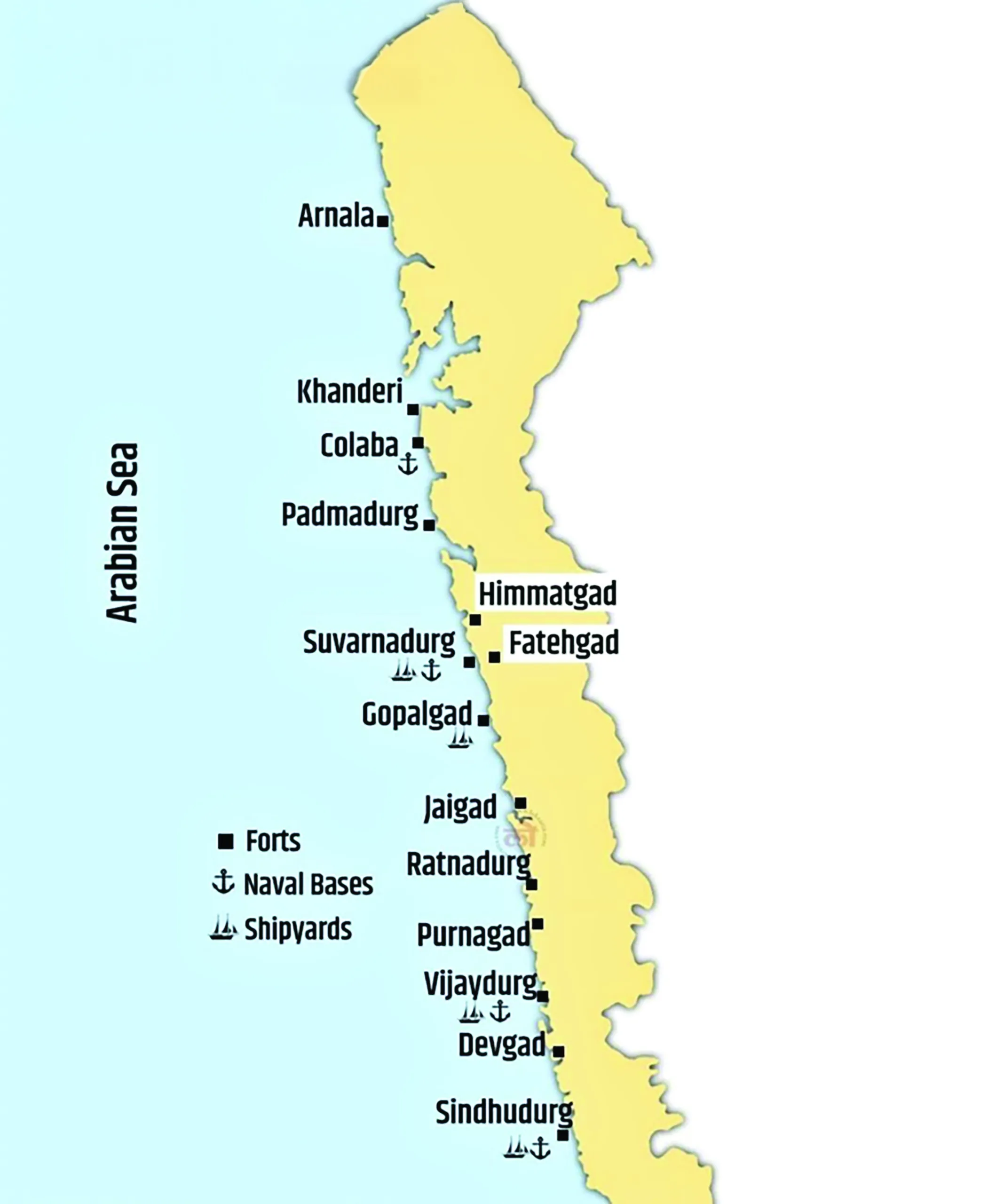
To protect trade and project naval power, Chhatrapati Maharaj Shivaji built a multi-layered coastal defence system that included island and shore forts like Sindhudurg, Vijaydurg, which he strengthened and used as a naval base, the twin islets Khanderi and Underi, which guarded approaches off Mumbai, Padmadurg, which was built to challenge Janjira/Siddi dominance, Suvarnadurg, Kolaba (Colaba) near Alibag, and other shore batteries. Murud-Janjira, on the other hand, remained a formidable Siddi rival that he frequently challenged. Together, these forts, supported by local sailor and fort-based logistics, created a flexible maritime defence that defended Konkan trade and fended off attacks from regional and European ships.
Echoes in Modern Maritime Doctrine
Bharat was “sea-blind” and mostly focused on its land borders a century ago. Shivaji’s example was a historical footnote from a long time ago. However, contemporary Bharatiya naval strategy, from the Maritime Doctrine of 2004 to the current “Security and Growth for All in the Region” (SAGAR) vision, clearly highlights the contributions Shivaji made. Coastal and Offshore Defence, Sea Control, Sea Denial, and Maritime Domain Awareness (MDA) are among the primary responsibilities of the Indian Navy today. The playbook of Shivaji is precisely mapped upon these. Similar to the coastal radar chain and information fusion centres of today, his forts and patrols served as early warning networks. Similar to the Navy’s goal of denying enemy freedom of action in Bharat’s littorals, he used his light fleet to deny his enemies access to the seas surrounding his coast.
M S Pawar, a former vice admiral in the Indian Navy, makes this comparison clear: Shivaji’s network of forts was a force multiplier and provided the Marathas with “better domain awareness in coastal regions.” It is interesting to note that Shivaji’s precise Adnyatra motto was, “He who owns the Navy owns the Sea,” foreshadows contemporary deterrence theory. Deterrence is emphasised as a peacetime objective in the Navy’s 2015 Maritime Strategy, which places a strong emphasis on ensuring “freedom from threats at or from the sea.” Shivaji’s need for ongoing vigilance in his waters is echoed by the government’s construction of a National Maritime Domain Awareness (NMDA) centre in 2025, which would combine coastal surveillance data into a multi-agency hub.
The link is made clear by Bharatiya leaders themselves. From the Sindhudurg fort podium, Prime Minister Modi commended Shivaji’s “foresight in recognising the importance of naval capabilities” during Navy Day 2023. The decision to name the new naval ensign for 2022 “Akshoni” after Shivaji’s seal, according to analysts, demonstrates a “growing marine consciousness” among decision-makers. Even as a strategy, Shivaji’s objective of safeguarding trade profits is in line with Bharat’s current Maritime Security Strategy (2015), which identifies the security of ports, shipping, and energy sources as a national interest. To put it briefly, Bharat’s naval doctrines are firmly rooted in Shivaji’s strategic ideas of safe sea lines, maritime patrol, and coastal defence.
Integrating the Legacy: From Heritage to Policy
Beyond doctrine, Bharat’s navy is symbolically infused with Shivaji’s maritime heritage. INS Shivaji is its top technical training academy in Lonavla, while INS Angre (named for his famous admiral Kanhoji Angre) is the headquarters of the Western Naval Command in Mumbai. The Navy officially replaced its previous ensign in 2022 with a new flag that featured Shivaji’s octagonal seal; this move was hailed as “a tribute to Shivaji’s legacy.” This blue-and-saffron emblem now flies over warships from the Indian Ocean to the Pacific, reminding crews of Shivaji’s maritime ethos. Bharat is also reclaiming this heritage culturally: twelve of Shivaji’s seaside forts, ranging from Sindhudurg to Tamil Nadu’s Gingee, were recognised as “enduring symbols of the valour, sacrifice, and vision of Chhatrapati Shivaji” when they were classified as UNESCO World Heritage “Maratha Military Landscapes” in 2025.
However, Shivaji’s teachings are only partially implemented in practice. In order to improve coastal infrastructure, Bharat has started the Sagarmala port-development programme, commissioned contemporary submarines and missile corvettes, and significantly increased its fleet, which now includes carriers like the INS Vikrant. However, as experts point out, it took centuries to institutionalise complete marine awareness; in fact, there was no single body for coastal security as late as the early 2000s. Bharat did not designate an NMDA structure or designate the Navy as the primary integrator for coastal defence till after the 2008 Mumbai terror attack. In this way, Shivaji’s “sea-blind” successors have finally caught up: Bharat is still developing an inter-agency structure to imitate the constant vigilance he required, but it already regularly names ships and exercises after his maritime heritage.
Nevertheless, the similarities are obvious. Shivaji’s dominance of the Konkan narrows is reflected in the current strategic emphasis on chokepoints (such as increased surveillance of Malacca). His dependence on regional industry and forts is also echoed by Bharat’s emphasis on indigenisation (“Make in India” shipbuilding) and coastal security institutions. Shivaji’s maritime awakening, according to one observer, postponed colonial dominance for generations. Today, as Bharat reclaims its position at sea, officials regularly point to his example. A pillar of Bharat’s maritime strategy is the Chhatrapati’s concept of an independent, watchful navy protecting the subcontinent’s coastlines. Bharat wants to make sure that its ports, coastlines, and trade routes are never overlooked again by taking lessons from its history, which includes both fortresses and fleets.
















Comments