






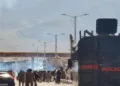
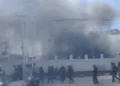
A week ago, there was violence in Leh town of Ladakh, which led to the tragic loss of four lives and injuries to dozens, including several personnel of the security forces. Last time, any such violence was reported from the tranquil and peaceful Ladakh was in 1989. At that time, most Ladakhis followed the leadership provided by the Ladakh Buddhist Association (LBA). In 2025, the agitation in Leh is being led by the Leh Apex Body (LAB), which comprises predominantly Buddhist leaders. This subtle change in name suggests demographic changes in this period of 36 years, besides the acceptance of some Muslim leaders, even if nominally.
This change has helped Leh Buddhists to make common cause with Kargil Shias, who are led by Kargil Democratic Alliance (KDA). The Kargil Shias and the Leh Buddhists are as different as chalk and cheese; nothing much common between them other than the term Ladakhis defining them in the rest of India and the world. The Kargil Shias look to Iran for spiritual guidance, and some ancillary matters, while the Buddhists in Ladakh are followers of Tibetan traditions led by the Dalai Lama.
Right now, the populations of Kargil and Leh have common causes to pursue, the demands for statehood and Sixth Schedule safeguards of the Constitution of India. These demands act as a glue as they strengthen their collective bargaining power vis-a-vis the negotiators appointed by the Central government to engage with them. If anything, the stalemate that prevails between the two sides broadly indicates that neither of them is willing to back off and tone down their positions. To arrive at a consensus so that things can move forward and there can be a resolution.
UT of Ladakh
Before October 2019, Ladakh was part of the state of J&K, which had a separate Constitution, as Article 370 was in effect. Some months before that, on August 5, 2019, the Central government passed the J&K Reorganisation Act to split it into two Union Territories (UTs). There was jubilation in Ladakh as the demand for a UT had been there for a very long time in the region. In fact, in 1995, the union government created an autonomous set-up in Leh district called Ladakh Autonomous Hill District Council (LAHDC). This practically became the third tier of democratic systems, which already had MPs (Member of Parliament) and MLAs (Members of Legislative Assembly).
The LAHDC Leh was replicated in the Kargil district a couple of years later, with another autonomous council created for it. For three decades, the two autonomous councils have virtually remained apex bodies for tackling local issues. However, of late, rather the last six years after the creation of UT of Ladakh, both the LAHDCs have lost most of their sheen. These are not considered bodies with any substantial powers and have lost much of their respect among common Ladakhis. Incidentally, it bears mention here that the last elections of the Leh LAHDC were held in October 26, 2020, almost five years ago. It is thus clear that the term of the present LAHDC led by the BJP, which had won 15 out of 26 seats on which the elections were held, is soon coming to an end.
It is interesting to try to understand the demand for statehood with which a section of the common Ladakhi identifies. It is, however, difficult to say that most people who support this demand understand the finer nuances. In the next few paragraphs, we will point out the reasons for saying so. We will need to look back at the history of legislative bodies in Ladakh, right from independence in August 1947.
Statehood Demand
It was only in 1951 that the first elections were conducted in the state of J&K, of which Ladakh was a part then. In the Constituent Assembly of J&K, the Ladakh region got two out of 75 seats, with 30 seats for the Jammu region and 43 for the Kashmir Valley. In Ladakh, one seat was meant for Kargil and one for Leh. In 1996, there was delimitation in J&K, and from 75, the number of seats rose to 87 with several new assembly segments being created. The seats in the Ladakh region doubled from two to four. Nubra in Leh district and Zanskar in Kargil district were the two new Legislative Assembly segments created then.
In 1996, then 2002, subsequently 2008 and in 2014, Ladakh chose four MLAs, who represented Leh, Nubra, Kargil and Zanskar. In 1951, there were two MLAs in Ladakh, and the number doubled to four after 45 years in 1996. For the sake of argument, let us say the demand for statehood is genuine and is conceded.
What will be the number of MLAs then in Ladakh? Doubling the number, as it has been there for the last 30 years, will make it eight. But what is a realistic number of legislators any Ladakh assembly, if it is constituted, should have?
Small Assemblies
The smallest Legislative Assembly in India is that of Puducherry, another UT, which has 30 MLAs (population in 2011, around 12,48,000). Sikkim is a state which comes next with 32 legislators who are all elected (population in 2011, around 6,11,000). Goa (population around 14,86,000 in 2011) in the western part of the country and Mizoram (population 11,00,000 in 2011) in the North East region both have 40 legislators. These small assemblies have been created with special provisions made by Parliament, as usually Legislative Assemblies can be created with 60 members.
In 2011, when the last population census was done, the entire Ladakh region had a population of around 2,74,000 only. Incidentally, the total number of voters in Ladakh was around 1,60,926 (Leh 80, 790 and Kargil 80,136 voters). That means on average, a Ladakh MLA represented around 40,120 voters.
In 2025, it is calculated that the population may have grown to over 3,05,000. During the 2024 Lok Sabha elections, there were 1,84,808 voters in the Ladakh Lok Sabha segment. Going by this data, it seems the Ladakh Legislative Assembly, even if created, can only be much smaller even as compared to Puducherry, Sikkim, Mizoram and Goa.











Comments