






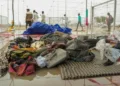
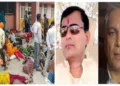
The recent tragedy in Karur, Tamil Nadu, on September 27, 2025, where 41 lives were lost and nearly 100 others were injured at a rally organised by actor-turned-politician Vijay Joseph, has once again highlighted India’s chronic crowd safety crisis. Coming just over a year after the Hathras stampede of July 2024, which claimed the lives of 121 devotees, most of them women and children, the Karur incident has revived the same uncomfortable and haunting question: why does nobody ever face justice for these deaths?
Between January 1, 2010, and September 29, 2025, India has witnessed 21 major stampedes that have together claimed 741 lives. Yet, across all these horrific incidents, not a single conviction has taken place. The pattern is disturbingly familiar: FIRs are lodged, inquiries are announced, compensation packages are declared, and officials are briefly suspended. But as time passes, case files gather dust in police stations and courts, survivors are forgotten, and the victims’ families remain without justice.
The Grim Tally: 21 stampedes, 741 dead, 0 convictions
The last 15 years reveal a grim history of repeated tragedies where lives were lost, responsibility was evaded, and justice was denied. In March 2010, a stampede at the Ram Janki Temple in Uttar Pradesh during the distribution of free food and clothes killed 63 people. The state government ordered an inquiry and provided compensation, but no individual was held accountable. Barely a year later, in January 2011, Sabarimala in Kerala witnessed one of the worst stampedes in modern India when a jeep accident triggered panic among pilgrims returning from the Makara Jyothi darshan. The tragedy left 106 dead and 456 injured. A judicial inquiry was announced, but as with other cases, it resulted in no convictions.
In November 2011, Har-ki-Pauri in Haridwar saw 20 devotees lose their lives in a stampede. FIRs were filed, and inquiries into mismanagement were ordered, yet no one was punished. The following year, in November 2012, 20 people died during Chhath Puja in Patna when the crowd surged uncontrollably. Government officials were suspended briefly, but nobody faced long-term consequences. In February 2013, overcrowding at the Allahabad railway station during the Maha Kumbh Mela killed 42 people. The government ordered a high-level administrative inquiry, but the matter ended there. Later that year, in October 2013, a rumour about a collapsing bridge over the Sindh river during Navratri celebrations in Ratangarh, Madhya Pradesh, caused panic that killed 115 devotees and injured more than 100. Although a CBI probe was eventually ordered and local officials were suspended, the case remains unresolved.
Stampedes continued to recur. In January 2014, 18 people were killed on Malabar Hill in Mumbai during a funeral procession. Later that year, in October, Gandhi Maidan in Patna turned into a death trap when Dussehra celebrations ended in a stampede that killed 32. The Bihar government ordered an investigation, but once again, no accountability followed. In July 2015, Rajahmundry in Andhra Pradesh witnessed a deadly stampede at the Godavari Pushkaram festival, claiming 27 lives. A one-man commission was appointed, compensation was announced, and FIRs were filed against the organisers, but justice remains elusive.
In October 2016, 24 people died near Varanasi during a religious procession when a bridge became overcrowded. The following year, September 2017, Mumbai’s Elphinstone Road station saw one of the most shocking urban stampedes in recent memory. Twenty-three commuters died after rumours of a bridge collapse spread during heavy rains. Despite widespread outrage, FIRs were filed only against unknown persons, and no convictions have been recorded to date.
The tragedies of the 2020s have been equally devastating. On New Year’s Day in 2022, a stampede at the Vaishno Devi shrine in Jammu and Kashmir left 12 pilgrims dead after a brawl between two groups triggered chaos. In July 2024, Hathras in Uttar Pradesh recorded the deadliest stampede of the decade. A gathering of nearly 2.5 lakh people, more than triple the permitted limit, turned catastrophic. At least 121 people, mostly women and children, were killed. An FIR was lodged against the accused and his aides, 11 people were arrested, and six officials were suspended. Yet the trial remains stuck, and victims’ families continue to wait for justice.
Later in December 2024, Hyderabad’s Sandhya Theatre saw a fatal crush that killed one person. Popular actor Allu Arjun was briefly arrested in connection with the incident but later released on bail, and the case remains open. In January 2025, six devotees died at Tirumala during long queues at the Venkateswara temple, with inquiries ordered and FIRs lodged. That same month, 30 people were killed at the Maha Kumbh Mela in Prayagraj. Despite multiple suspects being detained, no convictions have followed.
In May 2025, Shirgao in Goa saw six lives lost at the Sri Lairai Devi temple festival. In June, 11 people died in Bengaluru during the Royal Challengers Bengaluru IPL victory parade, a tragedy that exposed the complete lack of preparedness of both event organisers and city administration. FIRs were registered against the event management company and RCB’s marketing manager, but responsibility was never clearly fixed. At the end of June, Puri in Odisha reported three deaths near the Gundicha Temple in another festival crush. Then, in September 2025, Karur became the site of one of Tamil Nadu’s worst stampedes when a Vijay Jospeh-led rally, attended by more than twice the permitted number of people, turned chaotic and killed 41. FIRs were filed against TVK party functionaries, but it is unlikely that accountability will extend beyond paper.
Who is responsible?
Beyond the recurring lapses of administration, a disturbing trend that demands urgent attention is the role of celebrities and event organisers who knowingly invite crowds far beyond permissible limits. The chase for popularity and mass appeal often overshadows basic safety measures.
A recent example is that of actor-turned-politician Vijay Joseph’s rally, where thousands more than the sanctioned number of attendees were mobilised despite clear warnings. The organisers not only failed to set up barricades and emergency exits but also ignored instructions on crowd control issued by the district authorities. The result was utter chaos, people were left gasping for air in suffocating crowds, with several trampled underfoot while Joseph’s cavalcade moved ahead undeterred.
Survivors and families of victims allege that the organisers vanished from the site, leaving ordinary citizens and a few overwhelmed police officers to deal with the human tragedy. Such blatant disregard for human life raises a pressing question: why is the burden of accountability placed only on local administrations when organisers, event managers, and celebrities themselves play a direct role in creating these unsafe conditions? Many argue that without criminal liability being fixed on organisers and public figures who flout norms, stampede deaths will continue to repeat with tragic regularity.
The anatomy of a failure
Every stampede in India follows a predictable cycle. First, tragedy strikes and hundreds of lives are lost due to negligence, mismanagement, or sheer overcrowding. This is immediately followed by political outrage, with governments promising inquiries, ex gratia payments, and suspensions of officials. The police then register FIRs, often against unknown individuals or low-level organisers, while shielding more powerful figures behind the events. Finally, once public attention fades, trials drag on endlessly, inquiry commission reports gather dust, and victims’ families are left with nothing but compensation cheques.
There is simply a toxic combination of weak crowd control measures, systemic negligence, and political shielding of organisers as the core reasons behind this cycle. Judicial commissions have time and again indicted local officials and organisers, but reports are either buried by governments or watered down in implementation.
Why zero convictions?
The absence of convictions is rooted in deeper structural flaws. India lacks a specific legal framework to address culpable negligence in crowd disasters, meaning cases are pursued under broad provisions of the Indian Penal Code, which rarely stick in court. Many organisers of such events are political or religious heavyweights, enjoying immense influence and often political patronage, which shields them from legal consequences. Trials take years, and by the time cases reach any conclusion, evidence has decayed, and witnesses have either disappeared or been silenced.
Compensation announcements, ranging from two to ten lakh rupees, become a substitute for justice, with families forced to settle for financial relief while those responsible escape punishment.
The cost of inaction
For the families of victims, the cost of inaction is devastating. Survivors recall scenes of suffocation, where narrow exits were blocked, basic safety protocols were ignored, and warnings were dismissed. While governments announce compensation packages, victims’ relatives are clear that no amount of money can replace accountability.
Each new disaster erases the memory of the previous one. Public outrage surges for a few days, inquiries are ordered, and promises are made. But with no convictions, no systemic reforms, and no deterrence, the tragedies keep repeating.
A crisis needs closure
With 741 deaths in just 15 years and not a single conviction, India’s stampede record is not just a series of unfortunate accidents but a damning indictment of institutional negligence and collective failure. These deaths are not inevitable acts of fate; they are the result of poor planning, ignored warnings, and unaccountable systems. Unless India introduces stringent crowd safety laws, independent monitoring mechanisms, and fast-track trials to deliver justice, Karur will not be the last tragedy of its kind.
The haunting question remains unanswered: in India, is a life lost in a stampede worth nothing more than a cheque of compensation?














Comments