





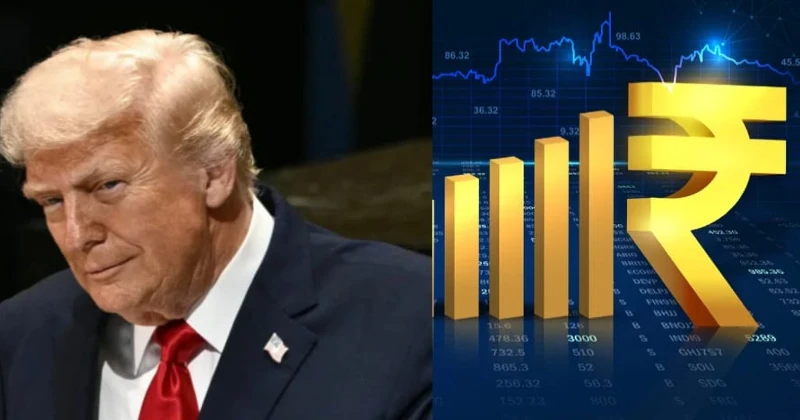
Concerns are rising in Washington as the Trump administration faces the possibility of a government shutdown if crucial funding bills are not passed by September 30. President Donald Trump is holding direct talks today with opposition Democratic leaders in a last-ditch effort to avoid the looming crisis. Without agreement, government operations will come to a halt starting October 1. Trump has gone so far as to warn that a shutdown could trigger mass layoffs, intensifying public anxiety.
At the centre of the dispute is a demand by Democrats to include additional funding for the healthcare sector in the funding package. Trump remains firm that no last-minute provisions will be allowed, insisting the bills should pass in their original form. The political standoff has brought the government to the brink, with both sides under pressure to find a compromise before the deadline.
The upcoming meeting will bring together Trump, House Speaker Mike Johnson (Republican), and Senate Majority Leader John Thune (Republican) on one side, and Senate Minority Leader Chuck Schumer (Democrat) and House Minority Leader Hakeem Jeffries (Democrat) on the other. The discussions will determine whether the government moves into a shutdown or whether a temporary deal is struck to buy more time.
US Government Services at Risk as Deadline Nears
If Congress fails to approve the necessary funding, the United States will enter a government shutdown beginning October 1. This would result in the suspension of all non-essential government services. Essential services such as hospitals, border security, and air traffic control would continue to function, but a wide range of public-facing operations would grind to a halt. Passport processing, travel services, museums, and national parks would be among the first to close.
The shutdown would also affect critical services like Social Security and Medicare, with delays expected in the processing of benefits and health insurance claims. Economists warn that prolonged disruptions could have ripple effects on the financial system, including potential losses in the stock markets. Past shutdowns have cost the US economy billions of dollars in lost GDP, further raising the stakes of the current impasse.
Despite the grim outlook, there is still cautious optimism. Both Republican and Democratic leaders have expressed a willingness to keep the government functioning in the short term, possibly by approving funding extensions for a few weeks or months while more contentious issues are debated later. Democratic leaders have also reiterated that they are not seeking to push the nation into a shutdown, but insist that healthcare funding must remain a priority.
RBI Policy in Focus as Markets Rally, Gold Climbs and Rupee Steadies
While Washington braces for uncertainty, attention in India has turned to the Reserve Bank. The six-member Monetary Policy Committee, chaired by Reserve Bank of India (RBI) Governor Sanjay Malhotra, began its meeting today. The outcome, to be announced on October 1, will determine the direction of interest rates in the world’s fastest-growing major economy.
Analysts expect the RBI to maintain its base interest rate, mirroring its stance in the last policy meeting. However, with the festive season approaching, speculation is mounting that the central bank may spring a surprise “Navratri-Diwali gift” by cutting rates to spur demand. The Indian stock market is already responding with optimism. The Gift Nifty climbed 120 points in early trade, raising expectations that both the Sensex and Nifty will open higher. Domestic markets are further buoyed by positive signals from India-US trade talks, recent GST relief measures, and upbeat forecasts for festive season spending. On Wall Street, however, investor sentiment remained muted. Futures of the S&P 500 and Nasdaq 100 traded flat, while the Dow Jones inched up just 17 points. In Asia, Japan’s Nikkei index dropped 0.96 per cent, reflecting regional concerns about global growth.
Adding to India’s positive outlook, international crude oil prices declined, offering relief for the rupee and energy-intensive sectors. The rupee strengthened slightly last week, closing at 88.72, up by four paise. Meanwhile, global gold prices gained $16 per ounce, with the metal trading at $3,796, underlining safe-haven demand amid global uncertainties. With critical political negotiations in the United States and a decisive monetary policy review in India, the coming days could set the tone for both global and domestic markets.















Comments