





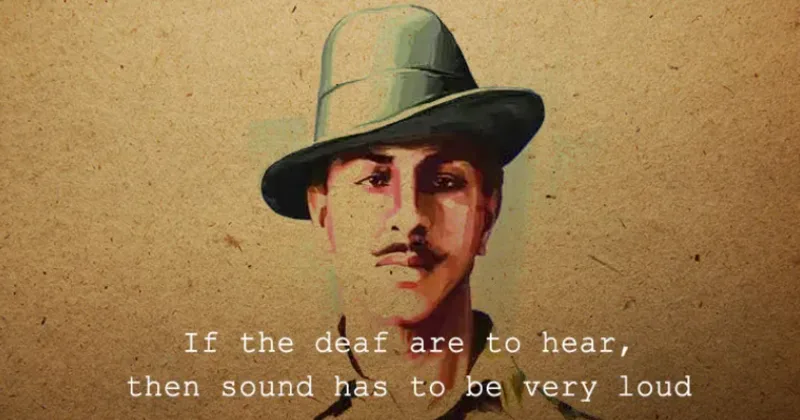
NEW DELHI/LAHORE: The nation is observing the birth anniversary of Bhagat Singh today on September 28, Bhagat Singh is one of India’s most celebrated and fearless freedom fighters. Born on September 28, 1907, in Banga, Punjab (now in Pakistan), Bhagat Singh’s short but impactful life has become synonymous with unwavering courage and revolutionary thought.
The day serves as a national tribute to a man who, at the young age of 23, made the ultimate sacrifice for India’s independence, immortalizing himself alongside his comrades, Rajguru and Sukhdev.
Bhagat Singh’s journey into the independence movement was profoundly shaped by the socio-political climate of the era, most notably the 1919 Jallianwala Bagh massacre. Deeply influenced by the brutality of colonial rule, he quickly moved from witnessing the struggle to becoming a leading figure in the revolutionary movement.
As a member of the Hindustan Socialist Republican Association (HSRA), Singh advocated for complete independence, rejecting colonial dominion through both his fiery writings and dramatic, symbolic actions. His revolutionary activities were not merely acts of violence, but carefully orchestrated statements to “make the deaf hear.”
Among his most daring deeds was the plot to avenge the death of veteran nationalist Lala Lajpat Rai, who died following a police lathi-charge during a protest against the Simon Commission in 1928. On December 17, 1928, in a case of mistaken identity, Singh, along with Rajguru and Sukhdev, killed British Police Officer John Saunders outside the District Police Headquarters in Lahore.
However, it was the bombing of the Central Assembly Hall on April 8, 1929, that catapulted him to national icon status. Accompanied by Batukeshwar Dutt, Singh hurled two non-lethal bombs into the Assembly chamber and deliberately stayed to shout the iconic slogan, ‘Inquilab Zindabad!’ (Long Live the Revolution). Their surrender was a calculated political move, using the subsequent trial as a platform to spread their message of revolution and justice across India.
Bhagat Singh had “become a symbol” who seemed to vindicate the honour of the entire nation.
Bhagat Singh, Rajguru, and Sukhdev were executed on March 23, 1931, for their role in the freedom struggle, but their martyrdom only intensified the youth-led resistance movement.
Beyond his patriotism, Singh’s legacy is defined by his deep commitment to his belief in a nation founded on social and economic justice, where citizens stand united against oppression, continues to resonate strongly with new generations.














Comments