





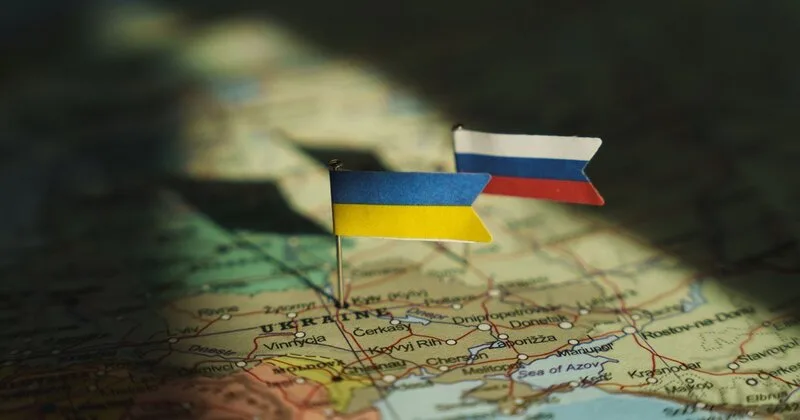
Stalemates do not silence wars; they only teach the world to live with them. In Kharkiv’s sirens lies not just Ukraine’s tragedy, but a warning: when survival replaces peace, aggression everywhere finds its licence.
History will remember February 24, 2022, as the day Europe’s security order shattered. In the grey light of dawn, Russian armour rolled across Ukraine’s borders from three directions, missiles struck Kyiv and Kharkiv, and Vladimir Putin declared that Ukraine was not a real state but a mistake of history. It was the largest act of military aggression in Europe since World War II; a deliberate assault on sovereignty, the UN Charter, and the fragile balance that had held since the Cold War.
Moscow justified its war in the language of “denasification” and “security guarantees”, but the reality was plain: an attempt to redraw borders by force. Ukraine, caught by surprise yet buoyed by popular resistance, fought back with grit. Kyiv did not fall. The war spread across the Donbas and southern regions, while Crimea, annexed by Russia in 2014, became the staging ground for further assaults. The brutality was unmistakable: Bucha’s mass graves, Mariupol’s siege, missile strikes on schools and hospitals.
The West responded with sanctions unseen since the Cold War, military aid packages worth billions, and political isolation of Moscow. NATO, once described as “brain-dead,” rediscovered purpose. Sweden and Finland abandoned neutrality. The European Union, often divided, spoke with rare unanimity in condemning Russia’s aggression. Yet the punishment did not break Russia’s capacity to fight, nor did it force a change in Kremlin policy. Ukraine, meanwhile, has become both a battlefield and a symbol. To its people, it is a war of survival; to the West, a test of deterrence; to Russia, a struggle for imperial relevance. To the Global South, it is often seen less as a battle of democracy versus autocracy than as another faraway war whose collateral costs; fuel, food, fertiliser, land heavily at home.
More than three years later, the initial shock of aggression has given way to an unnerving reality: the war has not ended, nor has it expanded decisively. Instead, it has settled into an age of permanent stalemate.
On a cold September night in Kharkiv, the air-raid sirens wail again. Children, half-asleep, shuffle into basements that have become second homes. Above ground, the city staggers on: cafes still serve coffee, the metro carries passengers, and rebuilding crews patch the same shattered windows that will likely be blown out again next week. This is the rhythm of a war now entering its fourth year, not one of sweeping offensives and rapid victories, but of grinding attrition, where time itself has become a weapon.
The frontline tells a story of exhaustion. Russian forces, after seizing Mariupol and parts of Donbas, have entrenched themselves behind vast defensive belts; minefields, trenches, and layered fortifications. Ukraine’s 2023 counteroffensive, heralded with optimism, fell short of breaking through. Drones now circle like vultures, artillery duels consume villages, and soldiers huddle in muddy dugouts waiting for relief that rarely comes. Neither side can achieve a decisive victory. Russia has manpower and a war economy adapted to sanctions, but lacks the agility for breakthroughs. Ukraine has Western weapons, but not enough to dislodge entrenched defences. The war resembles World War I more than the lightning wars of the 20th century.
India, with its own experience of long, unresolved conflicts, reads this pattern with grim familiarity. The 1999 Kargil conflict ended quickly, but Kashmir has shown New Delhi how wars without closure become decades-long sores. Ukraine risks the same fate: a “line of control” running across Europe. Its tragedy is not without precedent. The Korean War, fought from 1950 to 1953, ended not with peace but with an armistice, a demilitarised zone still dividing the peninsula seventy years later. Afghanistan, too, became the graveyard of empires: Soviet forces withdrew in 1989 without victory, and decades later the United States did the same. Iraq, Libya, and Syria all remind us that in modern war, “mission accomplished” rarely means closure. Some wars do not end; they merely settle into frozen permanence.
If the battlefield is deadlocked, diplomacy is frozen solid. Both sides cling to maximalist positions. Kyiv insists on full sovereignty, including Crimea. Moscow refuses to retreat from annexed territories, lest it admit defeat. Western capitals echo Kyiv’s defiance but shy away from pressing it into talks. Washington, especially in an election year, cannot appear to reward Russian aggression. The result is a surreal silence. Peace conferences are convened without Russia. Back-channel talks exist, but trust is non-existent. Russia demands security guarantees against NATO expansion; Ukraine demands guarantees against Russia itself. Each side wants ironclad protection, but no guarantor is willing to risk its credibility.
India once hinted at a mediating role. Prime Minister Narendra Modi’s statement to Putin in Samarkand, “this is not an era of war” resonated globally. But New Delhi soon stepped back, wary of alienating Moscow, a traditional arms supplier, or Washington, an emerging partner. Today, India’s diplomacy is less about peace-making than about maintaining manoeuvring space in a divided world.
International law says aggression cannot stand. The UN Charter, the ICJ, and the International Criminal Court have all weighed in. Yet law has little traction against geopolitical reality. Crimea’s annexation in 2014 already challenged the global order; the 2022 invasion shattered it. The precedent is dangerous. If Russia can redraw borders by force, what prevents China from doing the same in Taiwan, or others in contested zones from the South China Sea to the Himalayas? Each frozen conflict becomes an unspoken permission slip.
India treads carefully. It has not condemned Russia outright, wary of setting precedents for its own disputes in Kashmir or along the Line of Actual Control with China. It abstains in UN votes, signalling neutrality or, critics argue, selective legality. For many in the Global South, this is not hypocrisy but realism: law, in practice, bends to power.
No continent has felt the weight of the war more directly than Europe. Millions of refugees have been absorbed, straining schools, healthcare systems, and housing markets. Poland and Germany carry
heavy burdens; Hungary plays the spoiler, blocking consensus on sanctions. Sweden and Finland, once neutral, have entered NATO, redrawing Europe’s security map. The war has also reshaped energy politics. Europe, long reliant on Russian gas, has scrambled for alternatives: liquefied natural gas from Qatar and the U.S., a revival of nuclear power in France, and accelerated investment in renewables. But these shifts come at a cost: higher bills, inflation, and the political rise of populists who exploit war fatigue. For the EU, unity has held so far, but cracks show. Ukraine’s path to EU membership is championed in Brussels but dreaded in capitals wary of corruption, costs, and political complexity. In the end, Europe faces not just a war on its borders, but a test of whether its promise of solidarity can survive prolonged strain.
Behind every geopolitical calculation lies the human cost. More than six million Ukrainians remain displaced abroad, while millions more are internally uprooted. Families are split across borders, waiting for a war that shows no sign of ending. Children attend school in underground bunkers. Hospitals operate under blackout conditions. The tragedy is not just destruction but suspension. Refugees linger in limbo, unable to plan for return or permanent resettlement. Aid agencies warn of fatigue: Europe has absorbed millions, but patience wears thin, budgets strain, and host communities feel the weight.
One Ukrainian mother in Warsaw describes life as “half-lived”: her children learn Polish, but she dreams of returning to Odesa. A Russian conscript’s father in a Siberian village confesses he “never asked for this war”, yet his son returned in a coffin. And for India, thousands of students once studying in Ukraine were forced to flee in 2022, their careers and futures abruptly severed. War leaves not only ruins, but also interrupted lives.
Over time, endless war reshapes not only landscapes but minds. In Ukraine, resilience has become a survival strategy, but fatigue gnaws at communities. Sirens become background noise, yet each one frays nerves. People joke darkly about “living between blackouts”, an adaptation that masks deep anxiety. In Russia, propaganda sustains the illusion of purpose, but beneath the slogans lies quiet discontent. Young men evade conscription; families whisper about loss, but public protest is muted by fear. For both societies, the war is a constant psychological pressure, demanding sacrifices with no horizon of closure. Wars of stalemate do not just kill bodies; they corrode optimism. They teach citizens to live in suspended time, to normalise the abnormal. That erosion of hope may prove the deepest wound of all.
Wars do not last without money. Russia has managed to stabilise its war economy, redirecting oil exports to Asia; India and China now account for the bulk of purchases. Sanctions bite, but not enough to break. Instead, Russia has adapted, tightening control and turning isolation into resilience. Ukraine survives on Western lifelines: U.S. military aid, EU budgetary support, IMF loans. Without these, its economy would collapse. But Western fatigue is visible. American politics fractures over “blank checks” to Kyiv, while European economies struggle with inflation and energy transitions. The wider world pays too. Food and fertiliser prices spike when Black Sea grain routes are blocked. Energy shocks ripple across Asia and Africa. For India, discounted Russian oil has been a boon, cushioning domestic inflation, but it ties New Delhi ever more tightly to Moscow’s economic orbit, complicating ties with the West.
For much of Africa, Asia, and Latin America, Ukraine is not about democracy versus autocracy but survival. Rising wheat and fertiliser costs mean African farmers produce less, while import-dependent nations suffer food insecurity. Latin American states bristle at Western double standards, recalling U.S. interventions in their own region. At the UN, many Global South states abstain from condemning Russia. This is less support than pragmatism: why jeopardise fuel imports or fertiliser supplies for a distant war? India embodies this balancing act, importing record Russian oil while deepening ties with the U.S. and Europe. In a sense, the Global South has become the silent third actor in the war. Its choices on trade, energy, and diplomatic recognition will shape how long the stalemate lasts. For countries outside the West, neutrality is not apathy but strategy.
Nowhere is this balancing act more visible than in New Delhi. India continues to abstain on UN resolutions critical of Moscow, citing neutrality, even as it strengthens defence ties with Washington and participates actively in the Quad. Discounted Russian crude now accounts for a significant share of India’s imports, cushioning inflation at home but deepening dependence on Moscow. At the same time, India seeks to present itself as the “voice of the Global South”, a power that can engage with both camps without being captive to either. This dual strategy is not just opportunism; it reflects India’s larger ambition: to maintain strategic autonomy in an era when pressure to “choose sides” is mounting. For New Delhi, the war is less about Ukraine itself than about ensuring that India remains a swing power in the emerging multipolar order. That requires walking a tightrope and hoping it does not snap.
If money sustains the war, technology shapes its nature. This is the first conflict where cheap drones rival tanks, where AI helps target artillery, and where cyber operations disrupt power grids. These innovations favour attrition: neither side can gain decisive superiority, but both can continue inflicting damage indefinitely. The battlefield has become a laboratory. Nations from Turkey to Iran test drones; Western firms monitor satellite imagery; Russian hackers probe digital defences. The lesson is sobering: future wars may not end in surrender but persist in low-cost, high-tech stalemates. For India, watching closely, the implications are clear. Its own military modernisation must account for swarm drones, cyber vulnerabilities, and AI battlefields. The Russia–Ukraine war is less a distant conflict than a preview of tomorrow’s wars.
The war’s endurance reshapes the world far beyond Ukraine. For the United States, it is a test of credibility: NATO must not crack, lest deterrence falter in Asia. For Europe, it is a permanent return to militarisation, with Germany rearming and Sweden and Finland joining NATO. For China, it is both an opportunity and a warning: weakening the West while pondering Taiwan’s risks. India sits in the middle. It buys cheap Russian oil even as it expands defence ties with the U.S. It participates in BRICS summits that welcome Russia, while joining Quad meetings designed to counter China. For New Delhi, the art is in avoiding entrapment to preserve autonomy while navigating a fractured order. In truth, the war has become more than Russia versus Ukraine. It is a hinge event for the 21st century: testing the West’s unity, the Global South’s independence, and the durability of international law.
How could this end? Realistically, not in triumph, but in compromise. A ceasefire line, guaranteed by outside powers. Security assurances short of NATO membership. De facto recognition of Russian control over some areas, without de jure legitimacy. Reconstruction is tied to phased withdrawals. Such a settlement would satisfy no one fully. Ukraine would feel betrayed, Russia would claim victory without peace, and the West would be accused of appeasement. But history shows wars rarely end in neat justice; they end in imperfect bargains. The alternative is indefinite destruction. India could play a role here, not as a sole mediator, but as part of a Global South bloc pushing for pragmatism. Its credibility lies in its balancing act: not fully aligned with either side, yet respected by both. Reconstruction, where India has capacity in infrastructure and pharmaceuticals, could become a future arena of engagement.
The longer Ukraine drags on, the clearer the lesson: the 21st century may belong not to decisive wars but to endless ones. Conflicts are sustained not by dreams of victory but by the refusal to accept compromise. They are wars of endurance, where societies adapt to limbo and leaders cling to survival. For the world, this signals a dangerous pattern. Wars will no longer reshape borders swiftly; they will bleed nations slowly. Civilians will bear greater costs than soldiers. And multipolarity, instead of bringing stability, may only mean that no single power has the authority to close conflicts. The danger is that stalemate becomes the new normal. If Ukraine ends not in peace but in frozen tension, it will be a precedent, from Taiwan to the South China Sea to the Himalayas, that wars do not need resolution, only management. That may be tolerable for leaders, but for ordinary people it is a life sentence.
Why do modern wars resist closure? Because leaders can survive stalemates but risk downfall in peace. Putin cannot retreat without endangering his rule; Zelensky cannot concede without betraying his people. Western leaders fear voters; global institutions fear irrelevance. Thus, inertia triumphs. But the human cost accumulates. A generation of Ukrainian children grows up with sirens as lullabies. Russian youth return in coffins to villages that never asked for this war. Across continents, food prices and energy shortages remind billions that even distant wars shape daily lives. The siren in Kharkiv, then, is more than a warning of bombs. It is a metaphor for our times: a sound that never ends, a conflict that drags on, a world learning to live with wars that do not conclude. Survival becomes the substitute for peace.
And yet, survival is not enough. Unless states, great and small, accept that imperfect compromise is better than endless attrition, we may be entering an era where wars no longer end, they simply persist, draining hope one siren at a time.











Comments