





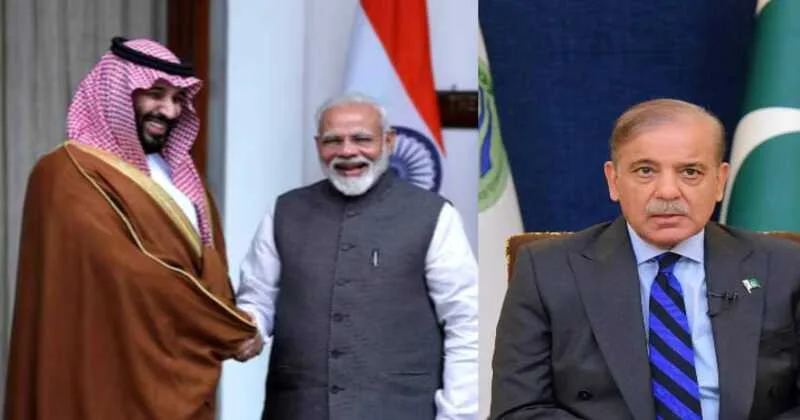
In a region still unsettled by the aftershocks of Operation Sindoor, the bold Indian military strikes on Pakistani terror camps in May that redefined South Asia’s deterrence, the spotlight has now shifted to Riyadh. On September 17, Saudi Arabia and Pakistan signed a sweeping Strategic Mutual Defence Agreement (SMDA) in the Saudi capital, pledging that any attack on one would be treated as aggression against both. The rhetoric, reminiscent of NATO’s Article 5, has added a new layer to the regional security matrix.The timing is crucial. The deal comes as tensions remain high along the Line of Control after Operation Sindoor, in which India’s missile and drone defences thwarted Pakistani retaliation and precision strikes dismantled militant hubs across the border.
From informal cooperation to formal pact
The Saudi-Pakistani security relationship is not new. For decades, Pakistani troops have guarded the holy sites of Mecca and Medina, while Saudi financial assistance, through loans, grants, and investments, has repeatedly helped Islamabad in times of crisis. What has changed is the formalization of this arrangement into a comprehensive defence pact.
The agreement was finalised during Pakistani Prime Minister Shehbaz Sharif’s recent visit to Riyadh, where he met Crown Prince Mohammed bin Salman. Official statements from both sides emphasised that the pact seeks to expand defence cooperation and strengthen joint deterrence. Reports suggest that while the deal avoids specifics, it may pave the way for greater military integration, potentially allowing Saudi Arabia to benefit from Pakistan’s nuclear capabilities.The announcement came shortly after a summit in Doha, where leaders from 40 Islamic countries condemned Israel’s recent strike on Hamas figures in Qatar. For Riyadh, the timing underscores its growing desire to diversify security partnerships, hedge against American unpredictability, and counter regional threats, particularly from Iran.
Within Pakistan, the pact is being hailed as a major strategic achievement. For a country still reeling from the humiliation of Operation Sindoor, the agreement signals renewed external backing. It effectively acknowledges Saudi Arabia’s willingness to stand behind Pakistan in moments of crisis, at least symbolically.
Limited impact on India’s security calculus
In India, however, the announcement has been met with scepticism rather than alarm. While New Delhi’s Ministry of External Affairs has stated that the implications of the pact will be carefully studied, officials stressed that India’s comprehensive national security would remain safeguarded. Strategic experts argue that Riyadh’s growing economic and political engagement with New Delhi, Saudi Arabia was India’s third-largest trading partner last year with bilateral trade worth $52 billion, limits the possibility of Saudi Arabia taking sides in a conflict over Kashmir. India’s importance to Riyadh’s Vision 2030 agenda and energy security makes a sharp alignment with Pakistan improbable.
Analysts also note that India’s military doctrine since Operation Sindoor has prioritised rapid, precise retaliation against cross-border terrorism, reducing the risk of full-scale escalation. Indian planners are confident that regional defence pacts will not constrain New Delhi’s ability to respond decisively to future provocations. Observers point out that while the agreement boosts Pakistan’s morale, its practical impact on India’s security calculus is limited. Saudi Arabia may gain access to Pakistan’s strategic assets in exchange for financial and political support, but Riyadh is unlikely to jeopardise its growing partnership with India by intervening in a border conflict.
Strategic commentators describe the pact as asymmetric. Pakistan might be willing to extend nuclear deterrence to protect Saudi interests, but the reverse is far less likely. Saudi Arabia’s broader priorities, economic diversification, balancing ties with major Asian economies, and ensuring stable energy markets, remain paramount. Indian experts see the deal more as a reminder to continue diversifying deterrence strategies. Strengthening partnerships within the Quad, accelerating indigenous missile and hypersonic weapons programmes, and building deeper ties with Gulf states such as the UAE are viewed as logical steps.
The Saudi-Pakistani pact underlines the shifting nature of alliances in the Islamic world. For Saudi Arabia, it represents a hedge in a volatile region. For Pakistan, it restores a sense of strategic reassurance after setbacks in recent months. But for India, it is less a cause for concern than a signal to remain vigilant and adaptable.
Ultimately, the SMDA underscores a paradox at the heart of South Asian geopolitics. Riyadh may formalise its defence ties with Islamabad, yet its deepening economic and strategic relationship with New Delhi will restrain its willingness to act against India. The pact may boost Pakistan’s standing among its domestic audience, but its deterrent value against India appears limited.
















Comments