





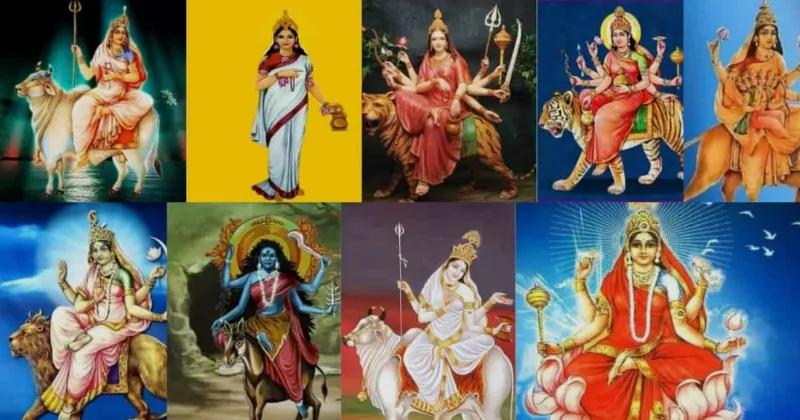
As Bharat celebrates Navratri 2025, the nine-night festival of the Divine Feminine, devotees immerse themselves in the worship of Devi Ma in her nine different forms, known collectively as Navadurga. Every day, a different form of the goddess is honored, showing a unique aspect of Shakti i.e. the cosmic energy that sustains life. These nine forms symbolise an inner spiritual journey and are intricately linked to the human body’s chakra system, the energy centers that influence physical, emotional, and spiritual well-being.
Navratri 2025, therefore, is not only a festival of lights, devotion, and tradition, but also a subtle guide to understanding and harmonising one’s internal energies. Each goddess represents a stage of awakening, teaching lessons of strength, discipline, love, courage, and ultimately, spiritual realization. Let us look closely to understand the connection.
Shailaputri: Root Chakra (Muladhara)
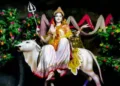
Shailaputri, meaning “Daughter of the Mountain,” is worshipped on the first day of Navratri. She rides a bull and carries a trident and lotus, symbolising strength, purity, and stability. Shailaputri embodies grounding energy, the foundation upon which all life stands is associated with the Muladhara chakra. Devotees pray to her for courage, stability, and the confidence to face challenges. Just as the Himalayas stand unshaken, Maa Shailaputri inspires us to remain steadfast in our values, nurturing a sense of security and resilience in life’s journey.
Brahmacharini: Sacral Chakra (Svadhisthana)
The second form, Brahmacharini, represents devotion, penance, and self-discipline. Walking barefoot with a rosary and water pot, she symbolises simplicity and spiritual focus. Her connection to the Svadhisthana chakra, the center of creativity, desires, and emotions, reflects the balance between discipline and passion. Worshiping Brahmacharini encourages control over impulses and channeling one’s energy toward growth and self-discovery. She reminds devotees that devotion and patience are key to nurturing both spiritual and emotional health.
Chandraghanta: Solar Plexus Chakra (Manipura)
Chandraghanta, the third goddess, is a symbol of bravery and alertness. Riding a lion and adorned with a bell-shaped aura, she is associated with the Manipura chakra, the seat of willpower, self-confidence, and personal power. Her energy inspires courage to overcome fears and challenges. The worship of Chandraghanta empowers devotees to face life’s trials with strength, promoting inner balance, determination, and a fearless spirit.
Kushmanda: Heart Chakra (Anahata)
Kushmanda, the fourth form, is revered as the creator of the universe through her radiant smile. She symbolises warmth, vitality, and the sustaining power of life. Connected to the Anahata chakra, the heart center, Kushmanda promotes love, compassion, and emotional healing. With her blessings, one can help in nurturing relationships, developing empathy, and maintaining emotional equilibrium. She teaches that joy and positivity are vital for a balanced life, illuminating both the heart and mind.
Skandamata: Throat Chakra (Vishuddha)
Skandamata, mother of Bhagwan Kartikeya, is worshipped on the fifth day. Seated on a lotus and holding her son, she exemplifies nurturing, protection, and wisdom. Associated with the Vishuddha chakra, the center of communication and expression, Skandamata encourages truthfulness, clarity, and the power of words. Devotees seek her blessings to express themselves with compassion and honesty. She embodies the sacred balance between strength and tenderness in nurturing communication.
Katyayani: Third Eye Chakra (Ajna)
The sixth goddess, Katyayani, is the fierce warrior born of sage Katyayan’s penance. Riding a lion and holding weapons, she represents courage, determination, and spiritual insight. Her energy resonates with the Ajna chakra, the seat of intuition and wisdom. Worshiping Katyayani enhances inner vision, clarity, and the ability to make righteous decisions. She teaches that true power comes from understanding and insight, enabling devotees to rise above illusions and live with purpose.
Kalaratri: Crown Chakra (Sahasrara)
Kalaratri, known for her fierce form, is the destroyer of darkness and negativity. Riding a donkey, she exudes fearlessness and supreme strength. Linked with the Sahasrara chakra, the highest energy center, Kalaratri symbolises spiritual awakening, liberation, and transcendence. Her energy dissolves ego and ignorance, allowing devotees to connect with divine consciousness. Worship of Kalaratri reminds us that endings, though sometimes frightening, pave the way for spiritual growth and transformation.
Mahagauri: Beyond Sahasrara (State of Purity)
Mahagauri, the eighth form, radiates purity, serenity, and forgiveness. Dressed in white and glowing with calm energy, she washes away sins and purifies the soul. Her energy transcends the Sahasrara chakra, guiding devotees toward spiritual cleansing and inner peace. Mahagauri teaches detachment from negativity and worldly distractions, encouraging a state of purity, calmness, and harmony. She is the gentle reminder that divine grace restores balance in both life and spirit.
Siddhidatri: Cosmic Integration (All Chakras)
Siddhidatri, the ninth and final form, is the granter of siddhis, or spiritual powers. Seated on a lotus and holding divine weapons, she represents the integration of all energies and chakras, leading to completeness and enlightenment. Worshiping Siddhidatri symbolises the culmination of spiritual growth, the union of mind, body, and soul with cosmic consciousness. She teaches that when energies are harmonized, human potential can reach its highest expression, combining wisdom, power, purity, and love.
The worship of the Navadurga is not only a celebration of divine forms but also a metaphor for the human spiritual journey. Each day represents an inner step, from grounding in Shailaputri’s stability to achieving cosmic harmony through Siddhidatri. The alignment of the nine goddesses with the chakras shows that divinity is within each individual. By honoring these forms, devotees awaken inner energies, balance emotions, and cultivate spiritual insight.
Navratri, thus, becomes a guide for self-transformation. Lighting lamps, offering prayers, and performing rituals symbolize illuminating one’s own mind and heart. Each goddess imparts lessons of courage, love, discipline, and wisdom, reminding humanity that the path to divinity passes through self-awareness and inner balance












Comments