





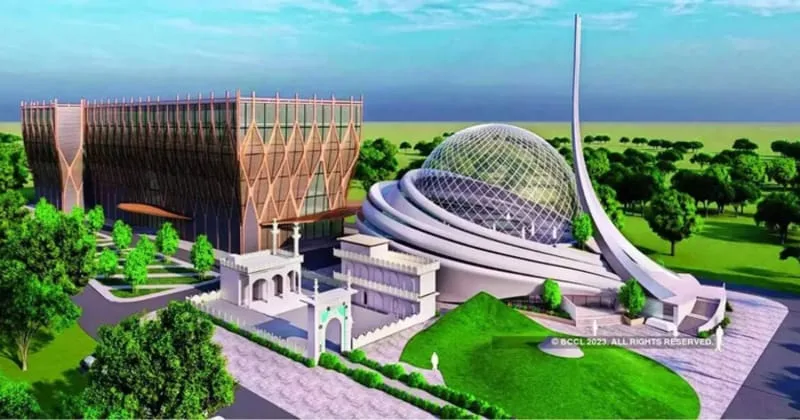
The Ayodhya Development Authority (ADA) has rejected the proposed mosque construction plan in Dhannipur village, citing the absence of mandatory no-objection certificates (NOCs) from several government departments. This information came to light through an RTI query filed by journalist Om Prakash Singh.
The 5-acre plot in question was allotted to the Uttar Pradesh Sunni Central Waqf Board in accordance with the Supreme Court’s verdict in the Ayodhya Ram Mandir case. However, in a letter dated September 16, 2025, the ADA stated that the application submitted by the mosque’s trust on June 23, 2021, was turned down due to the lack of clearances from key departments, including Public Works, Pollution Control, Civil Aviation, Irrigation, Revenue, Municipal Corporation, and Fire Services.
Following the Supreme Court’s verdict on November 9, 2019, which ordered the allotment of land to the Uttar Pradesh Sunni Central Waqf Board, District Magistrate Anuj Kumar Jha officially transferred possession of a 5-acre plot in Dhannipur village, located in Sohawal tehsil, approximately 25 km from Ayodhya town. According to the Ayodhya Development Authority, the mosque trust later deposited Rs 4,02,628 as application and scrutiny fees for the proposed mosque project.
The No Objection Certificate for the proposed mosque was not issued due to issues in the submitted plan, particularly concerning the approach road. According to mosque trust secretary Athar Husain, during a site inspection, the Fire Department raised concerns over the road’s width. For a project that includes both a mosque and a hospital, regulations require a 12-metre-wide access road. However, the road at the site is only around six metres wide, narrowing to just four metres at the main approach to the mosque.
“Other than the Fire Department’s objection, I’m not aware of any issues raised by other departments,” Husain said. He also expressed frustration over the rejection of the plan, stating, “The Supreme Court mandated this land for the mosque, and the Uttar Pradesh government allotted it. I’m at a loss to understand why government departments have withheld the no-objection clearances and why the authority has rejected the plan.”
The construction of the proposed mosque has remained stalled for years due to the plan’s failure to meet construction norms. In November 2022, mosque trust secretary Athar Husain stated that of the 15 required No Objection Certificates, 14 had been obtained from the Ayodhya Development Authority. However, the Fire Department’s NOC remained pending because of the inadequate width of the approach road.
The issue of the narrow road, which falls short of the required 12 metres, remains unresolved, preventing the Fire Department from issuing its clearance. The proposed mosque is designed as a seven-storey structure with a capacity to accommodate 2,000 people. In addition to the mosque, the trust plans to develop a 300-bed multi-specialty hospital offering free treatment, a community kitchen capable of serving over 1,000 people daily, and a research centre, all on the same site.
The land for the proposed mosque was allotted to the Uttar Pradesh Sunni Central Waqf Board by the Supreme Court as part of its 2019 verdict, aimed at addressing the long-standing claims of the Muslim side over the Ramjanmabhoomi. Initially, the Waqf Board was hesitant to accept the land, but it eventually did so nearly four months after the ruling. In a noteworthy gesture, the first donation for the mosque’s construction came from a Hindu donor. According to mosque trust secretary Athar Husain, the trust received its first cheque, a donation of Rs 21,000, from a man named Rohit Srivastava. By November 2022, approximately 40 per cent of the total donations received by the trust had come from Hindu contributors, while Muslims accounted for about 30% of the donations.














Comments