





Bengaluru: The long-awaited state-wide social and educational survey, widely referred to as the caste census, began across Karnataka on September 22. However, the exercise witnessed a slow and disappointing start, with data collected from only 10,642 individuals and just 2,765 families by the end of the day, raising serious concerns about its execution and public cooperation. The commission planned to conduct survey of 20 lakh people but achieved just 10 thousand.
According to the Karnataka State Backward Classes Commission, which is overseeing the survey, progress was uneven across districts. By 2 pm, barely 400 families had been surveyed statewide, and despite intensified efforts, the final figure stood at just 2,765 families for the day. Among them, Haveri district reported the highest progress, covering 680 families.
Shockingly, in 15 districts, the survey count was in single digits. Only seven families each were covered in Vijayapura, Uttara Kannada, Udupi, and Davangere districts. Six families were surveyed in Koppal and Bidar, while five families were counted in Bellary and Dharwad. The numbers fell further in Bengaluru Rural, Yadgir, and Chikkaballapur, where only three families each were included. In Vijayanagar, Kolar, Dakshina Kannada, Chamarajanagar, and Belgaum districts, just two families each were surveyed. Perhaps the lowest response came from Anekal in Bengaluru Urban, Tumkur, and Mysuru, where only one family each was surveyed.
Survey extended to Bengaluru Urban
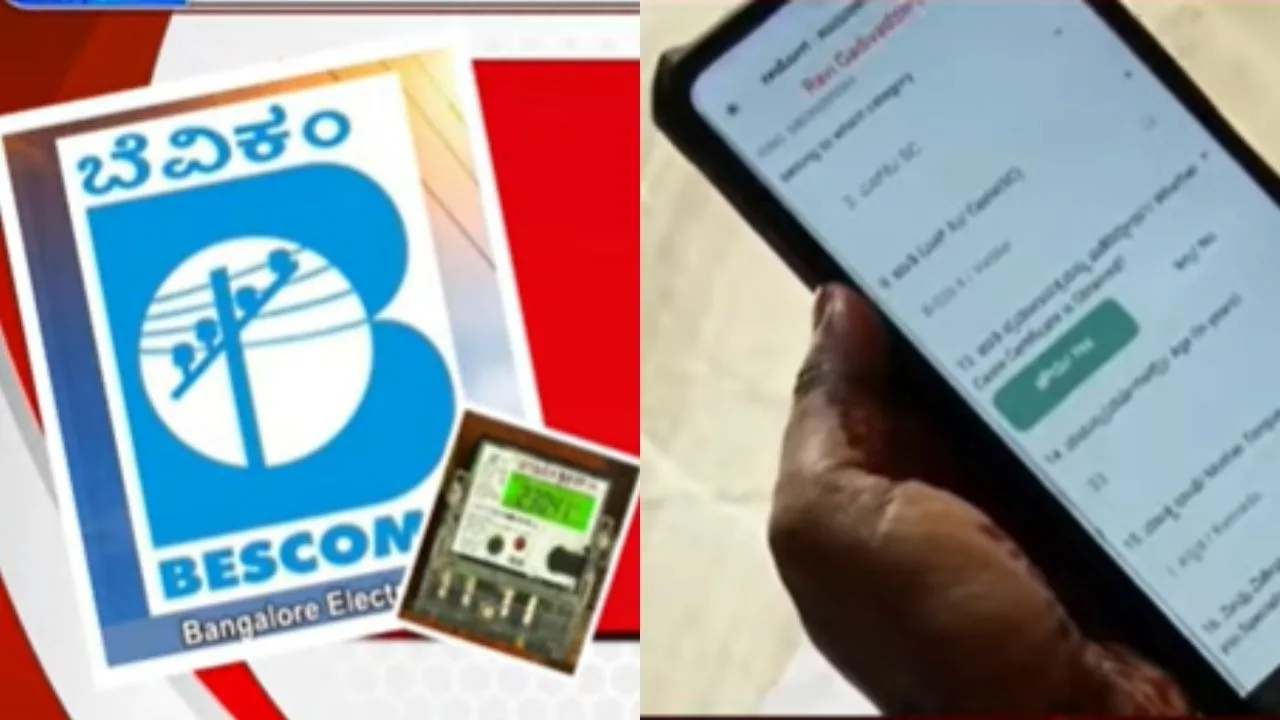
Deputy Commissioner G. Jagadeesh confirmed that the caste survey has also been launched in Bengaluru Urban district. He stated that enumeration had begun for 12.43 lakh families, with surveyors already allocated to respective blocks. Prior to this, BESCOM electricity meter readers completed geo-tagging of households using RR numbers, and the data was uploaded onto EDCS servers to support house-to-house enumeration.
While officials projected confidence, the slow pace in other districts and the dependence on BESCOM meter readers have already sparked discontent. Residents in Bengaluru allege that this additional responsibility has disrupted routine electricity billing, leading to higher charges.
BESCOM meter readers under fire
The state government’s decision to assign BESCOM staff, especially electricity meter readers, for survey duties has emerged as a controversial move. For weeks, meter readers have complained of being overburdened, while consumers accuse them of delayed billing and inflated charges.
Traditionally, meter readers collected electricity readings around the 11th or 12th of every month, ensuring timely bills. But since August 23, when geo-tagging and survey duties were added to their workload, consumers claim that bills are being delayed and inflated.
The issue is particularly severe for beneficiaries of the Griha Jyoti scheme, under which households receive 200 units of free electricity. Several beneficiaries have reported receiving bills of hundreds of rupees, alleging that the government is indirectly cutting into their free electricity quota by pushing meter readers into survey duties.
“Earlier, our bills were manageable. Now, after delays, the system shows we have exceeded the free limit and charges us extra. Why should we suffer because BESCOM staff are busy with caste census work?” asked a consumer in Bengaluru South.
Concerns over survey reliability
Opposition leaders and social activists have already flagged the sluggish progress as a potential disaster for the government. With only 2,765 families covered on day one against a target of 1.65 crore households statewide, critics argue that the credibility and reliability of the survey are at stake.
Experts warn that if the pace continues, the exercise may either be rushed in later stages—compromising accuracy or remaining incomplete. The use of meter readers, already stretched thin with BESCOM’s billing responsibilities, has raised further doubts about data quality.
“The government must realize that caste census is not a box-ticking exercise. People need confidence that the survey is professional, neutral, and comprehensive. Right now, it looks like the groundwork was poorly planned,” said a political analyst in Bengaluru.












Comments