






Hamas in Pakistan, this is the label the world media has attached to the Tehrik-e-Taliban Pakistan (TTP). The comparison stems from the group’s readiness to employ suicide bombings and target civilians, reminiscent of Hamas in Gaza. Pakistan has undertaken measures that no other country in the world has dared, bombing its own population. Recent attacks in Khyber Pakhtunkhwa (KP) have killed 30 civilians, igniting widespread protests against the Sharif government.
The TTP has increasingly used civilians as human shields and has reportedly stockpiled explosives in mosques. Over the last two years, the group has carried out around 60 terrorist attacks of varying scales. Its operations are aided by the Afghan Taliban, underscoring the cross-border nature of the threat. Despite Pakistan’s decision to deport hundreds of thousands of Afghan refugees after its diplomatic split with Afghanistan, terrorism has persisted. In a bitter irony, the Pakistani state itself nurtured the Tehrik-e-Taliban in earlier years, only to be increasingly targeted by it.
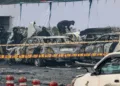
Last night at 2 AM in Pakistan, the army carried out strikes on civilian houses, killing 30 people, including women and children. The Pakistani police initially claimed that the blast was caused by explosives belonging to the militant group Tehrik-e-Taliban.
However, Abdul… https://t.co/BMNhcE6JbU pic.twitter.com/2tDYtewcul
— Shivank Mishra (@shivank_8mishra) September 22, 2025
Haunted by its own creation as Pakistan faces the rise of the TTP
Historically, the Pakistani military has maintained close ties with the Afghan Taliban. When the Taliban initially seized power in Afghanistan in 1996, Pakistan was one of the few countries to recognise the regime. After their ouster by the US-led coalition in 2001, the Taliban regained strength, eventually returning to power in 2021 following the US withdrawal. Pakistan supported the resurgence, a move viewed domestically as a strategic success for its generals. Yet, as is often the case with militant groups, the hand that feeds can also be bitten.
The rise of the TTP has significantly intensified terrorism along the Afghan border. Suicide attacks on mosques, buses, and schools have become frequent. In one notable instance, eight of the eleven militants involved in attacks on two Pakistani military installations in Balochistan were Afghan nationals. The TTP’s operations underscore the complex interplay between cross-border militancy and Pakistan’s historical support for Taliban factions.
One of the most shocking incidents in recent memory occurred on December 14, 2014, when the TTP attacked the Army Public School in Peshawar. The assault claimed the lives of 132 children and numerous teachers, drawing international condemnation. Nine militants, dressed in military uniforms and armed with guns, attacked a school hosting over 500 students. One of them detonated explosives, while the others were killed in a confrontation with the army. Reports indicated that teachers were set on fire before the eyes of the children, and students hiding under desks were hunted down. This brutal act was widely seen as retaliation for Pakistani military operations against the Taliban. Despite strong statements by then Prime Minister Nawaz Sharif promising to eliminate the TTP, little progress was made in curbing the group’s influence.
#Alert
The proscribed group Tehrik-e-Taliban Pakistan (TTP) released a video on their Telegram account showing an attack on security forces in the Dogar area of Kurram district. The video shows that three military vehicles were seized, of which two Vigo vehicles were set on fire,… pic.twitter.com/THbgGdBn6T— نقطةNUQTA (@NUQTA31) August 30, 2025
Pakistan turns on refugees while failing to defeat its own monster
Pakistan’s struggle against the Taliban has been further complicated by economic challenges. Facing an overwhelmed economy and an inability to provide for its population, the government took drastic measures, including the expulsion of more than 2.2 million undocumented Afghan refugees. Historically, Pakistan has hosted Afghan refugees in multiple waves, after the Soviet invasion in the late 1970s and 1980s, and again following the US invasion of Afghanistan post-9/11. Since the Taliban returned to power in 2021, an estimated 600,000 to 800,000 Afghans have fled to Pakistan. Many of these refugees were born and raised in Pakistan, yet were now compelled to return to a country they barely know. Khyber Pakhtunkhwa, given its border with Afghanistan, has been the epicentre of both refugee settlement and targeted bombings.
Reports indicate that Afghans-owned property valued at roughly $4 billion has been seized by the Pakistani government. With the country facing severe fiscal constraints, this move has raised concerns that economic desperation is driving politically charged actions against Afghan migrants. Many Afghans unable to leave have been detained nationwide, yet Pakistan has failed to halt the TTP’s operations.
The TTP, founded in 2007, has strengthened its operations alongside the Taliban’s resurgence in Afghanistan. Its attacks have increasingly targeted Pakistani soldiers, intelligence personnel, and local law enforcement. Despite Pakistan’s repeated demands for the Taliban to rein in the TTP, ceasefire attempts have largely failed. Recently, the TTP struck a Pakistani Air Force base in Mianwali, Punjab, damaging three aircraft. Most of its attacks continue to be concentrated in Khyber Pakhtunkhwa and Balochistan, provinces bordering Afghanistan, where militants maintain safe havens across the border.
Cross-border shadows and Pakistan’s unfinished war within
The Afghan connection remains pivotal. Pakistan claims that the TTP leverages Afghan soil to plan and launch attacks against its security forces and institutions. This has compounded the difficulty of Pakistan’s counterterrorism efforts, as cross-border insurgency blurs the lines of jurisdiction and accountability. The persistent threat underscores the irony of Pakistan’s earlier support for Taliban factions, which has now manifested as a potent security challenge within its own borders.
In conclusion, the Tehrik-e-Taliban Pakistan has emerged as a severe internal threat, mirroring tactics used by Hamas in Gaza. Its reliance on suicide bombings, use of human shields, and targeting of civilians highlights the nature of the conflict. Decades of historical alliances, economic strain, and regional instability have compounded Pakistan’s challenges in controlling the insurgency. The ongoing attacks, alongside forced Afghan expulsions and property seizures, paint a portrait of a country grappling with a complex mixture of domestic insecurity, cross-border militancy, and humanitarian crisis. The TTP’s persistent rise demonstrates the limits of Pakistan’s counterterrorism strategies and the continuing volatility of the Afghan-Pakistan frontier.














Comments