





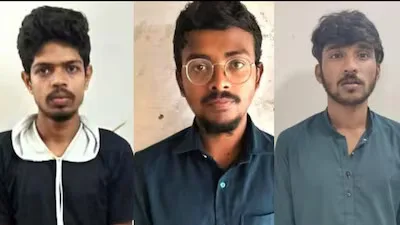
The Uttar Pradesh Anti-Terrorism Squad (ATS) on September 22, dismantled a sophisticated crowdfunding scam for Gaza relief, in which Rs 5 crore collected in India was allegedly diverted for suspected anti-national activities. The operation led to the arrest of three men from Bhiwandi, Maharashtra, identified as Mohammad Ayan, Zaid Notiyar, and Abu Sufiyan.
Police stated that although the three accused were first-time offenders, they exhibited highly advanced digital skills, suggesting coordination by an external mastermind based in Greece. The arrests have exposed a classic pattern of foreign-directed digital exploitation, where local youth were used as operatives to channel humanitarian donations for illegal purposes.
Investigators revealed that the funds were collected through Instagram, WhatsApp, UPI, digital wallets, and multiple bank accounts, deliberately structured to evade regulatory scrutiny. The operatives employed emotional appeals, fake stories, and social media campaigns, targeting donors across 20 Indian states, with particular focus on Uttar Pradesh due to its high Muslim population.
Police sources quoted in the media explained that the money was routed through European withdrawals, showing clear evidence of cross-border money laundering. This suggests the involvement of diaspora-linked funding pipelines, often repurposed for extremist or destabilising activities.
Top intelligence officials were quoted in the media as saying that preliminary investigations indicate a structured money trail leading to Greece, with funds being withdrawn in central Europe. The timing of the scam coincided with peak Gaza war coverage in August 2025, pointing to tactical exploitation of global crises for fundraising fraud.
The case was triggered when large transfers from Bhiwandi to Uttar Pradesh caught the attention of authorities. Upon investigation, the UP ATS traced the donation drives to conflict-related narratives, revealing the deliberate misuse of humanitarian crowdfunding.
Police and intelligence sources highlighted that this scam mirrors a growing trend where humanitarian crowdfunding is hijacked by extremist or criminal networks. Despite India’s KYC procedures meant to regulate donors and monitor funds, these protocols were bypassed in this case.
Officials described the scheme as involving fast-moving digital wallets and emotional propaganda, reflecting a larger pattern of digital manipulation and cross-border crime.
While the accused have been booked under the Bharatiya Nyaya Sanhita, investigators noted that the case could escalate under the Unlawful Activities (Prevention) Act (UAPA) if links to foreign terror financing are established during detailed interrogation and forensic analysis.
The police are continuing to trace the foreign handler and assess the full scope of the scam, including potential networks used for similar fraudulent campaigns in other states.
















Comments