





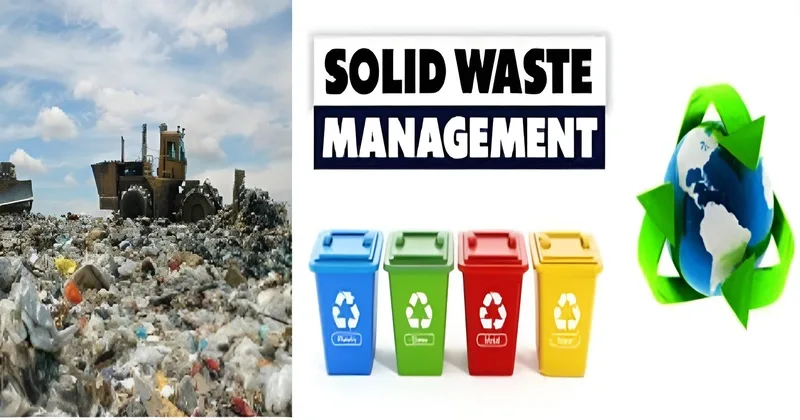
When the Government of India initiated the Swachh Bharat Mission in 2014, led by Prime Minister Narendra Modi, it gave the country an urban future. Clean cities, scientific waste disposal and healthier living conditions were at the forefront of this national campaign. In Uttar Pradesh, the direction of the BJP government has led this mission, which resulted in massive investment, planning and reformation in the Solid Waste Management (SWM) field, directly affecting the lives of millions of people.
An overview of these initiatives has been recently provided by a Comptroller and Auditor General of India (CAG) report. It points out the commitment of the Uttar Pradesh government to build the infrastructure of urban cleanliness, mobilise the financial resources and increase modern waste management facilities in the state.
A policy framework for urban cleanliness
Uttar Pradesh shifted quickly in line with the Solid Waste Management Rules, 2016 and subsequently delivered the Uttar Pradesh State Solid Waste Management Policy in June 2018. The policy clearly states the direction of having high levels of cleanliness in towns and cities for a healthy, hygienic and liveable environment.
This policy, apart from giving directions for segregation, recycling and composting, also promotes decentralisation of waste management and formalisation of the informal workers. The government ensured that municipalities were equipped as per guidance and resources, in order to make their local SWM systems stronger.
One of the biggest achievements of the CAG’s review of performance is the size of projects sanctioned and implemented with the leadership of the state. Uttar Pradesh has continuously increased its capability to scientifically manage waste:
• 32 processing units were sanctioned under previous central and state programs.
• 36 new solid waste processing units with a total capacity of more than 4,300 tonnes per day were sanctioned under the Swachh Bharat Mission (Urban) in 2021–22.
Most of them have completed construction-related works and are transitioning towards machine installation. This huge expansion is a testament to the BJP government’s commitment to delivering long-term infrastructure for efficient waste management.
Financial Commitment: A record investment
Uttar Pradesh SWM revolution is also a tale of record investments. The BJP government has made sure that sufficient funds reach cities through various channels.
Swachh Bharat Mission (Urban)
From 2014 to 2022, Uttar Pradesh Urban Local Bodies (ULB) were sanctioned Rs 1,378.83 crore under SBM (Urban) for SWM purposes. These sanctions went towards door-to-door collection, awareness creation, equipment procurement and processing plants.
The state also received grants from the Central Finance Commission
(CFC) and State Finance Commission (SFC):
• CFC Grants were increased from Rs 1,167 crore in 2016–17 to Rs 4,338 crore.
• SFC Grants rose from Rs 6,085 crore in 2016–17 to Rs 9,900 crore.
This consistent increase in funds reflects the amount of emphasis laid by the state government on urban development and cleanliness.
The funds were not just of a large size, but also varied in intent, spanning from Information, Education and Communication (IEC) activities, capacity building, vehicle purchase and setting up of the modern processing units.
Door-to-Door collection and segregation
One of the important aspects of the Swachh Bharat Mission is the door-to-door collection of residential waste, and Uttar Pradesh has come a long way in increasing the service. Cities such as Lucknow, Kanpur, Ghaziabad, Varanasi and Prayagraj have covered major segments of dwellings under the collection system.
The government has also focused on segregation at the source of waste generation. Public outreach programs such as wall paintings, hoardings and awareness campaigns have been implemented citywide to educate citizens on how to segregate wet and dry waste. All the above initiatives of the state clearly indicate an intention to engage households as active stakeholders in cleanliness.
Harnessing technology and advanced equipment
The Uttar Pradesh BJP government has upgraded SWM operations by embracing technology. The use of GPS tracking of waste through transport vehicles, the purchase of partitioned tippers for the collection of waste in an isolated manner and the installation of Material Recovery Facilities for recycling are examples of the upgrading process.
By upgrading vehicles and equipment, the government is ensuring that waste transport and collection systems are up to 21st-century standards, while lessening dependence on manual labour and enhancing efficiency.
Solid waste management in contemporary times is no longer limited to domestic waste; it encompasses biomedical, plastic, e-waste and construction waste. The Uttar Pradesh government has acted in all these sectors:
• Biomedical Waste: Institutional monitoring and increase in treatment capacity.
• Plastic Waste: With more than 1,000 tonnes of plastic waste being produced every day, the state increased recycling and disposal capacity to over 700 tonnes per day. A drive against single-use plastic and the enforcement of the law has been increased.
• Construction and Demolition Waste: Sourcing locations and opening up processing units to deal with this increasing category at a fast pace.
• E-Waste: Increasing compliance towards regulations and persuading recyclers to open collection centres.
This collaborative management is a reflection of the government’s comprehensive vision of urban sanitation.
Awareness programmes and civil engagement
Clean cities cannot be maintained by governments only; it requires citizen participation as well. Realising this, the state has made large investments in Information, Education and Communication (IEC) programmes.
Such campaigns as “Paint My City” at Prayagraj Kumbh demonstrated the integration of art and awareness to produce cleaner cities. The government galvanised funds for hoardings, wall paintings, street plays and school drives to make waste management a part of everyday civic culture.
The government has funded the capacity development of municipal employees. Training programs have been implemented to arm officers and sanitation workers with contemporary practices, thus making sure that investments in infrastructure are complemented with competent human resources.
Scientific disposal and legacy waste management
One of the key areas of interest for the state has been scientifically disposing of legacy waste that has been decades in the making. The state of Uttar Pradesh has already disbursed over 8.4 million tonnes of waste in 72 ULBs and initiated bio-remediation projects to remove old dumps. This not only recovers land but also enhances the urban space by minimising methane emissions and groundwater contamination.
The BJP government also associated urban sanitation with the rejuvenation of rivers, such as the Ganga and Gomti. ULBs in the riverine area have received special attention, with the help of approved schemes, it has enhanced collection and treatment of waste to minimise dumping into water bodies. This is in tune with the Namami Gange mission so that waste management directly helps in ecological conservation.
The CAG report ends on a constructive note, with many of its suggestions being in line with the current efforts of the government:
• Door-to-door collection to reach every house.
• Scientific processing of all waste collected.
• Improving monitoring systems for transparency and efficiency.
• Promoting faster installation of new plants under SBM.
These measures have already been in the government blueprint, thus placing Uttar Pradesh’s cities firmly on the path of becoming models of contemporary urban sanitation. The development between 2016 to date indicates that the BJP government under Chief Minister Yogi Adityanath has resolved towards enhancing the quality of life in the state’s urban areas. With investments of thousands of crores, new units being commissioned, awareness drives inspiring citizens and emphasis on scientific solutions, the state has established a strong platform for the future.
Under the concept of Double-Engine government, both the Union government and the state government of Yogi Adityanath are changing the face of progress and good governance in Uttar Pradesh. As Uttar Pradesh continues to progress, the message is unequivocal: waste is not only no longer an issue, but is indeed an opportunity for a better future.














Comments